FRANKFURT — Mercedes-Benz has halted all further investment at its German manufacturing sites and is formally weighing plant closures after months of stalled negotiations with labor unions over cost reductions.
The decision was announced on Thursday, November 12, 2026, in an executive memo posted on the automaker’s internal intranet. The move reflects mounting financial strain across Germany’s automotive sector, which is contending with high domestic production expenses, sluggish demand, and intensifying competition from lower-cost Chinese electric vehicle manufacturers.
Key Details of the Executive Memo
Mercedes-Benz German Operations Update (November 12, 2026)
+--------------------------------------------------------------------------+
| DECISION: Immediate halt on all further investments in German sites      |
| POTENTIAL IMPACT: Detailed review of possible German plant closures      |
| CORE DISPUTE: Deadlocked labor cost talks with works council & IG Metall |
| COST GAP: German hourly labor up to 5x higher than Eastern European sites |
+--------------------------------------------------------------------------+
- Investment Freeze: Production chief Michael Schiebe stated in the intranet interview that the executive board jointly decided to stop further investments at domestic locations because no viable agreement on restructuring costs had been reached despite intensive discussions.
- Plant Closures Under Review: Management board member and Human Resources Director Britta Seeger noted that while the automaker wants to avoid shutting down factories, deadlocked talks with employee representatives have forced the company to examine in concrete detail which German sites it can afford to keep operating.
- Production Shift Warning: Schiebe warned that without structural cost changes, next-generation Mercedes-Benz vehicles could be manufactured exclusively outside Germany.
Broader German Auto Industry Context
According to company figures, hourly production labor costs in Germany can run up to five times higher than at Mercedes-Benz facilities in Eastern Europe. While management has sought concessions—including proposals to extend working hours without pay increases—unions and works council representatives have pushed back.
The announcement comes after Mercedes-Benz lowered its full-year 2026 profit margin forecast for its passenger car division to between 2% and 3%, underscoring how rising domestic expenses and tough market conditions in China are forcing sweeping austerity measures across Europe’s largest automotive market.
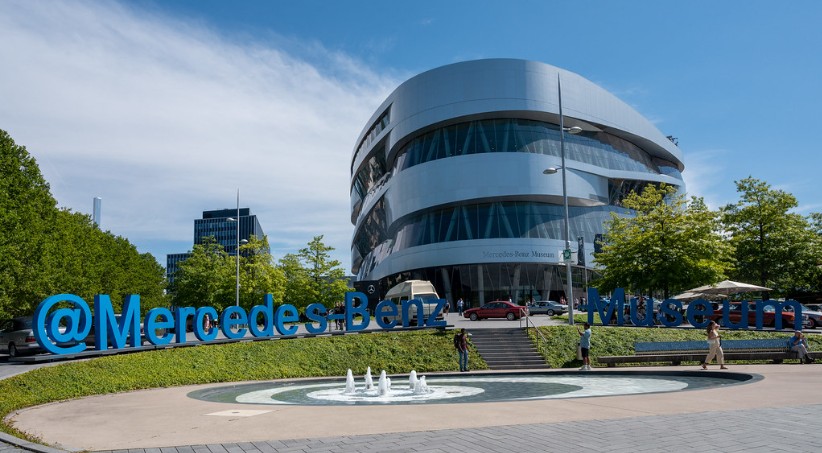
Mercedes-Benz Museum Building, Stuttgart, Germany. Flickr Picture by xiquinhosilva for Illustration purposes only