What if some of the materials used to keep our homes warm in winter and cool in summer could be grown rather than manufactured from fossil-based resources?
Buildings account for around 40% of Europe’s energy consumption and more than a third of its greenhouse gas emissions. The European Commission’s Renovation Wave aims to at least double the annual rate of energy renovations and renovate 35 million buildings by 2030.
To support that ambition, the EU-funded EASI ZERo project brought together researchers and businesses to test new technologies and develop more sustainable ways of renovating buildings. The team focused on the “building envelope”.
“The building envelope is basically everything that separates the inside from the outside: the walls, windows, doors, roof and the structural and insulation components,” said Dr Arnaud Jay, an expert in building energy efficiency at French energy research institute CEA-Liten, who coordinated EASI ZERo.
But the project, which ended in May 2026, was not simply about finding greener insulation. Researchers wanted to understand how different materials perform as part of whole buildings, while also considering their environmental impact, cost, durability and eventual end of life.
The team set out to use design tools and a materials database to work out which combinations suit a particular building, and to create “material passports” for the products.
The solutions were simulated and evaluated in three pilot cases in France, Germany and Norway. Preliminary computer simulations suggest energy savings of between 20% and 50%, along with lower CO2 emissions.
In Norway, for example, the researchers modelled the retrofit of a detached house with bio-based window frames, wood-fibre panels and an insulating coating for outside walls.
“
The mycelium grows and acts as a natural glue, binding hemp or wood particles together to form an insulation panel.
“There is no single super product. We have a portfolio of nine different products,” said Jay. These included different types of bio-based insulation, an insulating coating, materials that store and release heat to help regulate indoor temperatures, specialist paint designed to remove pollutants from indoor air, and an easy-to-integrate system of solar panels that generate electricity.
The project focused on renovating existing buildings, while also aiming for its materials to be used in new construction.
Growing insulation
One of the project’s more unusual approaches involved mycelium – a root-like network of fungal threads that can produce mushrooms.
“The mycelium grows and acts as a natural glue, binding hemp or wood particles together to form an insulation panel,” said Jay. The result is a 100% bio-based insulation, grown on agricultural waste, that can biodegrade at the end of its life.
This could offer an alternative to conventional glues, some of which are fossil-fuel based. But the project showed that it is not as simple as swapping one ingredient for another.
“You need to look at the whole life cycle of the product: how you manufacture it, how you use it to reduce energy consumption, and then how you remove it at the end of its life and whether you can recycle or reuse it,” said Jay.
For mycelium panels, for example, durability is a key factor in their overall environmental impact. Assessing that impact means considering the materials used, how the panels are produced and how long they last.
From idea to market
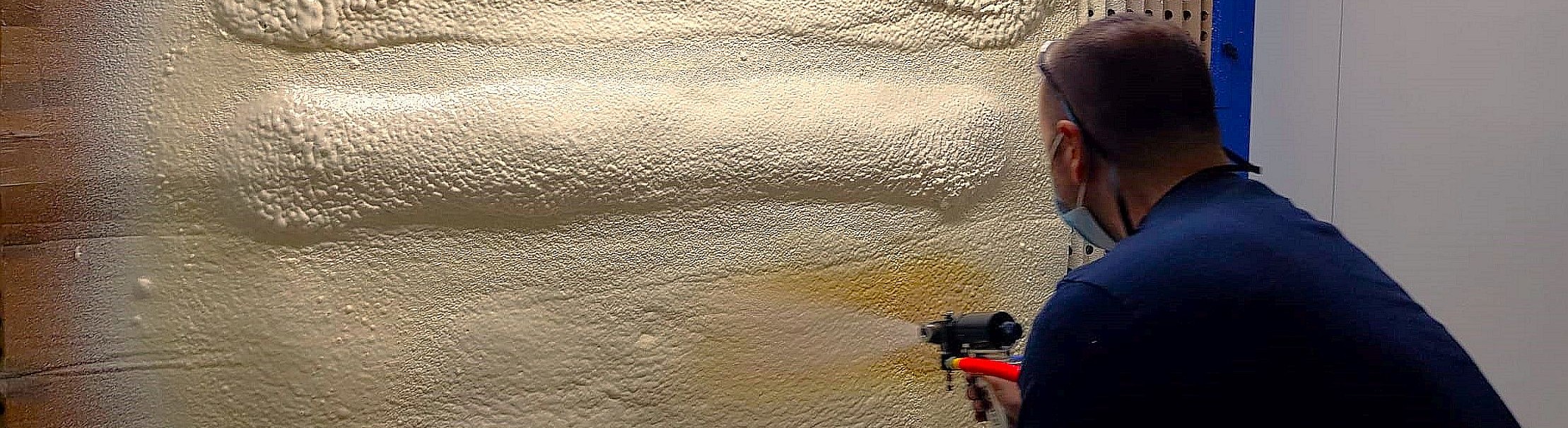
Spanish company INDRESMAT, one of the EASI ZERo partners, has been developing products made from bio-based polyurethane – a type of biobased resin – for different parts of the building envelope.
These include a window frame, sprayable wall insulation and an injected insulating component for roller-blind boxes, all made from raw materials derived from vegetable oils.
Pablo Rodríguez Outón, INDRESMAT’s co-founder and CEO, said a high-performing material also needs to be affordable, competitive and capable of being produced at scale.
“Developing a material that performs well is only part of the challenge.”
The project gave the company a platform to move from a fossil-based polyurethane product towards a bio-based formulation while improving its manufacturing process.
“The most important outcome of EASI ZERo was developing the second generation of our patented sRIM-PUR® manufacturing technology, with automation to support industrial-scale production in the future,” said Rodríguez Outón.
Different buildings, different answers
The pilot cases also highlighted why there is no single solution to making Europe’s buildings more efficient. “The building stock is very different from one country to another, the regulations and the way we deal with circularity are also different,” said Jay.
The potential benefit of a new insulating material depends heavily on the nature of the building. A poorly insulated building has far more scope for savings than one already upgraded. Heritage buildings bring extra restrictions, and national energy mixes affect the carbon savings from cutting energy use. That makes it difficult to put a single figure on savings across every building.
“
Developing a material that performs well is only part of the challenge.
Instead, researchers set out to understand where each solution makes most sense, and how improved insulation and building envelope components can contribute to warmer homes in winter, cooler interiors in increasingly hot summers and lower energy demand.
For people living in these buildings, using less energy should mean lower heating and cooling bills. Some of the products are also aimed at comfort, such as a layer designed to even out temperature swings.
There is also the question of what happens when today’s renovation materials need replacing: they should be removed, reused or recycled rather than becoming construction waste.
INDRESMAT, for example, explored mechanically recycling polyurethane waste from other products – physically breaking it into smaller pieces rather than using chemicals – so that recycled material could be incorporated into some of its products.
Because buildings can remain in use for decades, it is important to consider from the outset how their materials can be removed, reused or recycled at the end of their life.
“If we want to have an impact in 20 to 50 years, we need to think right now in the design phase,” said Jay.
“If we can use bio-based materials instead of fossil-based materials, and consider their end of life from the beginning, we can have a safer and lower impact product.”
Research in this article was funded by the EU’s Horizon Programme. The views of the interviewees don’t necessarily reflect those of the European Commission. If you liked this article, please consider sharing it on social media.
This article was originally published on https://projects.research-and-innovation.ec.europa.eu/en/horizon-magazine/growing-greener-materials-europes-home-renovations. It is shared here under a Creative Commons license.