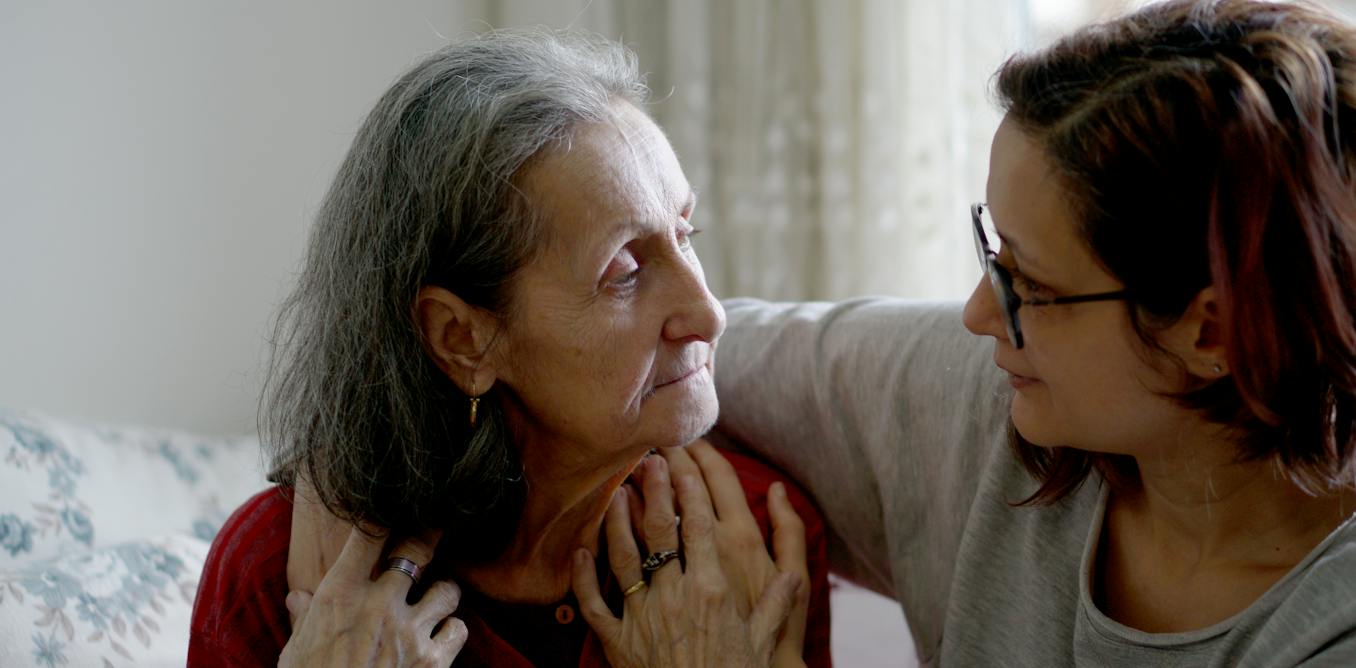
“Sister,” the “Saturday Night Live” sketch about daughters who take care of their aging parents, hit home for a lot of people.
The make-believe ad features several men who say they love their father but don’t want to interrupt their own lives to help him or deal with his chronic health conditions. So they’ve turned to a handy service, which costs nothing, by texting “Dad fell” to their sister.
“Years of internalized sexism warps Sister’s brain into thinking caretaking is her responsibility, and somehow not yours,” a man in a doctor-evoking white coat explains.
I winced as I watched the sketch because my own sister, Carol, provided full-time, unpaid care for our mother for more than a decade. In 2018, when I wrote about the daunting economics of caregiving for older adults for The Conversation, I led with Carol’s story.
A growing trend
One reason “Sister,” which stars Jane Wickline as an exhausted caregiver and John Mulaney as her smug brother, packed such a big punch is that more of us find ourselves in her shoes.
My sister was one of 43.5 million Americans providing care to a loved one at the time. That number has since risen to 63 million – about 1 in 4 adults.
The care family members provide today, as it was in 2018, is mostly unpaid. And it’s labor that isn’t counted when the government estimates the scale of economic activity. That doesn’t mean it’s not valuable work – estimates put its value at about US$1 trillion.
Warning: ‘Sister’ may break down
Family caregivers make it possible for many older people to remain in their homes. That, in turn, can make an aging person happier and reduces the costs of their stays in hospitals and nursing homes. But their freedom to age in place comes at a price.
Caregiving is tough work, and numerous studies over the years have found that caregivers suffer more physical and emotional stress than other people.
That’s why at the end of the “Sister” ad, the announcer speaks in the rapid-fire speedtalking normally reserved for a drug’s unpleasant side effects as he cautions: “Sister may break down without warning.”
Family caregivers pay a price
Caregiving may save money that might otherwise be spent on home health aides or assisted living fees, both of which are beyond the means of many families. The average cost of in-home care is $35 per hour, totaling over $25,000 a month for 24/7 care. Compare that to a median annual household income of $87,460.
But it is costly for the caregivers to do this unpaid work for their parents or other loved ones.
Over 90% of caregivers must cut their work hours), which typically reduces their wages, employer-provided retirement benefits and Social Security benefits.
Some of them, like “Sister” in the sketch – and my own sister – end up quitting their paid jobs to do this unpaid one.
AARP estimates that family caregivers who were born between 1981 and 1985 and are in the paid workforce will lose on average $120,500 in income over their lifetimes because of their time devoted to caregiving. Caregivers also incur over $7,000 annually on average in out-of-pocket expenses for home modifications and other caregiving necessities.
NBC
A ‘daughterhood penalty’
Sociologists have found that men with a sister do less parental caregiving than men without a sister. They have also found that women with a brother do more caregiving than women without a brother. This extra caregiving burden women face is sometimes called the “daughterhood penalty,” or tax.
Social psychologists Toni Schmader and Katharina Block explain the various ways children are taught that caring is a feminine trait and being uncaring is masculine, although there’s no obvious gender differences in caregiving ability.
Economists’ explanations of gender differences in employment and earnings initially focused on differences in education and experience. Now, economists like me also recognize the role that social norms play in determining who works in certain jobs and how much they’re paid, including who in the family will take care of aging relatives.
But there is some good news – if not for “Sister,” then for some other sisters out there: growing evidence that the gender gap in caregiving is narrowing.
Female caregivers who belong to the baby boom generation – people born 1944-1964 – spent three times more time doing household chores than their male counterparts, according to a study published in 2024. This gender difference was much smaller among caregivers who were millennials – people born 1980-1985, mostly because women in that generation spent less time doing household chores.