THE HAGUE, NETHERLANDS — The International Court of Justice (ICJ) ruled on Thursday, November 19, 2026, that Myanmar committed genocide against its ethnic Rohingya minority during military operations in 2017. Delivered in the case brought by The Gambia, the historic decision marks the first time the United Nations’ top court has found a state directly responsible for committing genocide.
Read out by ICJ President Yuji Iwasawa at the Peace Palace in The Hague, the judgment establishes that Myanmar’s military carried out “extreme violence” with the intent to destroy a substantial part of the mainly Muslim Rohingya population in northern Rakhine State.
Key Findings of the Court
Following a seven-year legal process initiated by The Gambia in 2019 under the 1948 Genocide Convention, the court issued several binding conclusions:
- Commission of Genocide: Myanmar is responsible for genocide through killings, causing serious bodily or mental harm, and imposing measures intended to prevent births.
- Failure to Prevent and Punish: Authorities failed to prevent genocidal acts by non-Rohingya civilians acting alongside security forces and failed to investigate, prosecute, or punish perpetrators.
- Breach of Provisional Measures: Myanmar violated the court’s 2020 order requiring it to prevent ongoing genocidal acts and preserve evidence.
- Ordered Reparations: The court ordered Myanmar to provide guarantees of non-repetition and implement restitution measures, including allowing displaced Rohingya to safely return home and reunite with their families.
Background and Global Reaction
The ruling stems from the 2017 military “clearance operations” that forced more than 700,000 Rohingya to flee into neighboring Bangladesh, where over a million refugees remain displaced. UN Secretary-General António Guterres welcomed the verdict as a “powerful recognition of the Rohingya victims of genocide” and a reaffirmation that impunity for such acts cannot stand.
Legal experts and human rights organizations—including Amnesty International and Human Rights Watch—noted that the judgment clarifies that genocidal intent can coexist with military objectives, a precedent expected to influence other pending cases before the ICJ. While ICJ rulings are legally binding and final, enforcement depends on dip
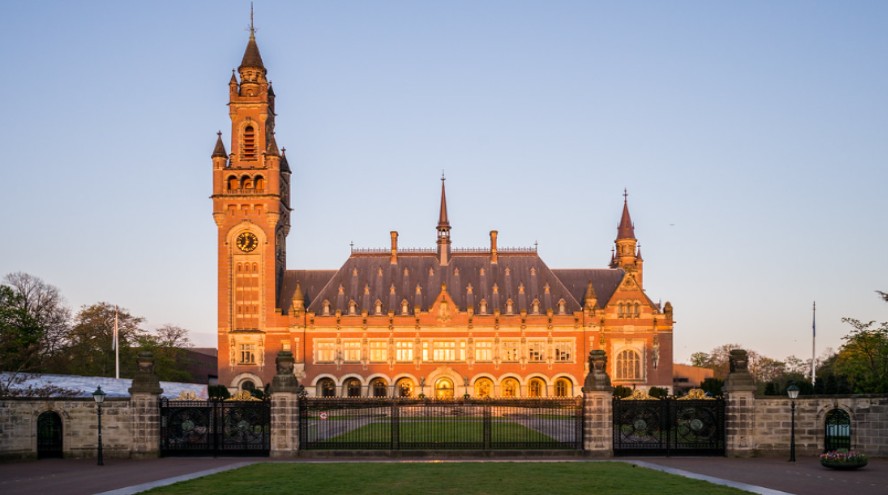
The International Court of Justice (ICJ) Peace Palace, The Hague Picture on Flickr by RB Photo