THE HAGUE / UTRECHT — A coordinated series of intentional disruptions brought major sections of the Dutch rail network to a standstill. The incident occurred early Tuesday morning, coinciding with Prinsjesdag (Budget Day), the traditional opening of the parliamentary year in The Hague.
Railway infrastructure manager ProRail and national operator NS reported that materials deliberately attached to tracks triggered widespread signaling safety overhauls, trapping thousands of commuters and causing widespread transport delays across the country.
Mechanics of the Disruption
Beginning around 5:30 AM CET, automated safety monitors flagged dozens of track-circuit failures concentrated primarily north, east, and central of Utrecht.
- The Sabotage Method: Inspectors discovered pipes and other metallic objects intentionally fixed or placed across rails at more than 20 locations.
- Safety System Failures: By bridging the rails, the objects completed electrical circuits, falsely signaling to central control centers that empty tracks were occupied by trains. This forced automated signaling systems to default to red lights, halting all rail traffic as a mandatory safety protocol.
- Impact on Road Traffic: Malfunctioning track circuits also forced several level-crossing barriers to remain lowered, causing severe traffic jams on surrounding roads.
- Train Impact: A passenger train struck one of the placed objects near Steenwijk in Overijssel. ProRail confirmed the train remained on the tracks and no injuries were reported.
Geographic Scope & System Disruption
                                MAJOR LINES IMPACTED
                                         │
        ┌────────────────────────────────┼────────────────────────────────┐
        ▼                                ▼                                ▼
  Central Sector                  Eastern Routes                   Northern Corridors
  • Amsterdam – Utrecht           • Utrecht – Arnhem               • Amersfoort – Zwolle
  • Utrecht – Gouda               • Amersfoort – Deventer          • Zwolle – Leeuwarden
  • Gouda – Oudewater             • Zwolle – Zutphen               • Zwolle – Deventer
The scale of the disruption overwhelmed local transit capacity, with NS acknowledging it was unable to provide enough replacement buses for stranded commuters.
Investigation and National Response
State Secretary for Infrastructure and Water Management Chris Jansen called the sabotage “particularly concerning” and confirmed a priority criminal investigation by police, intelligence services (AIVD), and forensic specialists. Staff clearing the lines were instructed to preserve evidence at all sites.
| Dimension | Current Official Status |
| Legal Classification | Investigated as deliberate physical infrastructure sabotage and safety disruption. |
| Attribution | No group or foreign actor has claimed responsibility. Authorities caution it is too early to publicly attribute the act to specific actors. |
| Political Timing | The disruption coincided with Prinsjesdag, when thousands travel to The Hague for the royal procession and formal budget presentation. No concrete link to the event has been established. |
Investigators are evaluating several potential lines of inquiry, ranging from domestic extremists to foreign state-backed hybrid warfare, following previous European transport infrastructure interference. Forensic analysis of the recovered materials remains ongoing as rail teams work to clear affected corridors.
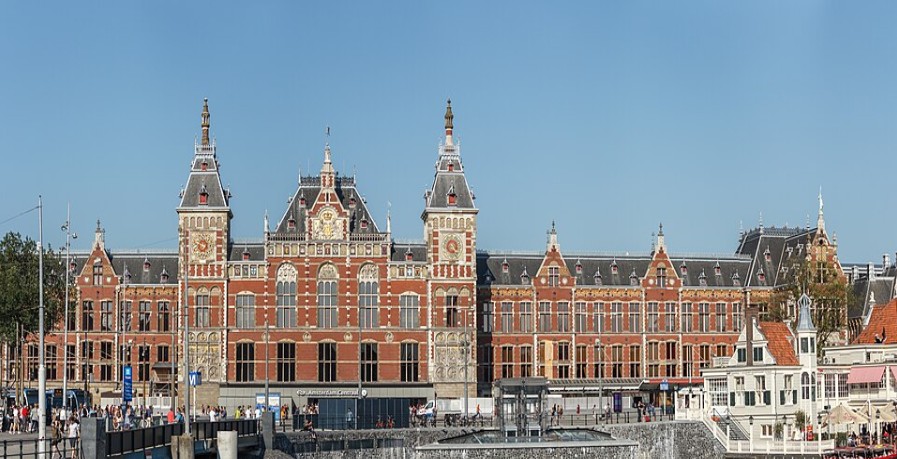
Amsterdam Centraal, Amsterdam, the Netherlands Station building in 2016 Wikimedia Image by Slaunger