
A drug that can treat chemotherapy-resistant ovarian cancer has just been approved for use on the NHS in England. Mirvetuximab soravtansine (also known as Elahere) is the first new drug to be approved for hard-to-treat ovarian cancer in over 20 years.
In the UK, over 7,500 women are diagnosed with ovarian cancer every year. By 2040, it’s predicted this number will rise to 9,400.
For more than 30 years, platinum-based chemotherapy has been the standard of care for ovarian cancer. But while patients generally respond well to this treatment initially, in around 70% of patients cancer recurs and they develop a resistance to treatment. Once resistance has emerged, patient outcomes are poor – with a five-year survival rate of approximately 50%.
The approval of Elahere will help hundreds of women living in England who have treatment-resistant cancer by delaying cancer progression and prolonging life.
Elahere is an antibody drug conjugate (ADC). ADCs are a relatively new class of cancer treatment that have been developed to deliver highly potent chemotherapy specifically to cancer cells. This advance is an essential move away from typical chemotherapy, which can cause damage to both cancer cells and healthy cells and tissues when administered.
ADCs use antibodies, which are a type of immune protein. Antibodies are able to recognise cancer cells because of a protein found on their surface that is present at very high levels. This same protein is typically not found on healthy cells.
A chemotherapy agent is hidden within these antibodies so that the antibody doesn’t cause any damage to healthy cells when in circulation and only attacks the cancer cells. This chemotherapy agent is even more potent than those used in standard treatment.
The antibody and drug are tethered to one another by a chemical bridge known as a linker which only releases the drug from the antibody after it has entered into the cancer cells. The antibody binds to a cancer cell, hijacking a normal biological process called endocytosis which pulls the antibody into the cell.
Once the ADC is inside the cell, the linker will be cut by enzymes that are present inside it. This allows the antibody to release the chemotherapy, killing the cancer cell.
Elahere specifically targets the protein folate receptor-alpha (FR-alpha). The FR-alpha protein is found at high levels on many ovarian cancer tumours and includes those that have undergone metastasis (cancer which has spread from the site of the primary tumour).
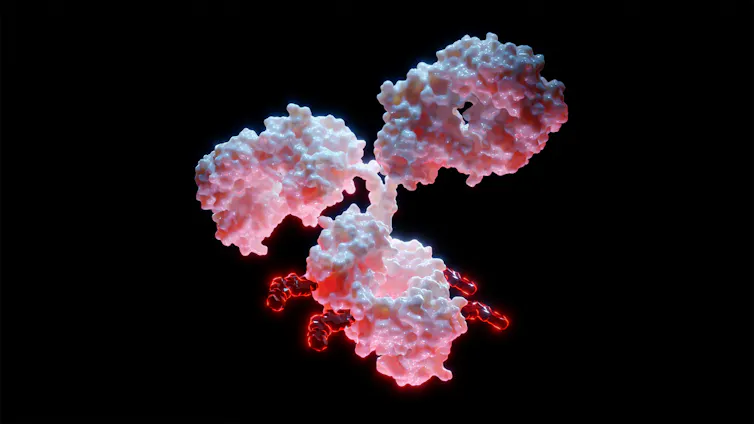
Alpha Tauri 3D Graphics/ Shutterstock
About 35% of patients with platinum-resistant ovarian cancer are eligible for treatment with Elahere, which is a significant proportion. Tumour biopsies will need to be tested for the level of FR-alpha to confirm a patient’s eligibility.
In clinical trials, patients with high FR-alpha were selected for treatment with Elahere when they had become resistant to platinum-based chemotherapy treatments. Resistance was classified as those who had received one to three rounds of first-line chemo, but their cancer had still progressed within six months of the last round of treatment. These patients had limited further treatment options and high mortality rates.
The clinical research showed that Elahere was able to delay cancer progression. Patients treated with Elahere also lived longer on average than patients who continued to be treated with other chemotherapies.
Patients who had been treated with Elahere survived for around 17 months after treatment, while those who had received other types of chemotherapy only survived around 13 months.
Hope for patients
Elahere will be offered to patients with specific types of ovarian cancer – called high-grade serous epithelial ovarian, fallopian tube or primary peritoneal cancer. They must also have developed resistance to traditional chemotherapy after receiving one to three rounds of this class of therapy.
Ovarian cancer is a devastating disease. It’s very hard to diagnose until it reaches an advanced metastatic stage and the survival outcomes of the disease are low.
Elahere treatment outcomes are comparably very effective, and it appears to be associated with fewer side-effects compared to chemotherapy.
Elahere’s approval is a breakthrough treatment. It’s use results in increased life expectancy and quality of life for patients treated with it.

Steve Conlan does not work for, consult, own shares in or receive funding from any company or organisation that would benefit from this article, and has disclosed no relevant affiliations beyond their academic appointment.