– Advertisement –
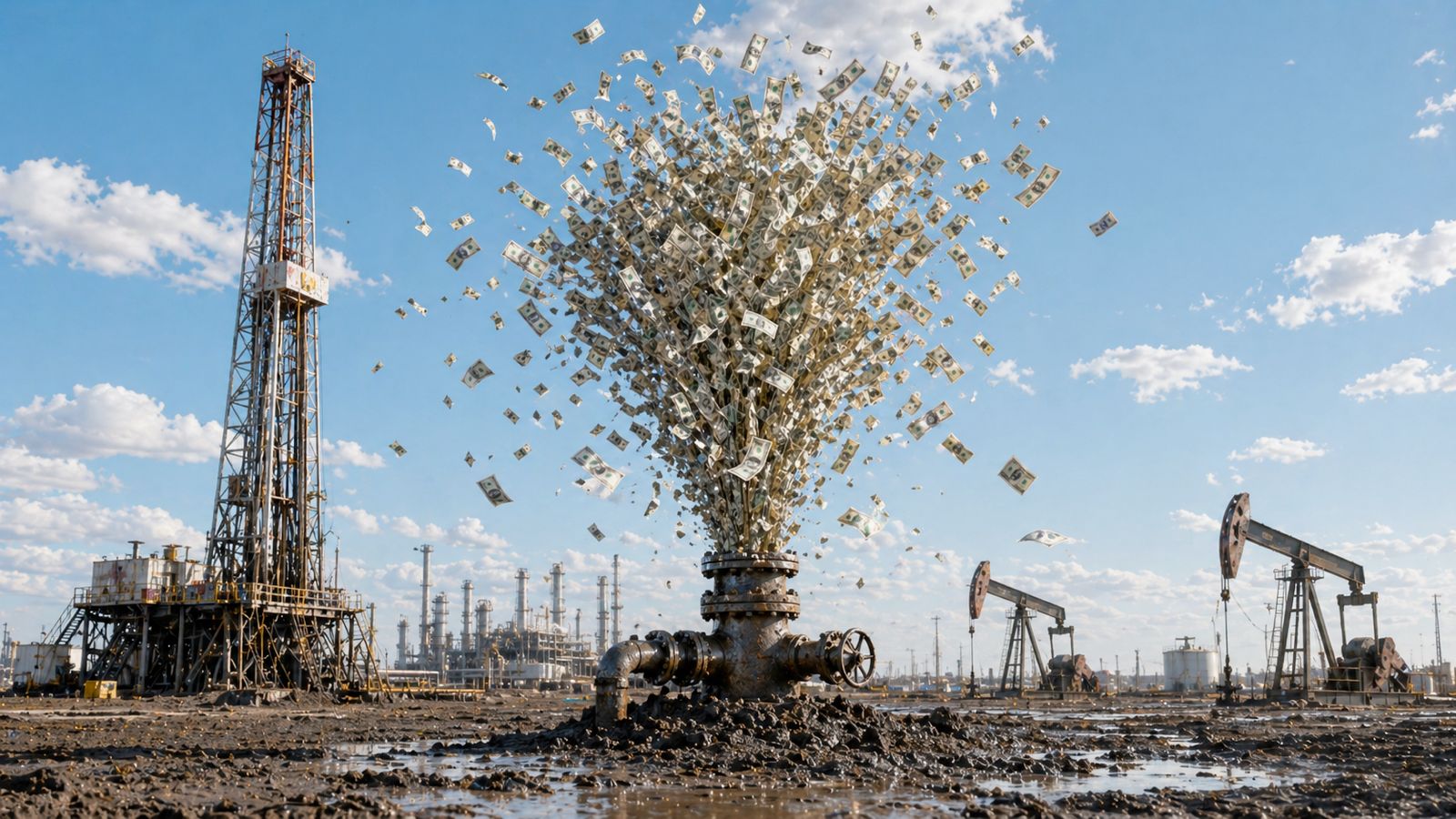
An analysis by Global Witness and the energy information service Rystad estimates that the additional profits of the 100 largest oil and gas companies reached $23 billion in the first month of the war. By the end of the year, this figure could rise to $234 billion. Five EU finance ministers are calling for a windfall tax.
In March 2026, the average oil price reached $100 per barrel—$30 more than before the war began. For the world’s 100 largest oil and gas companies, this translates into estimated additional profits of around $23 billion in the first month after the outbreak of war, equivalent to more than $30 million per hour. If prices remain at this level throughout the year, war-related extra revenues could total $234 billion. The figures come from an analysis of Rystad data by the non-governmental organization Global Witness.
Saudi Arabia and Russia as the Biggest Beneficiaries
The biggest beneficiary is the majority state-owned Saudi company Aramco. The company is projected to generate $25.5 billion in additional profits in 2026. This comes on top of its regular earnings, which averaged $250 million per day between 2016 and 2023. Three Russian companies—Gazprom, Rosneft, and Lukoil—are expected to generate a combined $23.9 billion. Russia’s oil export revenues reached $840 million per day in March, about 50 percent higher than in February. These figures come from the Centre for Research on Energy and Clean Air, which has been tracking Russian energy trade since the start of the war in Ukraine.
Western corporations are also benefiting. ExxonMobil is expected to generate $11 billion in war-related profits, Chevron $9.2 billion, and Shell $6.8 billion. Their market values have risen in parallel: ExxonMobil has gained $118 billion in market capitalization since the start of the war, while Shell has gained $34 billion. Chevron CEO Mike Wirth sold shares in his own company worth $104 million between January and March.
EU Import Costs Rise by €22 Billion
The costs are borne by households and businesses through higher fuel and energy bills. Dozens of countries, including Australia, South Africa, Italy, Brazil, and Zambia, have cut fuel taxes to ease the burden on consumers. The resulting loss of revenue is straining public budgets. Since the start of the war, the EU’s import costs for fossil fuels have risen by €22 billion.
In Austria, a fuel price cap has been in effect since April 1, 2026. It limits profit margins for refineries and gas stations by regulation and temporarily reduces the mineral oil tax. After the first week, the regulatory authority E-Control reported positive results: pump prices fell on average by 10.5 cents for diesel and 18 cents for gasoline; at major branded stations, prices dropped by as much as 18 and 21 cents respectively. Austria is now again below Germany in terms of fuel price levels.
At the European level, the finance ministers of Germany, Spain, Italy, Portugal, and Austria called for a coordinated windfall tax in a letter to the European Commission on April 4. According to the ministers, this would send a clear signal to those profiting from the consequences of the war. The revenues should be used to relieve consumers and curb inflation without placing additional strain on public budgets.
Expansion of Renewables Mitigates Oil Shocks
Fatih Birol, Director of the International Energy Agency, described the disruptions as the largest shock the global energy market has ever experienced. Simon Stiell, the United Nations’ climate chief, warned in mid-March that dependence on fossil fuels undermines national security and sovereignty. In countries with a high share of renewable energy, price increases are less severe.
For context: $30 million (around €26 million)—equivalent to one hour of the industry’s current war profits—would be enough, according to IRENA data, to build at least two modern onshore wind turbines of the latest generation (around 7 megawatts each). With a capacity factor of about 34 percent, two such turbines would generate roughly 42 gigawatt-hours of electricity per year. That is enough to supply a small town with at least 5,000 households. The energy content corresponds to about four million liters of crude oil. In 2024, onshore wind remained one of the cheapest sources of new electricity worldwide, with an average cost of €0.03 per kilowatt-hour.
The rights to the content remain with the original publisher.
Post Views: 5
– Advertisement –