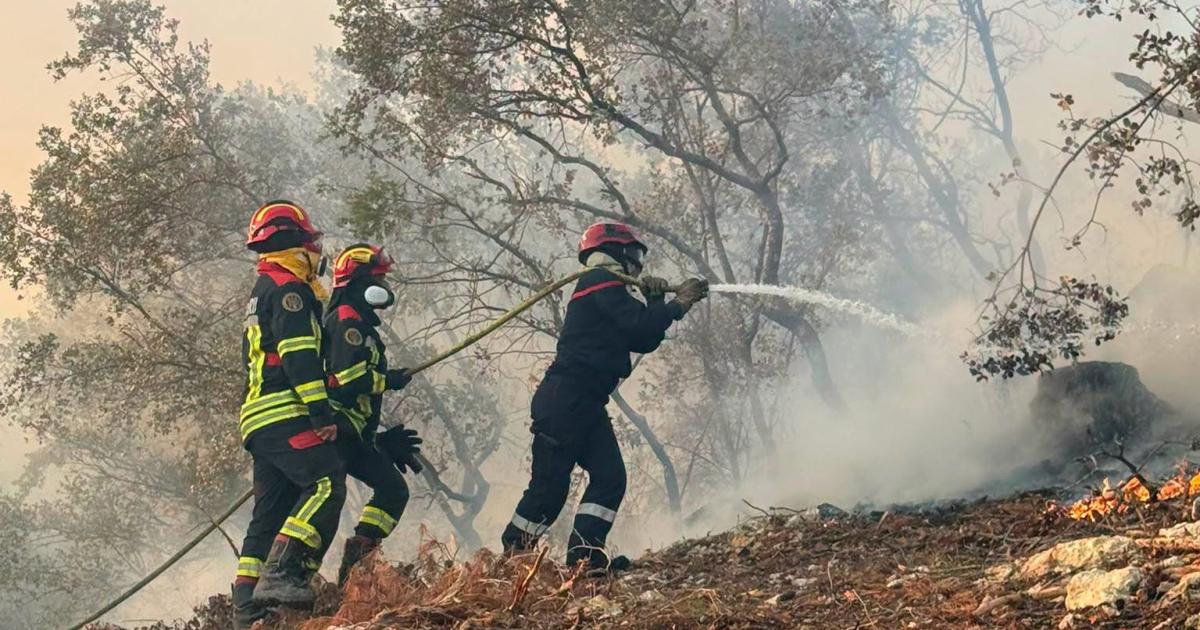
Today, Commissioner for Preparedness, Crisis Management and Equality, Hadja Lahbib is visiting Gironde, one of the areas in France most affected by raging wildfires, to express the European Union’s solidarity. During her visit, the Commissioner is meeting with French authorities and first responders to thank them for their tireless efforts and witness first-hand the ongoing emergency response.
Following France’s activation of the EU Civil Protection Mechanism, the EU has coordinated the deployment of
- 8 firefighting planes from Croatia, Portugal, Sweden, Türkiye and Luxembourg
- 4 helicopters from Czechia, Germany and Slovakia
The EU is also coordinating emergency support to Spain as it battles the largest wildfires in its history by mobilising
- 6 planes from Greece, Italy and Türkiye
- 1 helicopter from Serbia
- 174 personnel and 60 vehicles from Portugal and Serbia
The EU had also prepared ahead of the wildfire season by prepositioning 331 firefighters from Romania, Slovakia, Greece, Italy, The Netherlands, Bulgaria and Poland in high-risk areas of France and Spain. Rapid emergency maps are also produced through the EU’s Copernicus satellite service.
Commissioner Lahbib said:
‘In the midst of these unprecedented wildfires, there are images that will forever remain etched in our minds, such as columns of farmers’ trucks heading to Gironde to support firefighters with water supplies. This human solidarity is exactly what we are doing at the European level. Since June, nearly 800 firefighters from 14 countries have been stationed in high-risk areas. Across Europe, firefighters are leaving their own homes to protect others’. The first face people see when they flee the flames may come from another European country. They may wear different uniforms, speak different languages, but they are fighting the same fire with the same European spirit. Thanks to our European solidarity mechanism, when France or Spain called, Europe responded with boots on the ground, planes in the air, and even satellites in space mapping the emergency in real time. Climate change is no longer knocking on Europe’s door, it is already inside. The only answer is more unity, more solidarity. More Europe.’
When a country asks for help through the EU civil protection mechanism, the request is shared with all 37 participating countries. Based on the country’s request, each can offer the aircraft, helicopters, firefighting teams, equipment or experts it is able to make available, and the Commission coordinates and cofinances their deployment. If those national offers are not enough, the EU can draw on rescEU, its strategic reserve. It includes a fleet of 22 planes and 5 helicopters. The emergency response coordination centre operates 24/7 and coordinates the response.