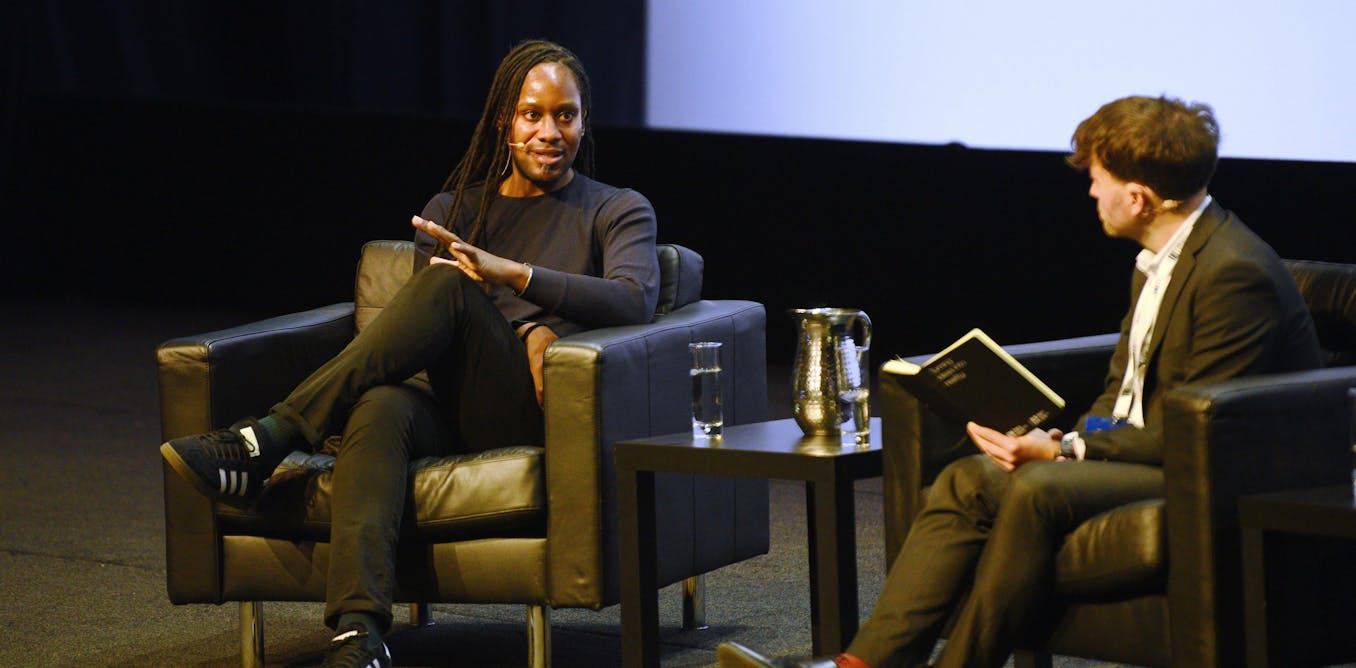
The death of Professor Jason Arday has left many of us with a profound sense of sadness. For Black academics in particular, his loss feels deeply personal. Jason represented possibility – a reminder of what could be achieved despite the barriers that continue to shape Black people’s experiences in education.
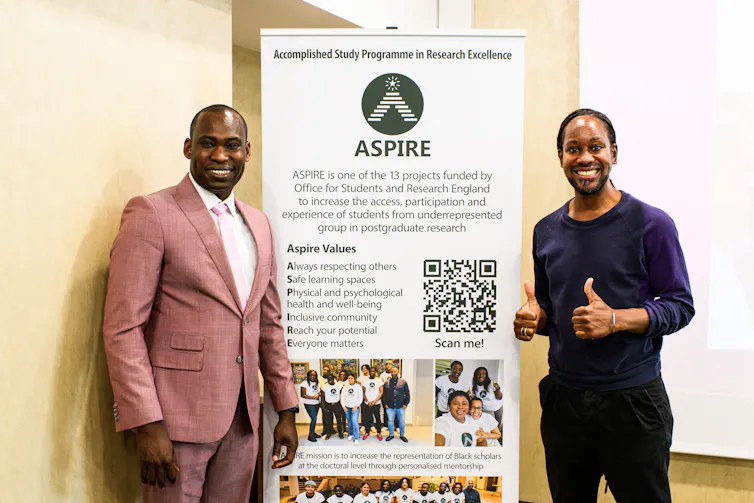
I had the privilege of knowing Jason and welcoming him to speak to scholars on the Accomplished Study Programme in Research Excellence (Aspire), which was set up to address the underrepresentation of Black students progressing into doctoral education.
Jason had been facing accusations of plagiarism and resigned from his position at the University of Cambridge. He was found dead on August 14 2026.
His passing has made me reflect on an uncomfortable question: do Black academics really belong in UK higher education? Of course, we should belong. The more difficult question is whether our institutions consistently make us feel that we do.
This question has shaped much of my work through the Aspire programme. Across three cohorts, Aspire has supported 59 Black and mixed-Black scholars. Fifteen progressed into fully-funded PhDs at universities across the UK.
Those numbers matter. But our research suggests that the most important impact of such programs cannot be captured through numbers alone.
Aspire/Key Reflections, Author provided (no reuse)
Despite years of commitments to equality, diversity and inclusion (EDI), Black academics remain significantly underrepresented at the highest levels of higher education. Only around 1% of professors in the UK are Black.
Behind that statistic are people navigating systems in which they may rarely encounter someone who looks like them in positions of seniority.
Scholars were transformed not simply by learning how to write research proposals, navigate PhD applications or identify funding. What mattered enormously was the building of relationships.
They encountered mentors who believed in them. They met Black academics who made becoming a researcher seem possible. They entered spaces where conversations about race did not have to be avoided. They became part of a community in which their ambitions were taken seriously.
For some, the journey towards a PhD began with something much simpler than research training: someone telling them that they belonged there.
Sometimes, exclusion is being the only Black person in the room. Sometimes it is not knowing the unwritten rules. Sometimes it is constantly having to prove that you deserve to occupy the space you have already earned.
And sometimes it is quietly wondering: is this place really for someone like me?
Supporting Black scholars is not an act of charity. Universities are intellectually richer when knowledge is produced by people with different histories, experiences and perspectives. Different questions are asked and assumptions are challenged. Students encounter new possibilities for who can become a professor, researcher or intellectual leader.
This is why the current moment should not lead universities to become less committed to EDI. It should make us more intentional about it.

Kjetil Kolbjornsrud/Shutterstock
EDI cannot simply be something written into strategies, displayed on websites or celebrated during particular months. It must be something people experience. And one of the simplest tests of meaningful inclusion is whether people genuinely feel they belong.
My work draws on ubuntu, the African philosophy often captured as “I am because we are”, alongside omoluabi, a Yoruba philosophy concerned with character, integrity and our responsibilities towards others. Both challenge the idea that academic success is purely an individual achievement. None of us flourishes alone.
Read more:
How African principles of community are helping Black students in the UK into PhD study
Most academics can remember somebody who opened a door, encouraged them after a rejection, advocated for them, or simply believed in them before they fully believed in themselves.
That is why racial equity must move beyond access towards belonging and duty of care.
One message consistently ran through Jason’s work and his interactions with others: kindness and love matters. Behind our titles, publications, grants and achievements are human beings who need community, encouragement and care.
There is a difference between being invited into a university and feeling wanted there; between being represented and being valued; between surviving academia and flourishing within it.
Universities therefore need to ask difficult questions. Who mentors Black scholars? Who advocates for them? Who notices when they are struggling? Where can they speak honestly about their experiences? Who reminds them that they do not have to navigate academia alone?
This is not the time to retreat
These questions are becoming more urgent at precisely the moment when EDI initiatives are facing increased scrutiny and universities face enormous financial pressures. There is a danger that universities will respond to this situation by retreating from EDI initiatives.
If mentoring changes trajectories, fund it. If communities create belonging, sustain them. If targeted interventions enable talented Black scholars to enter doctoral education, invest in them.
Otherwise, EDI risks becoming performative – something institutions are comfortable talking about but less willing to resource.
ASPIRE/Key Reflections, Author provided (no reuse)
The question should never really have been: do Black academics belong in higher education? We do. The question for universities is: what are we doing to make sure they know that they do?
Jason’s work feels especially important now. Kindness may sound too soft for conversations about structural racism. I believe the opposite. There is something profoundly powerful about creating institutions in which people genuinely care whether others flourish.
At a time when some Black academics are looking towards the future with uncertainty and wondering where they truly belong, retreating from racial equity cannot be our response.
We must instead build universities where Black scholars do not merely enter and survive, but are supported, valued and able to flourish.