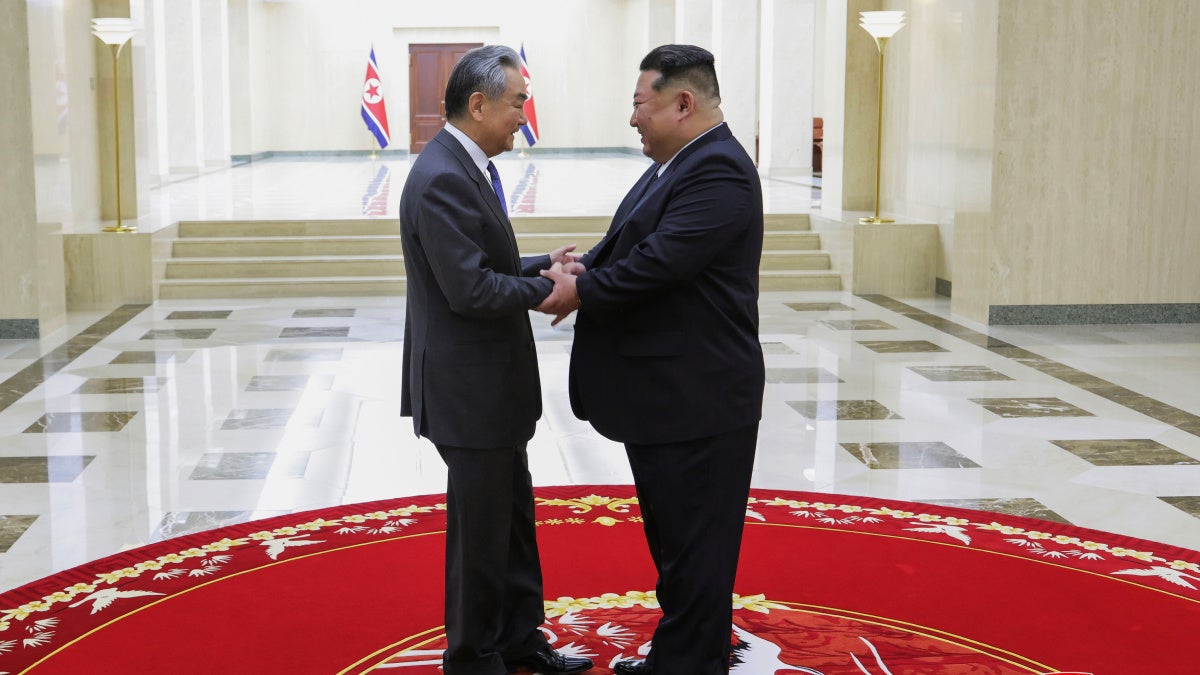
Earlier this month, Chinese Foreign Minister Wang Yi traveled to Pyongyang for his first visit since 2019. During the trip, he met with North Korean leader Kim Jong Un and Foreign Minister Choe Son Hui, with both sides pledging to deepen cooperation and coordination.
This visible and cordial diplomacy between Beijing and Pyongyang was deliberate. Transport links between China and North Korea have resumed, high-level visits are accelerating, and the relationship between the two governments is being actively rebuilt.
But along the China-North Korea border, a different reality persists—one defined not by visibility, but by enforced silence.
Border control is an essential part of North Korea’s system of repression. The government bars people from leaving without permission at the penalty of imprisonment, torture, forced labor, enforced disappearance, and death. Beijing has long helped North Korea seal escape routes and forcibly return those who flee, helping to reinforce North Korea’s control over its oppressed citizens. Every forced return sends a signal to those inside North Korea or hiding in China: there is no safe way out.
For the North Koreans who attempt to flee, the stakes are high. In March, Kim Geum Sung, a young North Korean now living in South Korea, told Human Rights Watch that his mother—who had sold herself into a forced marriage in China to finance his escape—had been detained by Chinese authorities over a year ago. This April, South Korean legislators sent a formal request to Beijing seeking information about her status. South Korea’s Ministry of Foreign Affairs sent similar communications. None have received a response. Her fate remains unknown, with no confirmation of release or return.
The Chinese government should immediately disclose the status of all detained North Koreans, halt all forced returns, and provide asylum or safe passage to a safe third country.
Governments engaging with Beijing, including ahead of the expected United States-China summit in May, should raise cases like that of Geum Sung’s mother and press Chinese authorities on their obligations under international law, which prohibits returning individuals to countries where they face persecution or other harm.
They should remember that behind every diplomatic handshake with Chinese officials are people like Geum Sung’s mother: invisible, unaccounted for, and at risk.