– Advertisement –
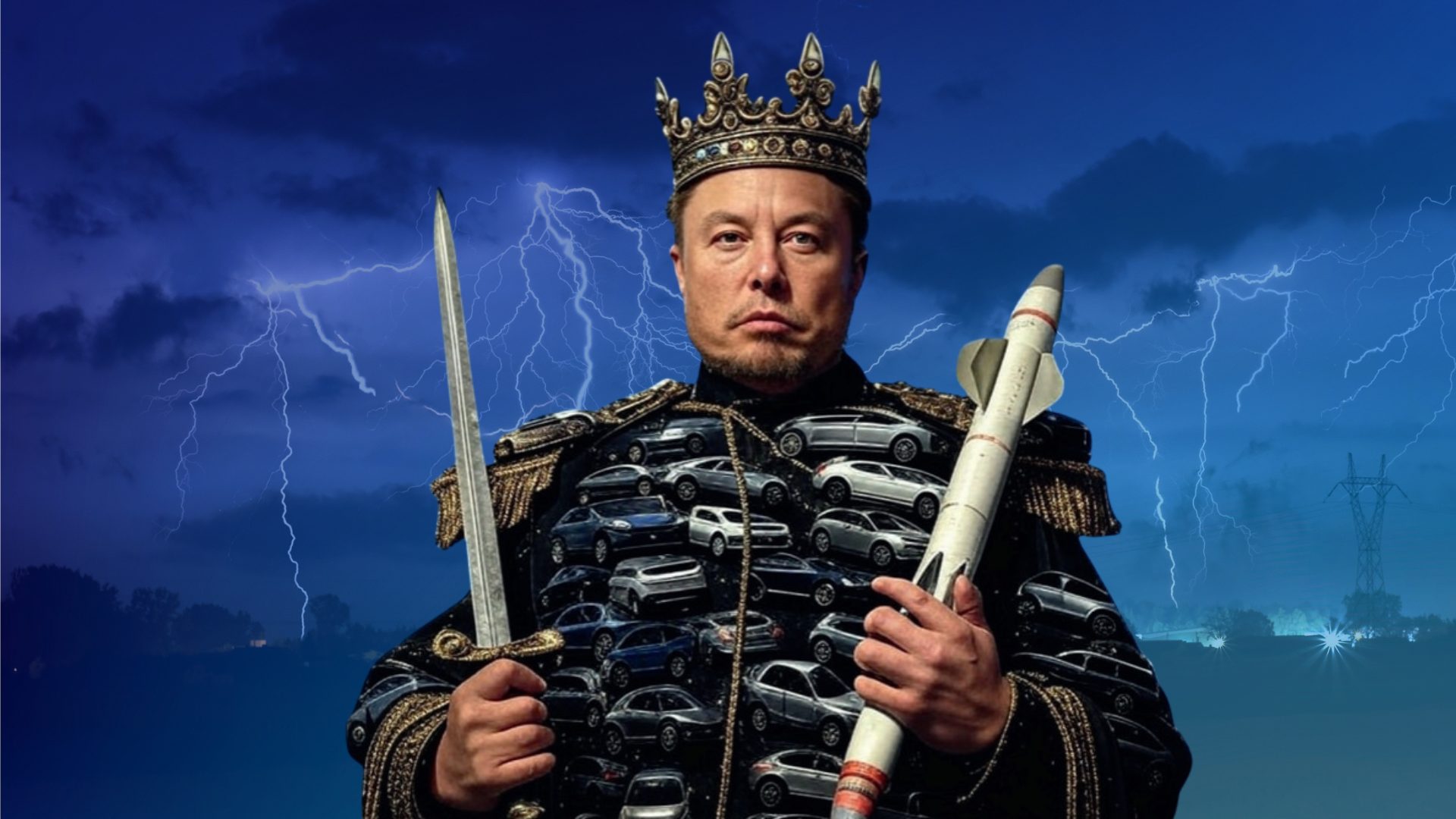
Elon Musk is more than an eccentric entrepreneur. In “Muskism”, journalist Ben Tarnoff and historian Quinn Slobodian describe him as a political actor and a symbol of a new ideology: the fusion of technology, capital and power. In an interview with Kontrast, they explain how Musk, through platforms like X, not only dominates markets but also radicalises public debate. Their argument: he promises “independence” through technology but in reality creates new dependencies and undermines democracy. With AI tools like Grok, Musk seeks to shape what we know, write and read – yet he may be more vulnerable than he appears.
Kontrast: In your latest work, you dive into the world of tech billionaire Elon Musk. You explore his visions for the future and the risks he poses, raising questions about monopolisation, AI and democracy in a tech-driven world. To begin with, what kind of world does Elon Musk intend to build?
Ben Tarnoff: Well, I think our approach with Musk is to try to think about him less as an individual and more as an avatar for a worldview that we call „Muskism“. The centerpiece of that worldview is the promise of sovereignty through technology. What Musk is promising is that in an increasingly unstable world, both individuals and nation states can fortify their self-reliance by plugging into his infrastructures. But what that does is it introduces a dependency on him and his companies. And I think in a European context that’s become particularly evident, for instance, in his control of Starlink, which has played such a crucial role in the Ukrainian conflict. But it is also expressed in many of his other ventures as well.
Quinn Slobodian: If we start from the future he imagines, Musk is building companies whose enormous valuations are based on promises. Within ten years, he envisions 100 billion humanoid robots, one million low-Earth-orbit satellites giving him a near monopoly on global connectivity; and X as a platform for a new kind of far-right internationalism. In many ways, he is already partway there. Our book is meant as a kind of wake-up call. An argument for putting as many obstacles as possible in the way of these ambitions.
Kontrast: You mentioned X as an example of Musk’s influence on communication. Is it fair to say that he, as an individual, is trying to control what can be said and thought online?
Ben Tarnoff: Since Musk acquired Twitter in 2022 and turned it into X, the platform has changed dramatically. Research shows a clear rightward shift in content. He has boosted his own posts algorithmically, so users are often confronted with his content. He has also cultivated a network of allies who receive similar amplification. In this way, X has increasingly become a megaphone for his political views, while many others have left the platform. So it has become, I think, a much more monolithic place ideologically.
Quinn Slobodian: With xAI and the chatbot Grok, he is going further. Grok is trained with certain principles that reflect Musk’s worldview. It is presented as „rational“ but it is actually a more distorted right wing perspective on things, on everything from the Black Lives Matter protests to the supposed white genocide of words in current to South Africa.
At the same time, Musk is not simply censoring in the traditional sense. He operates within the medium, amplifying certain narratives. For example, figures like the German far-right influencer Naomi Seibt have shaped his views, which he then amplifies to a global audience. He allowed Seibt to basically spoon-feed him a set of far right talking points about the influence of Muslims on order in Germany, about the problems of immigration, the lack of democratic freedom etc.. It is not a one-way model of control but a more complex, algorithmic amplification process. This is one of our questions going into the book: How does a billionaire mogul control opinion in an era of digital capitalism? It’s not actually quite the same model as the early 20th century.
Kontrast: Reading your book, one might conclude that AI is becoming a tool for enforcing authoritarian politics. Why do AI and far-right politics seem to align?
Ben Tarnoff: Well, if we return to his acquisition and transformation of Twitter, one of the reasons that Musk undertakes this project is to purge the social network of what he calls „wokeness“, and in particular, the so-called „woke mind virus“. Musk comes to the conclusion that social media in general, but Twitter in particular, has become „infected“ with a kind of mental disease which he associates with the viewpoints of the left. In his view, companies like OpenAI, Google and Anthropic are producing „woke“ chat bots because their AI models have been influenced by a training set that is drawn from an overly progressive internet sources like Wikipedia, which he deeply distrusts, for instance.
Founding xAI was part of an attempt to counter this. Projects like “Grokipedia”, a right-wing alternative to Wikipedia, show how he is trying to reshape not only platforms but also the knowledge base that AI systems rely on. In that sense, influencing human behaviour and reshaping technology go hand in hand.
What’s interesting about Grokipedia? To dwell on that just for a moment. So when you’re on X and you ask a question either directly in the chat bot or through a reply thread, grok is referring to Grokipedia when it provides that response. So if you ask “what was Black Lives Matter?” or “Is white genocide real?”, it will use Grokipedia as a knowledge base and so further. Grokipedia is expected to help form the training data for the next iteration of the AI model. You have to understand Musk’s motivations as much geared toward influencing human behavior as they are about re-engineering the machines.
Quinn Slobodian: There’s also a political-economic dimension. Large-scale AI development requires massive resources like computing power, data, and energy – and therefore close ties to the state. This creates a tendency towards more centralised, even authoritarian structures, because democratic processes can slow down this kind of expansion.
So in the case of the United States, it kind of lends itself to authoritarianism in the sense that you need to be able to chain yourself to an authority that is willing to bulldoze over public dissatisfaction with the build out of data centers or public skepticism about the effects of AI on their own everyday lives or their own workplaces. The Trump administration would brush aside what would be seen as the normal democratic guardrails that would usually slow down this kind of a rapid deployment of capital in a one way back on it, ultimately untested technology.
But even more moderate people like Sam Altman at OpenAI could be seen as becoming cozy with an authoritarian power, because there’s a kind of need for antidemocratic control in order to realize this colossal build out.
Kontrast: Beyond Musk, what do tech elites like him and figures such as Peter Thiel share with the far right?
Ben Tarnoff: Well, I think what we’ve seen in this new Trump administration is really the unprecedented role of Silicon Valley in the federal government. I mean, there’s always been a relationship between the industry and government. The Obama white House famously had a close relationship with Google. So it’s not to say that Silicon Valley and Washington were completely apart before. But the extent of the integration I think we’ve seen in this administration is unprecedented.
To some extent, it’s about the convergence around shared material interests. AI is the organizing imperative for the industry and in particular the need to build out data center capacity and in turn, to obtain sources of energy to sustain that buildout. That requires a very different relationship to the state than, say, in the consumer tech era and the social media era. The Trump administration has wholeheartedly embraced AI as a national priority and has helped the industry, to fast track the construction of data centers by rolling back environmental review, by offering up federal land for data centers, by promising broker deals around energy provision and so forth.
I think we have to start with the political economic layer. But when we think about worldview and ideology, there are certain figures in the Silicon Valley leadership class with the Trumpist worldview. In the case of Musk, we could see one particularly strong convergence around anti-immigrant rhetoric around the perception that there are people out of place that need to be identified, detained and purged from the body politic.
And further, the belief that technology can help the state control and secure society. Firms like those owned by Musk, but also other firms like Palantir, co-founded by Peter Thiel, can provision services to the state, in its exercise of those functions.
Quinn Slobodian: I think it’s also worth kind of differentiating someone like Musk from someone like Zuckerberg. I don’t think we want to paint everyone in Silicon Valley with the same brush.
There is something about Musk. He is distinctive and ahead of its time in certain ways. He anticipated arguably some of the politics of more recent years. While Apple was producing an iPhone that was designed in California but assembled in China, and Zuckerberg was trying his very best to get Facebook into China to kind of globalize his medium as much as possible, Musk was already thinking in more national and narrow terms. So he was trying to figure out how to vertically integrate the production of cars and rockets to make himself less dependent on global supply chains, and was actually successfully selling that more economically contained model to China, to Germany, as ways to fortify themselves against global dependency. He already had a kind of re nationalizing frame when other tech leaders were still thinking in more global terms.
When it comes to the immigrant question, one of the things we want to emphasize about how Musk thinks is that he thinks of immigrants as basically embodied computer viruses. We call it „digital native“ nativism. So if you have a master metaphor of the software engineer, you think of a network as something that is need to be cleansed of intrusions, that has vulnerabilities, that need to be contained.
When Musk thinks about governance or society, he blows up the image of the computer network into the real world. He sees those illegal immigrants basically as computer viruses that need to be located and purged. It is the anti immigrant and nativism of the far right, but from the internet back to reality.
If we compare Muskism to Fordism, the difference is striking. Fordism promised social peace; Muskism promises social conflict. Says Ben Tarnoff
Kontrast: Given the appeal of technologies like electric cars or Starlink, what can societies do? What would be the equivalent of regulation in the 21st century?
Ben Tarnoff: Well, I think it’s worth dwelling on the Fordism comparison for a moment. If we compare Muskism to Fordism, the difference is striking. Fordism promised social peace; Muskism promises social conflict. That is actually a much darker and more destructive view of how to organize society. One of its strengths is how Muskism has managed to implant itself is that it’s particularly attuned to the new politics of globalization, where countries are more than ever eager to reduce their reliance on global integration, to harden their borders, to renationalize their industrial base and so forth. But once again, we’re kind of interested in thinking about him symptomatically as someone who is responding to absorbing, remixing, radicalizing currents in society, in political economy.
One response, in my view, is a renewed form of internationalism. Not integrated on the model of free market globalization of the neoliberal era, but integrated around principles of solidarity.
We saw this recently in Minneapolis, where you had communities coming out to protect their immigrant neighbors. Where solidarity was being constructed across many lines of difference and being channeled into a very effective political organization that did manage to counter incursion by federal agents. I mean, these federal agents are very much in line with „Muskism“. They are heavily armed, relying on high technology, in particular databases and facial recognition software to conduct their campaigns.
So I think, we can look at the existing sources of resistance in society and identify the impulses that point toward a very different kind of world than the one envisioned by Musk.
Quinn Slobodian: It’s good to remember that Musk is also a bit more vulnerable than he appears. He knows that his entire worth is wound up in the success of a small number of businesses that he holds. He’s not a diversified man, so part of the hyperactive activity of people like himself and the other people in Silicon Valley could be interpreted as a sign of urgency, because they know that they’re vulnerable to their plans being thwarted.
In the US, the next midterm elections could be decisive. Voters may reject the plans of a small group of very wealthy people that offer little benefit for most of society.
If you take Musk’s empire apart, you can see it’s facing very serious competition in each of its sectors. We know that last year, the sales of Tesla fell off by 30% in EU. They’re falling worldwide. BYD now sells more cars in the EU than Musk does. Catl, a Chinese company, is now the world’s biggest battery manufacturer, long outpacing Tesla for a niche it previously had. Yes, the EU and other places are still dependent on SpaceX to get things like satellites into orbit. But now there are startups that are using the same technology to do cheap reusable, launch provision with, very well-made effective satellites.
So he has lots of points of vulnerability that he compensates for by overpromising what’s going to come next. So to those investors who ask about falling Tesla sales, he’ll say: “but now I’m building robots”. To those people who say, “but what about competition on satellite launch?” He’ll say “Now I’m going to be providing cellular service to every last human on planet Earth. I’m going to be putting data centers in space.”
Think of the pedagogical virtues of his outrageous behavior: he’s forcing people into realizing the repercussions of being dependent on a small number of people. Hopfully soon, people will seek alternatives and unplugging themselves from the Musk machine.
Kontrast: Are European regulations sufficient to counter these developments?
Ben Tarnoff: Well, I think actually, European policymakers are thinking about this and are attuned to this question. There is a renewed attention of how to achieve so-called digital sovereignty. The difficulty is that this dependency on Silicon Valley technology firms is decades in the making.
We’re not just talking about Musk, we’re talking about Google. We’re talking about Facebook. We’re talking about, the technology sector as a whole. Those software services are absolutely integral to the provision of the EU’s daily government services. I think that’s a much more ambitious project than simply trying to get more satellites into low-Earth orbit.
Quinn Slobodian: Hopefully, that kind of ambition can motivate European policymakers and European social movements, because I think it has been increasingly evident under the second Trump administration: the stakes are quite existential. It’s not simply an inconvenience. It could very well be a matter of life and death. So it does require investment. It requires coordination of political will, and it will take time. You know, it’s not an overnight solution to unplug from those infrastructures.
There’s probably signs that Musk is overplaying his hand. I mean, the decision earlier this year to boost user usage on grok by allowing it to produce non-consensual sexual imagery, at a rate of tens of thousands of images was, I think, crossing a red line for some European governments. It’s one of the reasons why the offices were raided in Paris by the attorney general there. It’s one of the reasons why the UK and Spain are reopening an investigation, thus turning those places into targets for Musk’s anger.
If Musk is taking time out of his day to insult Pedro Sanchez in Spain, it must be because they have identified something of the vulnerabilities and weaknesses in his profit model.I think that can be a starting point to start to crack open what has become far too naturalized kind of reliance on these services.
The rights to the content remain with the original publisher.
Post Views: 4
– Advertisement –