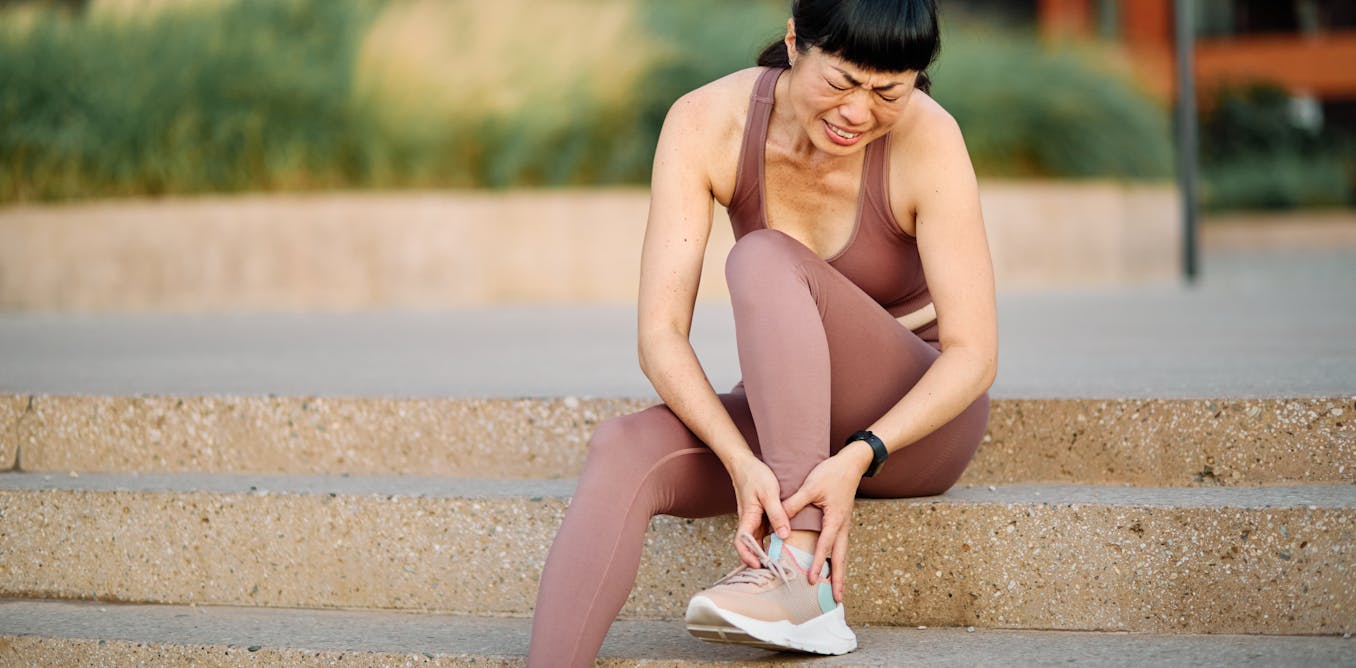
A sports injury can feel like a single setback: a twisted ankle, a strained calf or a sore knee. But for many people, the real problem starts when they try to come back too soon – only to end up with a second injury.
Secondary injuries happen for a simple reason. After an injury, the body often changes the way it moves. This is a normal protective response. If one area hurts, feels weak or isn’t working properly, the body shifts the workload elsewhere.
That strategy can be helpful in the short term. It allows us to keep walking, climbing stairs or doing our normal, everyday tasks. But in sport and exercise, where the body has to run, jump, turn or absorb force, those small changes can place extra stress on muscles and joints that were not meant to do the extra work.
Take an ankle sprain as an example. Someone recovering may limp slightly, shorten their stride or put more weight onto their other leg. They may also rely more heavily on the muscles around the hip and pelvis to compensate. Over time, that can lead to pain or injury somewhere else, such as the knee, hip or lower back.
Another reason secondary injuries happen is because pain and recovery are not the same thing. The pain you experience from your initial injury may improve quite quickly, especially with rest. But that doesn’t mean strength, balance, fitness and confidence have returned.
This is where many people get caught out. They feel better, so they assume they’re ready to go back to training even though the body isn’t yet prepared for the demands being placed on it. As a result, other limbs, tendons or joints have to take on more load to compensate for the weak area, leading to stress and strain.
Some injuries are also more likely than others to lead to a secondary problem. Lower-limb injuries are a common example because they affect how we move through almost every activity. An issue with the foot, ankle, calf, knee or hip can change walking, running and landing patterns in ways that then affect the rest of the body.
Sports that involve repeated impact or frequent changes of direction may also carry a higher risk. Running, football and basketball are obvious examples because small problems in movement can be repeated hundreds of times in a single session.
Age can play a part too. As we get older, muscles, tendons and ligaments tend to become stiffer and slower to adapt to load. Recovery may also take longer. That does not mean older people should avoid exercise – far from it – but it does mean recovery often needs to be managed more carefully.
What you can do
To heal from a secondary injury, the first step is to avoid treating it as a completely separate problem. It’s important to ask not just “what hurts now?” but also “what changed after the first injury?”
Prostock-studio/Shutterstock
If someone develops hip pain after an ankle injury, for example, treating the hip alone may not solve the problem. The ankle may still be stiff or weak. The person may still be moving differently without realising it. Unless those issues are addressed, the secondary injury may keep coming back.
Treatment usually starts with reducing unnecessary stress on the injured areas and allowing symptoms to settle. From there, the focus should shift to restoring normal movement, rebuilding strength and gradually returning to activity.
A widely discussed modern framework for soft-tissue injury management is “Peace and Love”, which moves beyond the old “rest and ice” approach. The Peace and Love strategy better supports the body’s natural mechanisms for repair. The old rest and ice approach causes too much restriction in blood, which limits the repair process.
After an injury, you should first focus on Peace – protection, elevation, avoid anti-inflammatories, compression, education (identifying risk factors, a weakness or movement pattern that can be worked on when training resumes).
After that, the emphasis shifts to Love (load, optimism, vascularisation, exercise). This means focusing on gradually increasing load on the injured joint, movement, exercise, blood flow and a positive mindset. The aim is not just to reduce pain, but to restore function and reduce the chance of another injury.
This is where rehabilitation matters. Good rehab is not just about waiting until pain fades. It’s about preparing the body for what comes next.
That might mean rebuilding calf strength after a strain, restoring balance after an ankle sprain or regaining confidence in turning and landing after a knee injury. Recovery should be gradual and, ideally, should match the demands of the sport or exercise a person wants to return to.
The good news is that many secondary injuries can be prevented.
Avoid rushing back. Feeling better is not always the same as being ready. Before returning fully, it helps to ask: has strength returned? Is movement back to normal? Can I do the key tasks my sport requires without pain, weakness or hesitation?
It’s also important to pay attention to new aches and pains during recovery, especially if they appear in a different part of the body. These may be early warning signs that the body is still compensating.
The best way to prevent a secondary injury is to treat the first injury properly. That means allowing enough time to heal, completing rehabilitation and building back up in stages rather than jumping straight back in.

James Brouner does not work for, consult, own shares in or receive funding from any company or organisation that would benefit from this article, and has disclosed no relevant affiliations beyond their academic appointment.