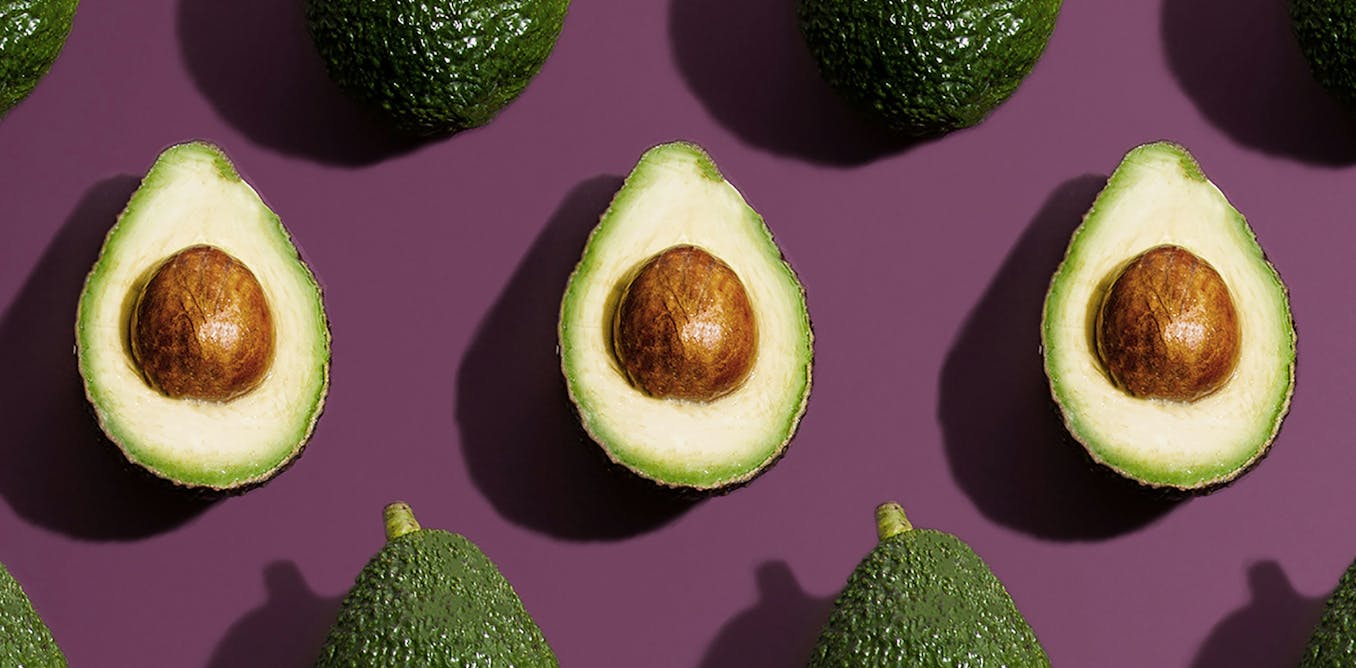
At picnics and World Cup watch parties across the United States this summer, people have been reaching for bowls of chips and guacamole. Most of that guacamole is made from avocados grown in Mexico – on orchards that, in what might come as a surprise, contribute less water pollution today than they did a decade ago.
There’s a story behind how these creamy fruits started to clean up their act. It begins with a big avocado deal between the U.S. and Mexico in 2016. And it provides evidence of how well-designed trade partnerships can do much more than promote trade.
Those benefits are worth remembering as officials from the U.S., Mexico and Canada negotiate the future of their free trade agreement.
How a trade deal cut Mexico’s farm pollution
Growing avocados on a commercial scale requires a lot of nitrogen fertilizers and other agrochemicals. Rain often washes those chemicals and fertilizers into nearby rivers and streams. Nitrogen downstream feeds algal blooms that starve rivers of oxygen and kill fish, and it can contaminate the drinking water that local communities rely on.
Brian Overcast/picture alliance via Getty Images
Economists have long argued that trade can exacerbate these environmental consequences: Wealthy countries with strict rules for their own growers buy the dirtiest goods from poorer countries with weaker regulations, relocating the pollution. Based on this “pollution haven” theory, America’s growing appetite for Mexican avocados should have left Mexico’s water dirtier.
Instead, research my co-author and I conducted shows the water got cleaner. We believe the requirements of a 2016 U.S.-Mexico trade agreement were a big reason why.

USDA
In 2016, the U.S. began allowing avocado imports from across Mexico as long as the Mexican farms met the U.S. Department of Agriculture’s strict production standards. Prior to 2016, Michoacán was the only Mexican state that exported avocados to the U.S.
The new standards required orchards to be certified before exporting their fruit to the U.S., multiple inspections at packing houses and ports, and phytosanitary certificates, which confirm that the fruit is free of the pests U.S. regulators target, such as avocado weevils and fruit flies.
To ensure the absence of pests, growers scout their fields and employ trapping devices, but they try to treat only where surveys turn up a problem. That’s because growers who rely on heavy spraying risk exceeding U.S. limits on pesticide residues, which can get shipments refused at the border.

Brian Wangenheim/Unsplash, CC BY
With a permanent monitoring program tracking avocados at every stage of production, the risk of losing access to the lucrative U.S. export market incentivized farmers to shift away from routine spraying toward a more watchful management approach that, in turn, lowered their use of pesticides and agrochemicals.
Pesticides and fertilizers go together in avocado production, so we believe the pesticide reduction made each extra unit of fertilizer less worthwhile, leading growers to apply less nitrogen and phosphorus.
As farmers applied less nitrogen and phosphorus, less of it washed off their land and into nearby waterways, meaning less water pollution was flowing downstream.
Why the avocado stipulations worked
I’m an environmental economist. Working with agribusiness researcher William Townsend at California Polytechnic State University, we compared water quality in Mexican municipalities that grow avocados with otherwise similar municipalities that don’t, both before and after the 2016 rules took effect.
If something other than the trade agreement changes were driving the change, we’d expect both sets of places to respond similarly. However, they didn’t. In fact, after the 2016 program, nitrogen concentrations in waterways near avocado-growing areas fell by about 10% in the span of a few years compared to declines in similar non-avocado-growing areas in Mexico.
This is a meaningful improvement for rivers where agricultural runoff is one of the dominant sources of water pollution. A 10% reduction in nitrogen pollution in water corresponds to about a 6.6% reduction in use of nitrogen fertilizers. With the high cost of fertilizer today, being able to reduce fertilizer need helps farmers as well as surrounding ecosystems.
John Vid/Unsplash, CC BY
There are some caveats, of course.
The U.S.-Mexico market for avocados is unique. It has large demand for a high-value crop with a single dominant buyer – about 90% of the 1.2 million metric tons of avocados Mexico produced in 2025 went to the U.S. – and a credible system of phytosanitary certification for Mexican avocados. So, the same trade policy in conjunction with enforceable standards might not be as effective for other crops in other developing countries.
Avocado farming in Mexico also has some other serious drawbacks, including connections to drug cartels in some regions. The expansion of avocado groves has also driven deforestation and increased water use, which can be a problem in regions where water is already scarce. But the 2016 agreement showed that trade policies can help reduce avocado growers’ environmental impact.
Lessons for the new trade deal talks
As the U.S., Canada and Mexico negotiate the next iteration of a free trade pact or pacts, agriculture is one of the negotiating topics. Our research shows that the conditions stipulated by the U.S. on products it buys can ripple across the border.
So, as you reach for the chips and guacamole, remember that you’re dipping into evidence that what Americans choose to import – and the conditions trade deals impose – can shape the environment far beyond the U.S. border.