Observed annually on November 11, Veterans Day is a national federal holiday dedicated to honoring all American military veterans, botUS Veterans Day: Honoring Service and Sacrifice and Understanding the History and Meaning of Veterans Day
In a profoundly moving national gathering, the United States commemorated Veterans Day 2026, centering the day’s activities on a solemn Presidential wreath-laying at the Tomb of the Unknown Soldier in Arlington National Cemetery. While modern commerce marks the day with consumer events, the heart of the national observance remained a precise, emphatic display of gratitude for the men and women who served in the U.S. Armed Forces, living and deceased. The day’s events bridged modern technical service with the historic armistice that defined the holiday over a century ago.
The Silent Wreath: Inside the National Ceremony
2026 National Veterans Day Observance: Key Ceremony Elements
+--------------------------------------------------------------------------+
| LOCATION: Tomb of the Unknown Soldier & Memorial Amphitheater            |
| KEY ACTS: Presidential Wreath-Laying; Parades of Flags; Speeches       |
| SECURITY: Heightened checkpoints, pedestrian freezes during VIP movement |
| MODERNELEMENTS: Live-streamed to active-duty personnel worldwide       |
+--------------------------------------------------------------------------+
The heart of America’s gratitude beats at 11:00 a.m. sharp on November 11. In 2026, the silence that fell over Arlington National Cemetery was emphatic. This is not a moment for applause, but for collective, reverent recollection.
A sharp, solitary bugle call—”Taps”—echoed across the thousands of uniform white headstones as the President of the United States, flanked by the Secretary of Veterans Affairs and senior military commanders, advanced to the Tomb of the Unknown Soldier. The placing of the wreath is the most potent symbolic act of the day, a gesture that says: Your sacrifice may be anonymous, but it is not forgotten.
Following the wreath-laying, the ceremony shifted to the nearby Memorial Amphitheater. There, a parade of flags from veteran service organizations wound through the columns, creating a tapestry of service history. Keynote speakers focused on the year’s theme, highlighting the evolving nature of service—from traditional battlefield roles to cyber defense and space operations—while reaffirming the unchanging commitment of those who swear the oath.
The Historical Anchor: From Ceasefire to National Gratitude
Understanding Veterans Day requires journeying back to a moment of chaotic relief.
History Timeline: From Armistice to Veterans Day
+--------------------------------------------------------------------------+
| 1918 (Nov 11, 11 AM): WWI Armistice signed, ending major hostilities.    |
| 1919 (Nov 11): President Wilson proclaims first "Armistice Day".         |
| 1938 (May 13): Congress makes "Armistice Day" a legal annual holiday.   |
| 1954 (June 1): Renamed "Veterans Day" to honor all American veterans.    |
+--------------------------------------------------------------------------+
1918: A Date Fixed in Time
The original observance was not called Veterans Day; it was Armistice Day. It marked the cessation of hostilities on the Western Front of World War I, which went into effect at the 11th hour of the 11th day of the 11th month in 1918. For millions, that moment represented the beginning of a hard-won peace.
Expanding the Legacy
Following World War II and the Korean War, it became clear that the legacy of November 11 needed to broaden. America had millions of new veterans from new generations and new kinds of conflicts. In 1954, responding to pressure from veteran service organizations, President Dwight D. Eisenhower signed the legislation that replaced “Armistice” with “Veterans.” The shift ensured the day would honor not just those who fell in “The War to End All Wars,” but all who served—living or dead—in war and peacetime.
The Brief Return to October
An interesting footnote in the holiday’s history is the Uniform Monday Holiday Act of 1968. To create convenient three-day weekends, Congress moved the federal observance of Veterans Day to the fourth Monday in October, beginning in 1971. The move was met with immediate, vigorous opposition from veterans and many states. The emotional connection to November 11 was too strong. By 1975, President Gerald Ford signed a law returning the holiday to its original, meaningful date, where it has remained since 1978.
Two Sides of the Day: Community and Recognition
Beyond the solemnity of Arlington, Veterans Day 2026 was defined by thousands of unique, celebratory events across the nation. While the official ceremony is solemn, local communities often use the day as a jubilant thank-you.
Parades and Public Gratitude
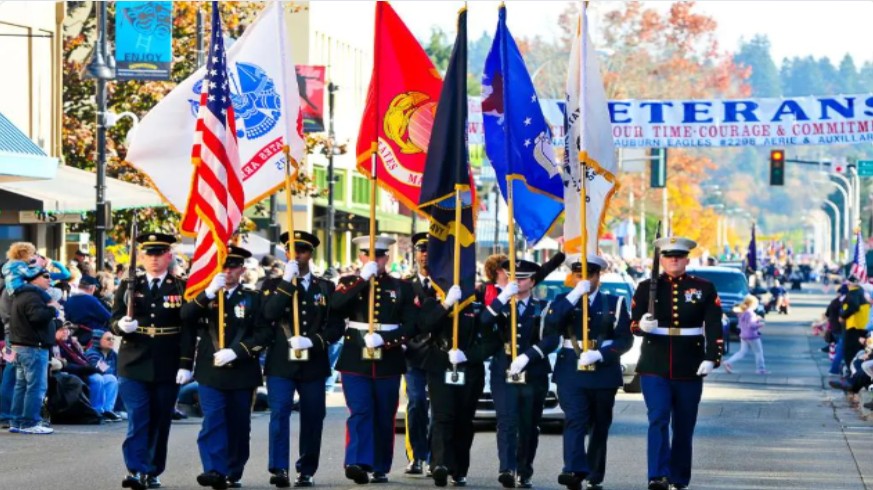
Veterans Day parades are vibrant spectacles of local pride, showcasing high school marching bands, vintage military vehicles, and formations of local veteran groups. In major cities, these turn into significant public events, while smaller towns offer intimate, heartwarming displays of community acknowledgment. These parades transform “service” from an abstract concept into visible, local neighbors.
Discounts as a Gesture
A controversial but undeniable modern tradition is the commercialization of the day through “Veterans Day discounts.” Major retailers and restaurants offer complimentary meals, significant price reductions, or exclusive services to those with valid military ID. While some find the commercial link misplaced, many retailers view it as a tangible, year-round commitment to recognizing the financial sacrifices inherent in military service, transforming gratitude into operational support
US Veterans Day celebration Picture by NARA and DVIDS Public Domain Archives