ABUJA, Nigeria — Nigeria has taken a historic step toward decentralizing its national security architecture after all 36 State Houses of Assembly approved a constitutional amendment allowing individual states to establish and operate their own police forces alongside the existing federal Nigeria Police Force.
On Wednesday, November 18, 2026, the National Assembly formally transmitted the Constitution of the Federal Republic of Nigeria (Sixth Alteration) Bill, 2026 to President Bola Tinubu for presidential assent. The unanimous endorsement by all 36 state legislatures surpasses the constitutional threshold of 24 states required under Section 9(2) of the 1999 Constitution, bringing decades of debate over state police in Nigeria to the brink of reality.
Why Critics Warn Against State Police: Fears of Political Intimidation and Abuse
Despite unanimous legislative backing, civil society groups, opposition figures, legal analysts, and many citizens have voiced strong opposition to decentralizing policing—warning that placing armed security forces under state-level control carries severe democratic and operational risks:
- Political Intimidation and Oppression: The foremost concern among critics is that state governors and influential local power brokers could weaponize state police forces to harass political opponents, restrict opposition rallies, intimidate voters during elections, and silence critics or independent journalists.
- Funding Shortfalls and Unequal Standards: Analysts question whether financially strained states can sustainably pay salaries, fund training, and equip modern police units—warning that poorer states could fall behind wealthier ones or see unpaid officers become vulnerable to corruption.
- Jurisdictional Clashes and Ethnic Tensions: Opponents also warn of overlapping authority and friction between federal and state police commands, as well as potential bias in regions with deep ethnic or communal divides.
Why Supporters Back the Reform: Faster Local Response to Insecurity
Proponents—including state governors, federal lawmakers, and advocates of fiscal and security federalism—argue that a single centralized police force commanded from Abuja has struggled to contain widespread kidnapping, banditry, terrorism, and communal violence:
- Localized Intelligence and Rapid Deployment: Supporters maintain that officers recruited from local communities understand the terrain, languages, and intelligence networks far better than officers posted from distant regions, enabling faster responses to rural and urban crime.
- Empowering State Chief Security Officers: Under the current system, governors are designated as chief security officers of their states but lack direct operational control over federal police commissioners. Supporters argue state police will close this accountability gap.
What Happens Next: Safeguards and the National Policing Bill
Presidential Chief of Staff Femi Gbajabiamila confirmed that President Tinubu will review the constitutional amendment alongside the Attorney-General of the Federation prior to a formal signing ceremony. Even after presidential assent, states will not immediately deploy officers: lawmakers must still finalize the separate National Policing Bill, which is expected to define operational boundaries, recruitment standards, oversight councils, and strict constitutional safeguards against partisan abuse.
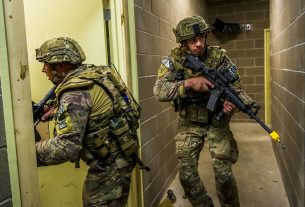
Nigeria Police Force Headquarters (Louis Edet House) Abuja Gemini AI Generated Picture