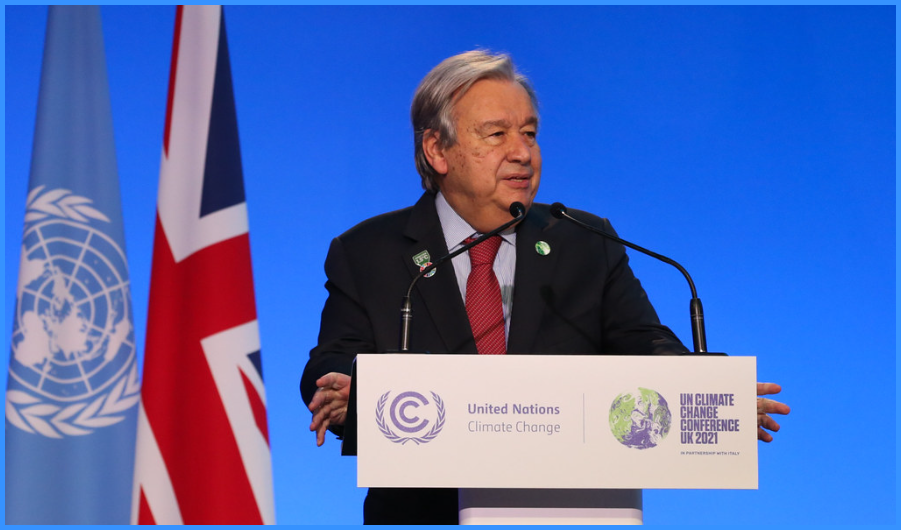
UNITED NATIONS — United Nations Secretary-General António Guterres has issued an urgent call for world leaders to treat social inclusion as an essential driver of global economic performance, warning that excluding populations amid rapid digital, energy, and AI transformations risks severe long-term financial consequences.
The statement accompanied the release of the United Nations Department of Economic and Social Affairs (UN DESA) World Social Report 2026: The New Economics of Social Inclusion, published on October 15, 2026.
“Inclusive societies are more productive, resilient, and prosperous,” Secretary-General Guterres stated. “Transformations are inevitable. Inequality and exclusion are not.”
The Economic Cost of Delayed Inclusion
The flagship report challenges the traditional framework treating social expenditure as a secondary byproduct of growth. Instead, the UN’s analytical modeling demonstrates that delaying investments in universal social protection, digital access, and skill building imposes a direct drag on global gross domestic product (GDP).
Cost of Delay vs. Return on Investment (UN DESA Data)
+-------------------------------------------------------------------------+
| DELAYED INVESTMENT PENALTY: Up to 12% loss in cumulative output over   |
|                             two decades if investments are stalled 10 yrs|
| INFORMAL WORK FORCE:       58% of global workers remain informal       |
| DIGITAL DIVIDE:            2.2 billion people still lack internet access |
| YOUTH INACTIVITY:         27% of young women (15-24) not in employment, |
|                             education, or training                      |
+-------------------------------------------------------------------------+
Specifically, UN economists found that a 10-year delay in building comprehensive social safety nets reduces cumulative discounted economic output by approximately 12 percent over 20 years compared to countries that invest early.
Empirical Findings: Divided Progress Across 168 Nations
Examining a 25-year dataset across 168 countries, the report concludes that technological progress and energy transitions do not automatically result in shared wealth.
Core Policy Pillars of the "New Economics of Social Inclusion"
+-------------------------------------------------------------------------+
| 1. CAPABILITIES & ADAPTATION                                           |
|    Expand access to lifelong education, AI skills, and resilient healthcare|
+-------------------------------------------------------------------------+
| 2. UNIVERSAL CONNECTIVITY & ENERGY                                     |
|    Ensure affordable broadband and off-grid sustainable energy access   |
+-------------------------------------------------------------------------+
| 3. LABOUR MARKET MODERNIZATION                                          |
|    Enforce equal pay, portable benefits, and active re-skilling programs |
+-------------------------------------------------------------------------+
| 4. SHARED PROSPERITY & FISCAL REFORM                                    |
|    Strengthen progressive taxation and collective wage institutions     |
+-------------------------------------------------------------------------+
While high-tech industries and automated platforms have expanded economic output, wealth concentration has widened. Income inequality rose in more than 50 countries between 2000 and 2024, including 23 high-income economies.
Strategic Shift in Global Development Planning
To counter the growing divide created by artificial intelligence deployment and clean energy transitions, the UN calls for a systemic transition from raw “structural growth” toward “socially inclusive transformation.”
Systemic Policy Evolution Outline
+-------------------------------------------------------------------------+
| TRADITIONAL DEVELOPMENT         | NEW INCLUSIVE FRAMEWORK               |
+-------------------------------------------------------------------------+
| Single Degree/Credential        | Continuous Lifelong Learning          |
| Fixed Wage Employment           | Diversified & Portable Livelihoods    |
| Extractive Data Systems         | Regenerative & Shared Digital Systems |
| Reactive Government Spending    | Anticipatory & Proactive Protection   |
+-------------------------------------------------------------------------+
Assistant Secretary-General for Policy Coordination Bjørg Sandkjær emphasized during the report’s presentation in New York that “social inclusion, while leaving no one behind, is not only the right thing to do, it’s the smart thing to do.”
The UN report urges international financial institutions and bilateral lenders to grant developing nations greater fiscal space through debt relief and affordable long-term financing, warning that national competitiveness in the late 2020s will be defined by how effectively economies integrate marginalized populations into modern industries.
United-Nations-Secretary-General-Antonio-Guterres-Flickr-Picture-by-UNclimatechange.