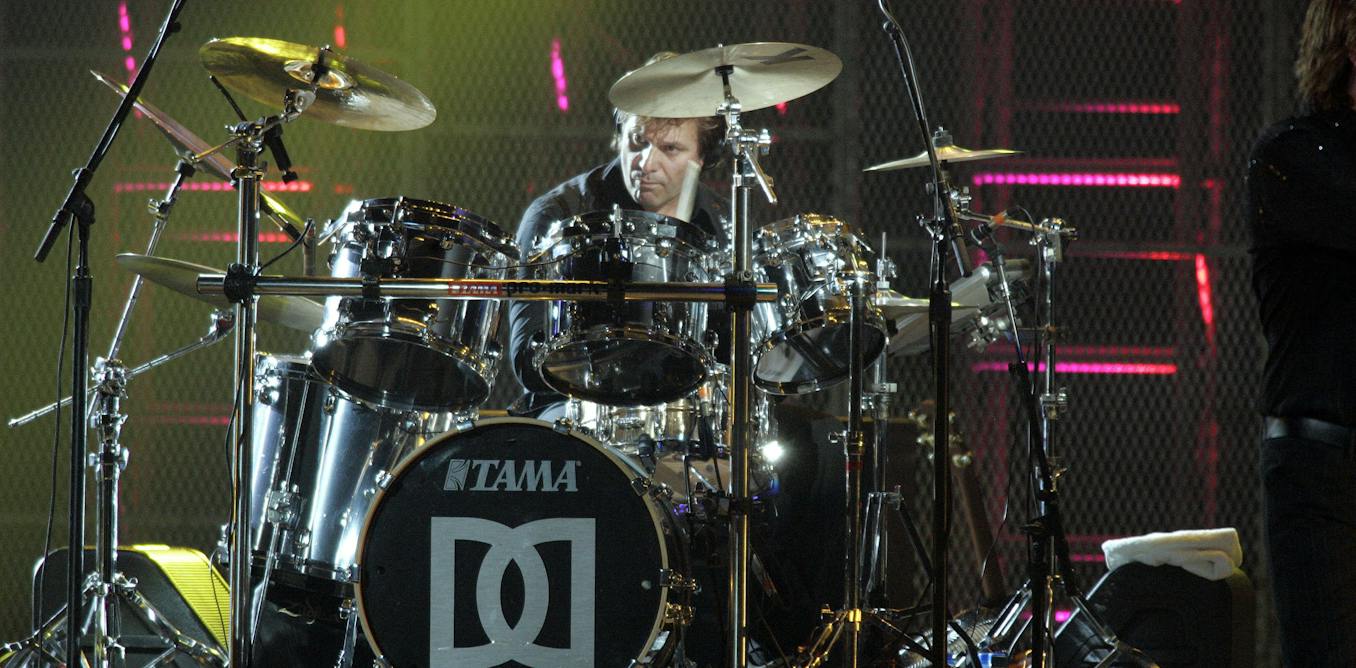
After more than 40 years performing with Duran Duran, drummer Roger Taylor has announced he’s retiring because of his worsening tinnitus.
His decision highlights the effect that decades of exposure to loud music can have on musicians and even music lovers. It also illustrates the profound impact tinnitus can have on someone’s relationship with sound and their ability to continue doing something they love.
Tinnitus affects an estimated 740 million adults globally. It’s not actually a disease, but rather a symptom associated with changes in the hearing system and the way the brain processes sound. It is commonly described as a ringing in the ears, though others describe hearing a buzzing, hissing, whistling or humming.
Tinnitus can develop for a number of reasons. One of the most important preventable risk factors for tinnitus and hearing loss is exposure to loud noise. For professional musicians, who are often surrounded by loud or amplified instruments throughout their career, this exposure can accumulate over years of rehearsals, performances and studio recordings.
Research has even found that musicians, whether playing classical, pop or rock music, are more than three times as likely to experience tinnitus as non-musicians. They also face a substantially increased risk of noise-induced hearing loss.
The relationship between sound exposure, hearing damage and tinnitus is complex.
Exposure to excessive sound can damage the delicate sensory structures within the inner ear, contributing to hearing loss and tinnitus. Although symptoms can settle, repeated or intense exposure can permanently damage those cells. Once lost, they cannot grow back and hearing may not recover.
However, risk doesn’t only depend on sound intensity and duration. Factors including previous noise exposure, age, existing hearing loss, genetics and medical conditions such as cardiovascular disease and diabetes, have been linked to an increased risk of both hearing loss and tinnitus.
Managing tinnitus
There’s currently no universally effective treatment or cure for tinnitus. One reason for this is that tinnitus is not a single condition with one underlying cause.
However, the absence of a cure doesn’t mean nothing can be done. There’s a wide range of evidenced-based management options that can significantly reduce tinnitus’s impact on daily life and improve emotional wellbeing and quality of life.
Crystal Eye Media/ Shutterstock
For people who have tinnitus alongside hearing loss, hearing aids can not only improve environmental sounds and communication, but they may also make tinnitus less noticeable.
Some people may find that introducing gentle background sounds, such as music, natural sounds or white noise, makes their tinnitus less noticeable, particularly in quiet environments.
One of the most effective strategies for reducing tinnitus distress is cognitive behavioural therapy (CBT). Rather than attempting to eliminate the tinnitus sound itself, CBT helps people change how they respond to it. This can help provide sustained improvements for the distress, anxiety and poor sleep that tinnitus can cause.
Research is also continuing to advance our understanding of tinnitus, helping drive more personalised approaches to care and aiming to make tinnitus support more accessible through digital technology.
There are also practical steps that musicians and music lovers can take to protect their hearing and lower the risk of developing tinnitus.
High-fidelity or custom-moulded earplugs reduce sound levels while preserving much of the clarity and balance of music. Scheduling regular quiet breaks during rehearsals or gigs, keeping in-ear monitors and headphones at safe levels, increasing distance from loudspeakers and other intense sound sources where possible and avoiding sudden loud sounds, all reduce risks of hearing damage.
Installing acoustic screens, elevating brass and percussion sections, increasing stage spacing and rotating seating during rehearsals can also help reduce musicians’ exposure to loud sound.
Roger Taylor’s decision to step back is a reminder that hearing is one of a musician’s most valuable assets. Protecting it should be an essential part of making and enjoying music.

Eldre Beukes does not work for, consult, own shares in or receive funding from any company or organisation that would benefit from this article, and has disclosed no relevant affiliations beyond their academic appointment.