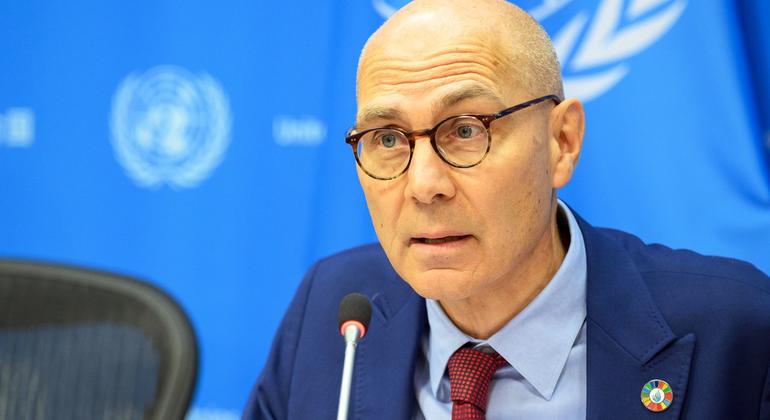
“The situation in the DPRK is a human rights crisis and it is high time the international community treats it as such,” Mr. Türk said.
Ongoing gross human rights violations in the country – known more commonly as North Korea – some of which may amount to crimes against humanity, continue to be documented by his office, OHCHR, he added.
Concerns over military spending
“I am particularly worried about the extreme prioritisation of security and military investments at the expense of desperately needed social services and sustainable development in the DPRK,” Mr Türk said.
“There needs to be accountability in all its forms, including non-judicial forms, for the grave violations that have plagued the DPRK for decades,” he added.
Truth and justice efforts
Speaking at a press conference on Wednesday in Seoul, Republic of Korea, Mr Türk said “I heard from escapees who are working hard to build a new life in South Korea but live with daily yearning and fear for their loved ones in the DPRK.”
Through documentation work, the Human Rights Office is preserving and analysing information that is essential for any truth, justice and accountability efforts.
The UN Human Rights Office in Seoul is also working to ensure that the suffering of victims and their families is not erased, including through memorialisation and truth-telling.
Encouraging engagement
“At the same time, we are engaging with DPRK officials wherever there are openings, such as on the rights of people with disabilities, in connection with their participation in UN human rights treaty body reviews in Geneva,” Mr. Türk said.
“These are small but important steps towards dialogue and confidence building,” he added.
At the same, Mr. Türk said the arrival of a women’s football team next week from DPRK was encouraging.
But he warned “urgent steps are needed to find ways to exchange letters, resume family contacts and reunions, and release information clarifying the whereabouts and fate of disappeared and abducted people.”