(Nairobi) – South Sudan’s military and opposition forces are blocking humanitarian access and unjustifiably ordering civilians to evacuate populated areas, Human Rights Watch said today. Since late 2025, the military has issued multiple evacuation orders, at least three of them sweeping in nature and the opposition forces at least three, forcing hundreds of thousands of civilians to flee.
“Repeated pressure, from both South Sudanese authorities and opposition forces, on civilians to evacuate populated areas is placing hundreds of thousands of people in harm’s way,” said Nyagoah Tut Pur, South Sudan researcher at Human Rights Watch. “Warring parties should not force people to flee towards further danger and destitution and are obligated to protect civilians whether or not they evacuate areas of military operations.”
Since December 2025, clashes between Sudan’s military, the South Sudan People’s Defense Forces (SSPDF), and the Sudan People’s Liberation Army in Opposition (SPLA/IO), and their respective allies have intensified in the country’s northeastern Jonglei state. At least 280,000 people have been displaced, many fleeing government bombardments, fearing government and opposition forces abuses, or following evacuation orders.
Based on interviews with humanitarian actors, United Nations human rights experts, and media reports, Human Rights Watch understands that in the days and weeks after the evacuation orders, the government carried out indiscriminate aerial bombardments of the areas under evacuation orders. Forces from both sides have reportedly committed abuses, including killings and raping of civilians, as well as looting and burning of civilian property, Human Rights Watch said. Deliberate, targeted attacks on civilians and civilian property, unlawful killings, and sexual violence may constitute war crimes and crimes against humanity.
On December 29, 2025, government forces bombarded the town of Lankien, in Nyirol county, Jonglei state, an opposition held area, hitting the airstrip, but also the nearby market killing 11 civilians and injuring 12 including children and older people, according to the medical agency Médecins Sans Frontières (MSF).
On January 25, 2026, the military issued an order for civilians, aid workers, and UN personnel to evacuate opposition-controlled areas in Nyirol, Uror, and Akobo. This followed a narrower order on December 30 to “vacate around military barracks and assembly points.”
On March 6 the military ordered civilians, UN personnel, and aid organizations, to evacuate Akobo County. Many of the 270,000 people in the area had already been displaced. Following the order, most of the population fled, including 110,000 people into neighboring Ethiopia. Several aid groups were forced to evacuate.
On March 15, the Nasir County commissioner in Upper Nile state in a statement, ordered civilians and aid workers in Mandeng town and surrounding villages, “under opposition control” to relocate within 72 hours, saying, the area would be the next target of the government’s counteroffensive. The commissioner said this was a follow-up to a similar March 1 order.
On December 27, 2025, the SPLA/IO warned civilians in northern Jonglei to flee to towns under opposition control including Pieri, Motot, and Palony. They also instructed civilians to stay indoors during shelling, and to avoid clothing associated with the army.
On January 8, 2026, civilians in Ayod county fled after armed actors reportedly issued a 72 hour evacuation order. On January 12, the opposition ordered humanitarian workers and civilians in “Bor, Ayod, Gaatdiang, Poktap, and surrounding areas” to leave immediately. On January 16, it ordered civilians and aid workers in “designated areas” including Bor, Duk, and Poktap, to vacate areas near military bases within 72 hours.
Under international humanitarian law, also known as the laws of war, parties to a non-international armed conflict may not order the displacement of civilians for reasons related to the conflict unless the security of the civilians involved or imperative military reasons demand it. Forced displacement of the civilian population is a war crime.
For an evacuation order to be lawful the displacement must be necessary, not issued for military convenience or advantage, temporary, and civilians must be able to return once hostilities end. Those ordering an evacuation need to ensure that displacement protections are in place and that displacement occurs in a manner consistent with returning the population after the threat is no longer present and consistent with the protection of the civilians’ human rights.
Evacuation orders differ from advance warnings under international humanitarian law, the latter being an obligation to give advanced and effective warning of impending targeted attacks that might affect a civilian population, unless the situation does not permit it. In contrast, evacuation orders are not necessarily linked to a single specific action.
Civilians who remain in place after an order to evacuate or warning of impending military actions do not lose their civilian status nor the protections of international humanitarian law and may not be subject to targeted or indiscriminate attacks, nor retaliated against for failing to leave.
The orders to evacuate have also occurred while both parties and their allies have attacked humanitarian infrastructure and imposed severe obstacles on humanitarian access, deepening civilian suffering.
On February 3, government bombardments hit an MSF hospital in Lankien, Nyirol county, injuring a staff member and destroying the hospital’s warehouse and medical supplies. MSF said it had provided coordinates for the hospital to the warring parties. On the same day, armed fighters looted an MSF health facility in Pieri, Uror county. UN Children’s Fund reported the suspension of at least 28 health and nutrition facilities and 17 incidents of looting of humanitarian supplies between January and March.
The government in particular has imposed staunch restrictions on access for humanitarians to opposition-controlled areas. In the first two months of the year the government-imposed a no-flight zone in opposition-held areas, including Lankien, Pieri, and Akobo, preventing the delivery of critical supplies and lifesaving evacuation of critically ill patients, the UN and MSF reported.
Government and opposition authorities have also issued contradictory and coercive administrative measures effectively restricting how and where aid can be delivered, Human Rights Watch said.
In a March 23 letter to aid agencies, the opposition-aligned county commissioner of Ulang in Upper Nile state warned that humanitarian agencies accessing the government-controlled town center would be considered government aligned and that their permission to move within the county would be suspended. The next day, the government-allied county commissioner of Ulang ordered aid organizations to relocate to Ulang town by March 31. On April 8, the same commissioner issued another letter to five international organizations giving them 72 hours to relocate to Ulang town or be treated as hostile to the government and face “legal and security penalties.”
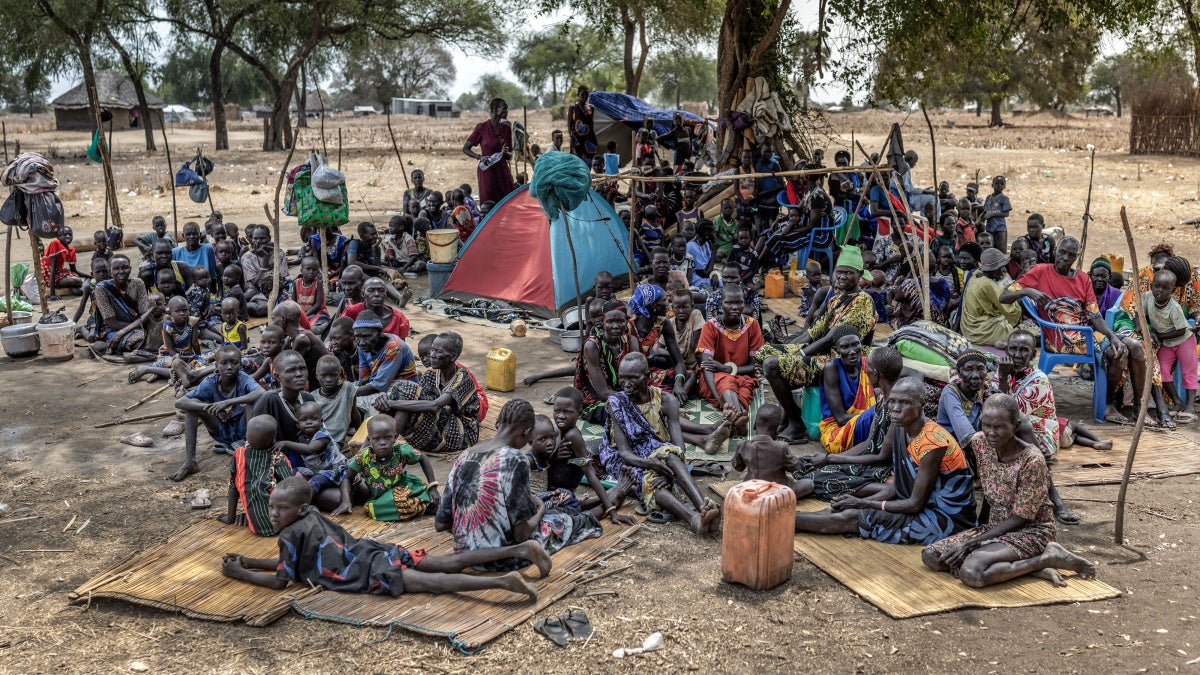
Civilians forced to flee are facing dire humanitarian conditions. In Nyatim, Nyirol county, for example, about 3,000 displaced people who fled violence in Lankien and Pieri are sheltering in swamp areas without food or medical care, with ongoing government blocks on aid access, MSF said. It also said that at least 58 people had died over a four-week period. Several conflict-affected areas have been projected at risk of famine.
All parties to a conflict are required to allow and facilitate humanitarian assistance.
“South Sudan’s authorities appear to be instrumentalizing aid access to meet their own agenda, leaving hundreds of thousands of civilians in desperate need,” Pur said. “International and regional actors should ensure accountability for the massive man-made humanitarian crisis and ongoing attacks on civilians and aid restrictions.”