– Advertisement –
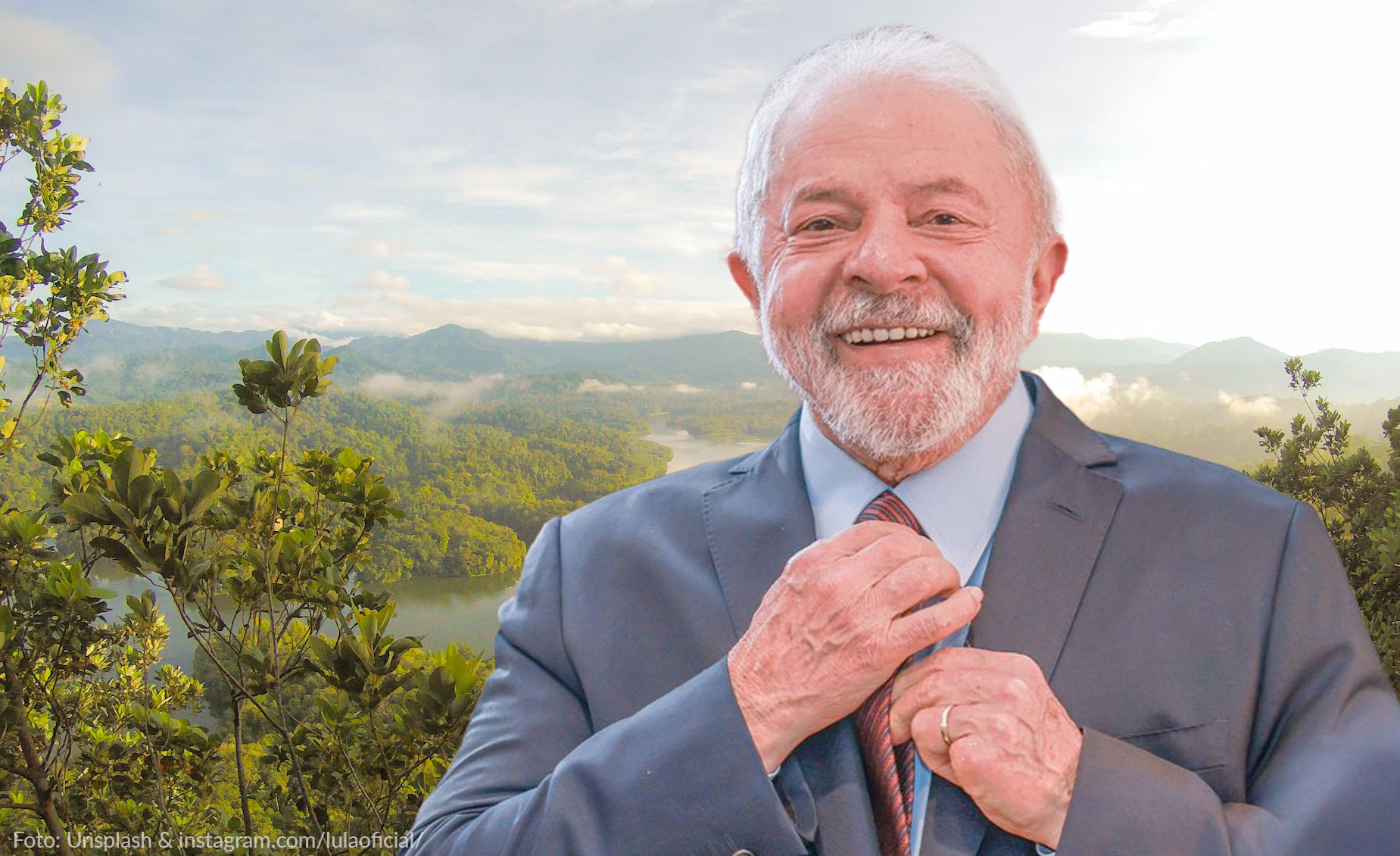
For years, the Amazon rainforest has been being cleared. The concern is that this unique ecosystem could collapse. However, Lula da Silva’s election as president brought hope. He announced that he would put an end to deforestation in the Amazon. And he appears to be keeping his promise. The latest satellite data shows that deforestation in the Amazon is at its lowest level since accurate records began in 2026.
The Amazon rainforest is one of the Earth’s largest carbon sinks. This makes it particularly important in the fight against climate change. And yet, illegal deforestation continues to occur time and again. This was particularly the case under the right-wing nationalist former president, Jair Bolsonaro. During his time in office, rainforest deforestation rose by around 75 per cent.
When he took office, the current president, Lula da Silva, promised to halt deforestation. More than three years into his term, the rate of deforestation has reached its lowest level in a decade. According to Brazilian authorities, based on satellite data, 2,874 square kilometres of rainforest were destroyed between August 2025 and July 2026. This was 37 per cent less than in the previous year. Deforestation has thus reached its lowest level since accurate records began in 2016. By way of comparison, around 11,500 square kilometres of forest were cleared in 2022 and as much as 13,200 square kilometres in 2021.
President Lula da Silva aims to completely halt illegal deforestation in the Amazon by 2030.
“These figures show that we can achieve this goal if we maintain the current pace, proceed with the same level of commitment we have shown so far, and provide the necessary resources,” he explained in São Paulo. “We take the issue of climate change very seriously in this country, because we are not climate change deniers.”
First successes after just six months: rainforest deforestation falls by 33.6 per cent
After six months in office, the BBC reported initial successes in the fight against rainforest deforestation. Compared with the first half of the previous year, deforestation fell by 33.6 per cent. In June 2023, 41 per cent less forest was destroyed than in the previous year. Brazil’s Environment Minister, Marina Silva, attributes this to Lula’s successful environmental policy.
In the first year following his election, rainforest destruction fell by 64 per cent (2022 and 2023); three years later, at 2,874 square kilometres, the lowest figure since accurate records began in 2016 was recorded.
Lula’s potential to reduce deforestation by 89 per cent
Lula’s goal of ending deforestation by 2030 is a major challenge. This is because deforestation reached alarming levels under his predecessor, Jair Bolsonaro. The new conservation plan, published by President Lula in early June 2023, is intended to help achieve this goal. Among other measures, it provides for the confiscation of half of all illegally used land within protected areas, as well as tougher penalties for illegal deforestation.
Furthermore, the Brazilian president is calling on other countries – particularly the wealthy West – to contribute financially to saving the ‘green lungs of the Earth’ in order to tackle the climate crisis on a global scale.
A study confirms that Lula’s plans have the potential to actually reduce deforestation in the Amazon by 89 per cent.
Under Bolsonaro, the Amazon shrank by an area more than twice the size of Vienna – every month
This is desperately needed, as the Amazon has been severely affected in recent years. When Lula first moved into the presidential palace in 2003, he launched an ambitious programme to save the rainforest. He and his successor, Dilma Rousseff – who, like Lula, hails from Brazil’s left-wing Workers’ Party – succeeded in reducing deforestation by 80 per cent to an all-time low. However, when Bolsonaro came to power in 2019, Brazil underwent a U-turn in its environmental policy.
Bolsonaro readily granted concessions to allow corporations to clear the rainforest for soya and palm oil cultivation, as well as for cattle farming and mining. Land cleared illegally was legalised by Bolsonaro, and efforts to tackle the forest fires were half-hearted. Deforestation rose sharply by 70 per cent under his government.
For the first time, the Amazon is emitting more CO₂ than it can absorb
Under Bolsonaro, the Amazon’s carbon balance has reversed: for the first time, it is emitting more CO₂ than it can absorb. This was revealed by a study conducted by researchers at the French National Institute for Agricultural Research. The scientists mainly analysed satellite data documenting the plant biomass in the rainforest and its deforestation. The result: the Amazon basin released around 16.6 billion tonnes of CO₂ into the environment, but absorbed only around 13.9 tonnes. This difference of 2.7 billion tonnes is roughly equivalent to Austria’s emissions over 35 years.
Without a well-preserved Amazon rainforest, the entire ecosystem could collapse
At present, the Amazon has a perfectly functioning water cycle: inland regions actually receive too little rainfall for a tropical rainforest. However, the trees draw groundwater upwards; it evaporates and falls as rain once more over the vast forest area. This cycle could be permanently disrupted by further deforestation. The rainforest would slowly die off, turning into a savannah and altering the climate across the globe.
This process would release as much CO₂ as the entire world consumes in seven years. The unique ecosystem, which is home to 10 per cent of all species, would be irretrievably lost, and with it the rainforest’s ability to sequester CO₂. Scientists estimate that this tipping point is reached when deforestation levels reach 20 to 25 per cent. We are currently at 18 per cent.
Anti-deforestation raids
Just a few days after taking office, Lula’s government took action and carried out inspections in the rainforest to combat illegal deforestation. As reported by Reuters, inspections were carried out in areas all located within the Cachoeira Seca indigenous reserve, where deforestation is strictly prohibited.
Whilst deforestation is declining, the number of fires continues to rise, as satellite monitoring shows. It is not possible to determine whether these are due to natural causes or arson.
Lula Da Silva
In October 2026, Lula will stand against the son of former President Bolsonaro – Flávio Bolsonaro – in the elections.
The rights to the content remain with the original publisher.
Post Views: 28
– Advertisement –