The French government is expected at any moment to unveil troubling draft legislation to address so-called entryism: the idea that certain groups seek to infiltrate state institutions to influence and promote an ideological agenda. If adopted, the bill would further erode the country’s already shrinking civic space.
The entryism bill would aim to strengthen the 2021 Law Reinforcing Respect for the Principles of the Republic, often referred to as the “separatism law,” which grants the government broad powers to shut down nongovernmental groups by ministerial decree. It also forces organizations to sign a “Contract of Republican Engagement” conditioning the receipt of public funds on vague requirements, including refraining “from any action that undermines public order.” These tools have created an environment of intense pressure and self-censorship among civil society.
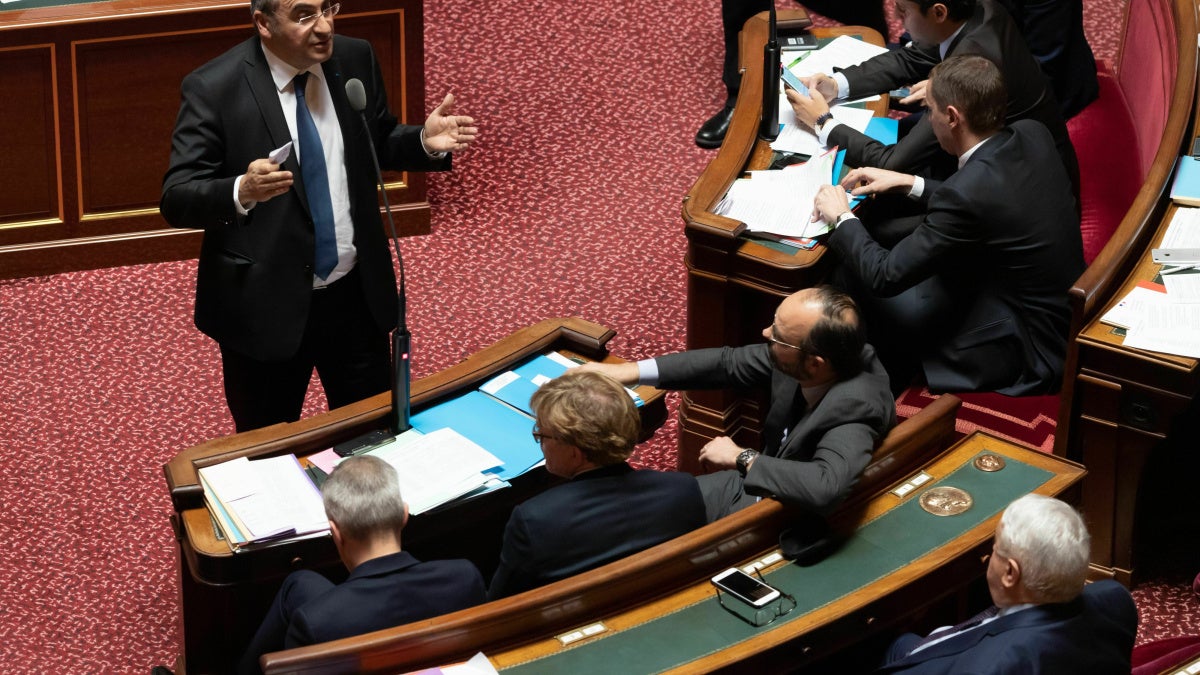
The French Senate passed on May 5 the first reading of a separate, highly restrictive bill initiated by conservative Senator Bruno Retailleau specifically targeting “Islamist entryism.” While Retailleau’s bill is unlikely to secure enough support for the next phase of the legislative process, it serves as a blueprint for what the government intends to incorporate into its own legislation.
Interior Minister Laurent Nuñez has said that the government bill will closely align with Retailleau’s proposal. The Council of State is currently reviewing the government’s entryism bill which will then be discussed by the Council of Ministers; if approved, the draft will be presented to the Parliament.
Although the final draft is not public, Nuñez has outlined several key provisions raising serious human rights concerns. They would grant the Ministry of Interior and local state-appointed governors unprecedented powers, broadening grounds for dissolution of nongovernmental groups. It would also allow the government to freeze nongovernmental groups’ assets and will expand state powers to enforce compliance with the Contract of Republican Engagement.
CIVICUS Monitor, a global alliance tracking civic freedoms across the globe, downgraded France’s civic space status from “restricted” to “obstructed” in December 2025. The government’s proposed law would compound the problem.
The French government should halt this dangerous downward spiral, scrap the bill, and take steps to protect civic space. As the European Commission prepares to publish its annual Rule of Law Report, it should issue clear, enforceable recommendations that directly address respect for rights to freedom of thought, expression and assembly and democratic backsliding in France.