– Advertisement –
The world today seems more unstable than it has been for a long time: wars in Iran, Ukraine, the Gaza Strip and Sudan, plus countless minor military conflicts that barely make the news in Europe. So is war an inevitable part of human nature? Peace researcher Werner Wintersteiner disagrees: wars are not a law of nature, but a historical product of social, economic and political conditions. They only emerged with the increasingly complex organisational forms of societies and can therefore also be abolished.
War is not a law of nature; it can be abolished
Kontrast: Wars in Iran, Ukraine, the Gaza Strip and Sudan – the state of the world does not look very good. After a prolonged period of relative peace, we are facing the threat of a new wave of war and violence. Have peace education and peace research failed? Or is waging war simply a human trait?
Werner Wintersteiner: Neither. One might perhaps put it this way: it is yet another defeat for peace research and proof of its necessity. It is not that peace research lacked ideas, but that it played no role in realpolitik. Many insights into how we can live together better – despite differing interests and power relations – were simply ignored.
But one cannot draw conclusions about human nature from this. Wars are not a product of human psychology, but of human society. A great many economic, political and cultural factors come into play. Clearly, humans are perfectly capable of waging war. However, wars did not exist from the very beginning, but only emerged from a certain stage of human development.
For war requires complex organisation and logistics. I sometimes say, somewhat cynically, that it takes a great deal of ‘love’ to wage war. In that sense, wars are a historical product and an institution that can also be abolished.
A frequently cited analogy is slavery. It was abolished as an institution, even though it still exists in practice. But it is illegal today and no one openly admits to practising it. A similar process is being attempted with regard to war. In a sense, this has even been successful. The League of Nations had already sought to outlaw war. With the founding of the United Nations, the prohibition of war was then essentially put into practice. The international community – that is, all the nations of the world – have committed themselves to renouncing war as a means of politics. However, this excludes self-defence, and later the concept of humanitarian intervention was added. The idea behind this was to protect people living under a terrorist regime.
In other words, wars have been successfully outlawed to a certain extent, both legally and, for a long time, politically. This is certainly an achievement that should not be forgotten. The fact that this achievement has not yet led to war actually being ‘abolished’ is another matter entirely.
Kontrast: It seems, however, that this condemnation of war is becoming increasingly diluted. Why is that?
Werner Wintersteiner: That is certainly linked to how states are constituted. When more and more societies are moving towards dictatorship, this also has implications for foreign policy. Especially when it comes to major states, such as the US and, of course, Russia, to name just these two examples. We must not forget that even those states which see themselves as guardians of human rights and peace – namely the European states – are increasingly presenting their own interests as the interests of humanity.
This was evident, for example, in the attack on Iran, which was, in every respect, a complete disregard for international law. Very few European countries actually criticised it in those terms.
International law permits legal interventions under certain conditions
Kontrast: In your opinion, is there a situation in which a military attack from outside is legitimate?
Werner Wintersteiner: There is a form of intervention that is compatible with international law. In such cases, the UN Security Council passes a resolution and deploys a force. However, there are several conditions for this: the cause must be just. Those intervening must not have any self-interest. There must be a realistic prospect of success, and the means must be proportionate. This raises the question, for instance, of whether the bombing of a state can ever be the appropriate means of supporting an oppressed people. Furthermore, all other means of intervention must have failed beforehand. This is something completely different from what is currently happening in Iran. However, nobody discusses this anymore, because nobody considers the rules to be important any longer.
But just because rules are being broken doesn’t mean you abolish them. You wouldn’t lift the speed limit on the roads just because not everyone sticks to it.
Kontrast: Another war has been raging in Ukraine for over four years. There is constant debate here about whether and how Europe should help. What is your view?
Werner Wintersteiner: We have to help Ukraine in any case. It is a country under attack; that is absolutely clear to me. But much more could have been done to prevent the war. That did not happen at all.
We are now seeing the country being destroyed, with part of it conquered, occupied and oppressed. At the same time, the message in Europe is that we must not even discuss negotiations, because that would weaken Ukraine. To me, that is appalling. For me, it is not primarily a question of whether one should supply one weapon or another, but of the fundamental stance: do we want peace, or do we say we will not negotiate with Putin because he is an aggressor? Who else should we negotiate with? After all, we even negotiated with Stalin, who was undoubtedly worse than Putin.
And this refusal to seek a negotiated solution has probably contributed to the war still dragging on, and to Europe playing absolutely no role whatsoever in the game of powers today.
Europe and Austria could engage much more strongly in diplomatic efforts
Kontrast: What do you think needs to be done to bring about more peace in the world?
Werner Wintersteiner: From a European or Austrian perspective, it is striking that Europe has apparently completely withdrawn and that there is no real peace initiative. Neither in Ukraine, nor in Gaza, nor in Iran. The only thing one might perhaps credit Europe with is that the member states do not now wish to get involved in the war in Iran as well, as Donald Trump or the Israeli government have demanded. But that would probably also be a form of suicide if one were to go that far.
Yet, given its economic power, Europe would have far greater room for manoeuvre if it spoke with one voice. The only thing the EU can agree on is a massive rearmament programme, and even that was decided under pressure from the US. The argument that Europe lacks sufficient weapons is by no means accurate, because the European arsenal is considerably larger than, say, Russia’s. This madness of rearmament lacks any factual basis. What is missing, however, is a diplomatic political initiative and a wise alliance policy.
I believe that a united Europe should join forces with countries of the Global South to launch joint initiatives, because there is a community of shared interests. Many countries in the South are also suffering as a result of the wars in Ukraine and Iran. Of course, there is no one who is not suffering. Trump has, after all, led his own people into this mess.
Austria could also play a role here. Austrian diplomacy has certainly been successful in the past, for example with the ban on landmines or the Treaty on the Prohibition of Nuclear Weapons. Even if some countries are now rolling these back, diplomacy has certainly achieved good things. The nuclear deal with Iran was also a success for Europe, until Trump withdrew from it and thereby disavowed his own allies. That is what has brought us into the current tragic situation.
The situation is not hopeless, but it is, of course, in a very sorry state, because there is a complete lack of action and an inability to take genuine steps towards peace. There would certainly be possibilities if the political will and foresight were there.
More than neutral: Austria should position itself as a republic of peace
Kontrast: Against the backdrop of these geopolitical developments, some say that Austrian neutrality is an outdated concept – is it obsolete?
Werner Wintersteiner: Of course, I believe that it is not obsolete, but on the contrary, our great opportunity. The reason people do not see it that way is simply because the current government is not using it for peace policy. I believe that neutrality gives us a degree of freedom that other countries do not have.
What would happen if we were in NATO? Then we would probably also have NATO bases here, as is the case in Italy, for example, where the huge US air base ‘Aviano’ is located just a few kilometres across the Austrian border on the Italian side. This base is quite important for an attack on Iran, because the tanker aircraft that refuel the bombers in the air take off from there. Certain surveillance and radar functions are also carried out from there. The Italians can’t do anything about it, because that’s how it’s laid down in a NATO treaty. Do we want that too?

I believe that neutrality actually protects us to a certain extent from military attack. Especially if we make use of our neutrality, offer ourselves as a diplomatic hub and launch diplomatic initiatives. If war does indeed break out – which I hope it won’t – there is a certain chance that all the warring powers will want to preserve it. That they will say such neutral islands are needed to make progress.
Rather than less neutrality, we need the opposite. Austria should establish itself as a republic of peace. With goodwill, this would be feasible and would serve the world and Austria. There are also historical examples pointing in this direction. Hans Thirring, a physicist, peace researcher and SPÖ Federal Councillor, proposed in the 1960s that Austria could conclude treaties with all its neighbouring countries and thus abolish the Austrian Armed Forces once again – as a unilateral confidence-building measure. His aim was to contribute to easing tensions during the Cold War. I think this idea of resisting military logic is highly relevant again today.
The militarisation of thought marks the beginning of preparations for war
Kontrast: At the same time, the Austrian Armed Forces are quite popular among the population today. Do they not fulfil an important function in society?
Werner Wintersteiner: Yes, certainly a very important one. For 20 or 30 years, the Austrian Armed Forces mainly promoted themselves on the basis that they are on the scene during disasters such as train crashes and floods. I believe a large part of their popularity can be explained precisely by their civilian missions. Now, however, it is once again being stated openly that the Austrian Armed Forces are actually there for the purpose of waging war.
We are witnessing a militarisation of thinking here, which is being pursued without hesitation by the media, but also very strongly by the Ministry of Defence. An example: when the ORF’s mobile phone experiment came to an end – in which pupils voluntarily went without their mobile phones for three weeks – Defence Minister Klaudia Tanner linked the pupils’ discipline and responsibility to the Austrian Armed Forces, as if it had been a drill in military virtues. In general, the military intervenes very heavily in the education sector and hijacks terms such as ‘spiritual national defence’. This term in our constitution is actually intended as a ‘non-military contribution to peacekeeping’, but now, of all things, the military is using this title to train teachers on ‘defence policy issues’.
The concept of security is also being hijacked. Yes, we need security. Everyone needs security – in everyday life, the assurance that you won’t be mugged in the street, that you’ll recover in hospital without going bankrupt because of the costs. We need the security of having a job with a decent income, and the security of being able to breathe clean air and afford a place to live. Although every person has so many and such diverse security needs, the focus is now on the need to strengthen the military ‘for security reasons’, whilst ignoring everything else.
In my view, this mental militarisation is actually a preparation for war. And generally speaking, there is a danger that preparations for war will turn into war itself.
Peace education is in the curricula
Kontrast: At the same time, ‘peace education’ is even included in the curriculum, and school classes frequently read pacifist literature such as Mother Courage and Her Children or All Quiet on the Western Front. Isn’t Austria doing a lot of things right in this regard?
Werner Wintersteiner: It is true that the term ‘peace education’ appears in the curricula. But is this anything more than lip service? After all, it appears in the context of the SDGs (Sustainable Development Goals), which also encompass peace, democracy and global citizenship. Viewed over a longer period, it is striking that peace is not a permanent feature of the curricula. It comes into vogue every now and then, and then disappears from the curricula again. In the 1980s, for example, peace was understood primarily as anti-fascism against the backdrop of the Waldheim affair. And the political climate, with the large peace demonstrations both worldwide and in Austria, may have been one reason why peace was included in schoolbooks and curricula at that time. That is no longer the case. Nevertheless, the political climate in a neutral country is less militaristic than in a NATO state, which is another argument in favour of neutrality.
In Germany, there are already educators and academics who say it was right to read such pacifist literature after the war, because the Nazis’ war was an unjust war. But now, they argue, we should be reading other works, because there is the possibility of a just war. For example, books in which soldiers are portrayed as heroes. This worries me, because these tendencies are also present in Austria.
“Strategic optimism”: neither despair nor sugar-coat the situation
Kontrast: Despite all these developments, you describe yourself as a “strategic optimist”. Why?
Werner Wintersteiner: I adopted the term from one of my role models, Herbert Kelman.
By this he meant that it is an appropriate strategy neither to despair nor to sugar-coat the situation, but to persistently seek out opportunities or actively bring them about in order to improve things. And he did, after all, mediate with some success in the Israel-Palestine conflict.
And I also see that interest in peacebuilding is growing strongly again. Precisely as a reaction against the whole trend towards militarisation.
War or peace: 3 scenarios for the future
Kontrast: As a strategic optimist, how do you see the future in 30 years’ time? Is there a positive vision for a more peaceful world?
Werner Wintersteiner: I believe that nobody can predict the future, but we can develop scenarios. The first scenario is a slide towards catastrophe. After all, the climate isn’t going to wait until the warmongers have finished squabbling. Wars are a key factor fuelling the climate crisis. This also leads to increased species extinction, conflicts over increasingly scarce resources, parts of the world becoming uninhabitable – leading to new migration flows – and entire peoples falling into poverty or perhaps even being wiped out. All of this could lead to bitter fighting and wars. This dystopian development is entirely possible in 30 years’ time.
The second possibility is that reasonable forces succeed in forging coalitions that halt this development and trigger a counter-trend. This has happened time and again throughout history. Otherwise, we would never have founded the UN or attempted a new beginning after 1945. Today there are many initiatives, particularly in the Global South, which are using their resistance to neo-colonialism to promote a ‘buen vivir’, a good life for all. Here, for example, we have the Convivialists, a movement that advocates radical social change and a ‘new art of living together’.
In the third scenario, everything stays as it is now, only slightly worse. We haven’t reached a tipping point yet; instead, a war has just been averted or a measure taken that delays the whole thing a little. And, sadly, people have grown accustomed to many deteriorations and the reversal of civilisational achievements. Sometimes I fear that perhaps our contribution is merely to ensure that we at least reach this scenario.
The more unequal a society is, the less democratic it becomes
Kontrast: What would you say to people who turn away from these developments, the wars in the world and the suffering, because it is simply unbearable and overwhelming?
Werner Wintersteiner: If these people want any advice from me at all, I would show them what they can improve in their immediate surroundings. If you prevent injustices in your own environment and help people who are worse off, that can lead to a renewed sense of courage to face life. Ultimately, this benefits society as a whole. Because the wider the social gap between rich and poor grows and the greater the tensions and social contradictions become, the more all forms of violence increase. And there is also this direct link:
The more unequal a society is, the more it tends towards anti-democratic attitudes. The rich, because they believe they can get away with anything – and the poor, because they feel that this system and this democracy offer them no protection anyway.
I would also show that international developments are not so far removed from us, but have a significant impact on us. You can see that just looking at the price of petrol.
And last but not least, there are also many examples of resistance and positive engagement that can be highlighted. Whether it is a courageous Iranian woman in Tehran, conscientious objectors in Ukraine or Russia, or the many examples of non-violent resistance in armed conflicts. These are activities that give cause for hope.
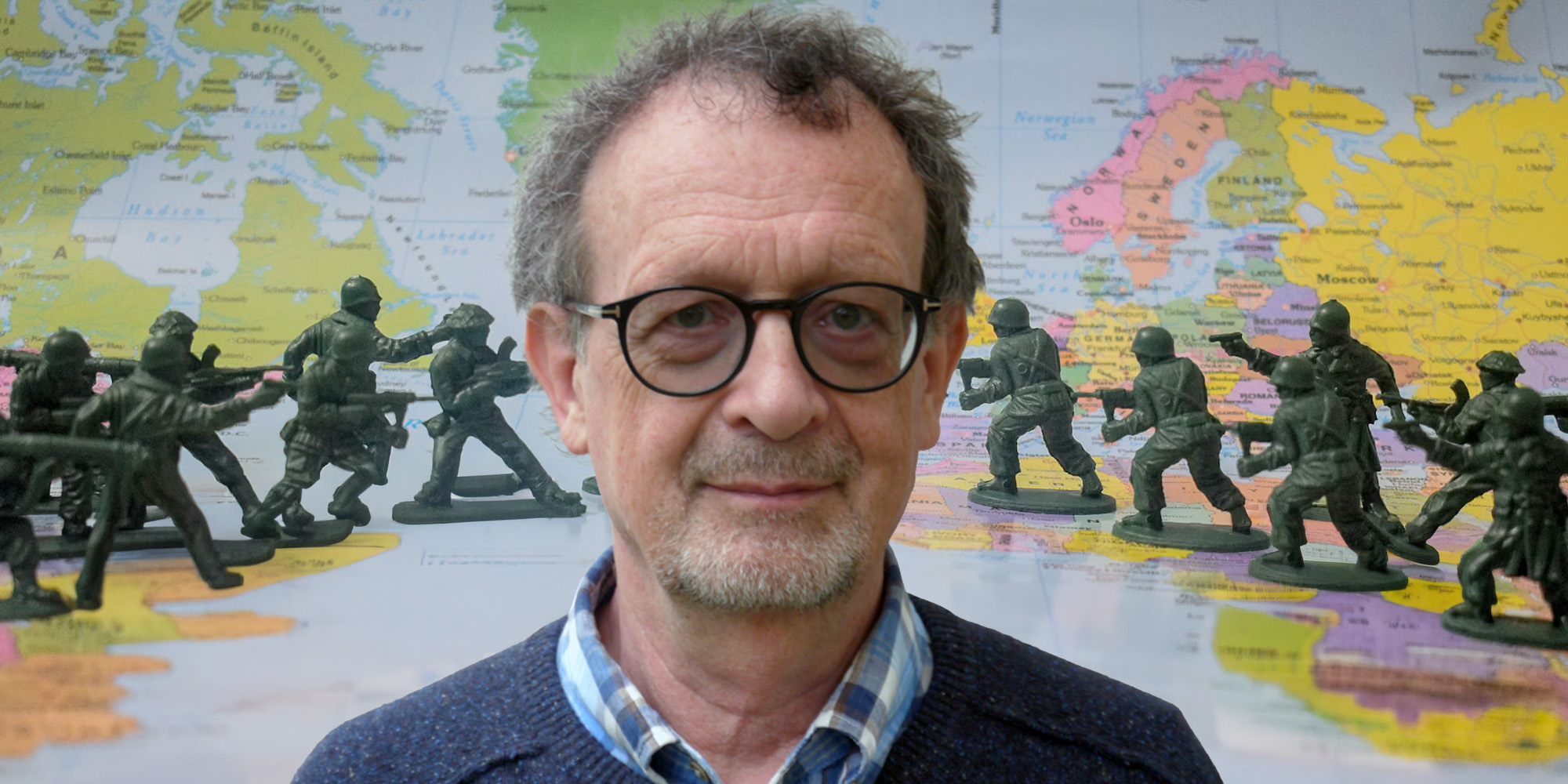
Werner Wintersteiner
His most recent publications include More Security Without Weapons: On the Relevance of Hans Thirring’s Peace Plan, Frieden. informationen zur deutschdidaktik, and Edgar Morin: From War to War.
For his work in peacebuilding, he has received several awards, including the Grand Decoration of Honour of the State of Carinthia in 2023.
The rights to the content remain with the original publisher.
Post Views: 133
– Advertisement –