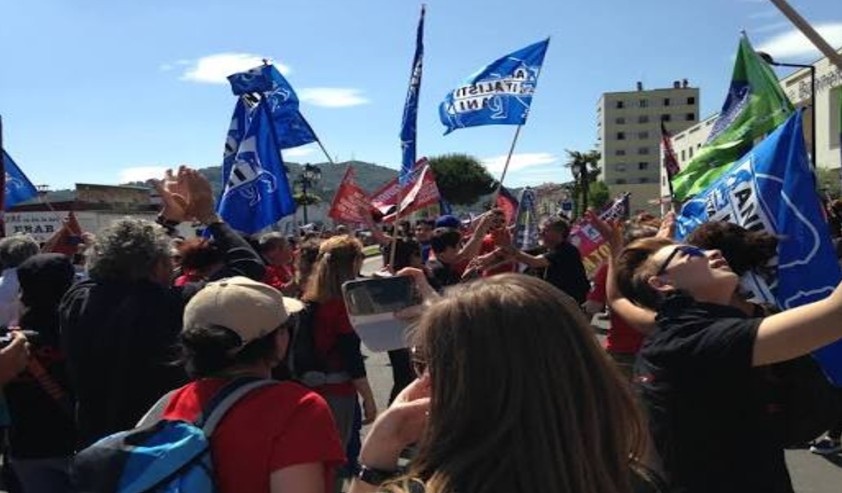
PARIS — What began as a local walkout at a suburban high school north of Paris has spiraled into France’s largest high school protest movement in decades, sparking widespread school shutdowns, political clashes, and civil unrest across the country.
The unrest originated in mid-September at Lycée Paul Éluard in Saint-Denis, just north of the capital, where students staged blockades in solidarity with striking teachers protesting staff shortages and dilapidated infrastructure. Over the past fortnight, those localized grievances broadened into a national crisis, mobilizing hundreds of thousands of secondary and university students across major urban centers, including Lyon, Marseille, Lille, Bordeaux, and Strasbourg.
Nationwide Impact and Escalating Violence
By October 5, between 400 and 500 high schools were fully or partially closed due to safety concerns, with regional authorities suspending in-person classes across one-third of secondary schools in the Île-de-France region.
The nationwide demonstrations have resulted in severe operational disruptions and violent clashes:
- Mass Arrests: Law enforcement has taken more than 5,000 people into custody, approximately 85% of whom are minors with no prior criminal records.
- Casualties and Severe Injuries: Over 300 police officers, dozens of firefighters, and dozens of students have been injured. Severe incidents include a high school student in Lens losing a hand due to a police stun grenade and another student in Tours suffering serious eye damage from riot-control projectiles.
- Property Damage: Education Ministry officials confirmed that at least 24 schools have suffered arson or severe vandalism, leading to complete structural closures in cities such as Nantes and Marseille.
Core Grievances
Student unions and civil society groups cite a compounding list of structural issues within France’s public education system:
- Staffing Deficits: Severe shortages of full-time teachers, leading to long-term class cancellations and high student-to-teacher ratios reaching 35 students per classroom.
- Infrastructure Conditions: Dilapidated facilities, including unsanitary restrooms, water leaks, heating failures, and extreme classroom temperatures during heatwaves.
- Poverty and Inequity: Disparities in public funding between affluent urban centers and working-class suburban districts, notably in departments like Seine-Saint-Denis.
- Demanding Schedules: Exhausting academic timetables spanning up to ten hours daily without adequate breaks or resources.
Government Response and Political Fallout
Prime Minister Sébastien Lecornu convened emergency cabinet meetings to address the security fallout, condemning the escalation into “urban violence” while promising structural reviews. Education Minister Édouard Geffray announced a phased return to in-person instruction and attributed the violent clashes to external far-left infiltrators hijacking peaceful student demonstrations.
Left-wing opposition leaders, including La France Insoumise (LFI) founder Jean-Luc Mélenchon, rejected allegations of political manipulation, blaming government austerity measures and demanding an immediate cessation of police riot-control tactics against minors.
With national student unions and labor federations calling for coordinated nationwide marches, authorities across France are bracing for further disruptions and continued blockades at high schools and university campuses.
Protesters in France, Picture by Pxhere