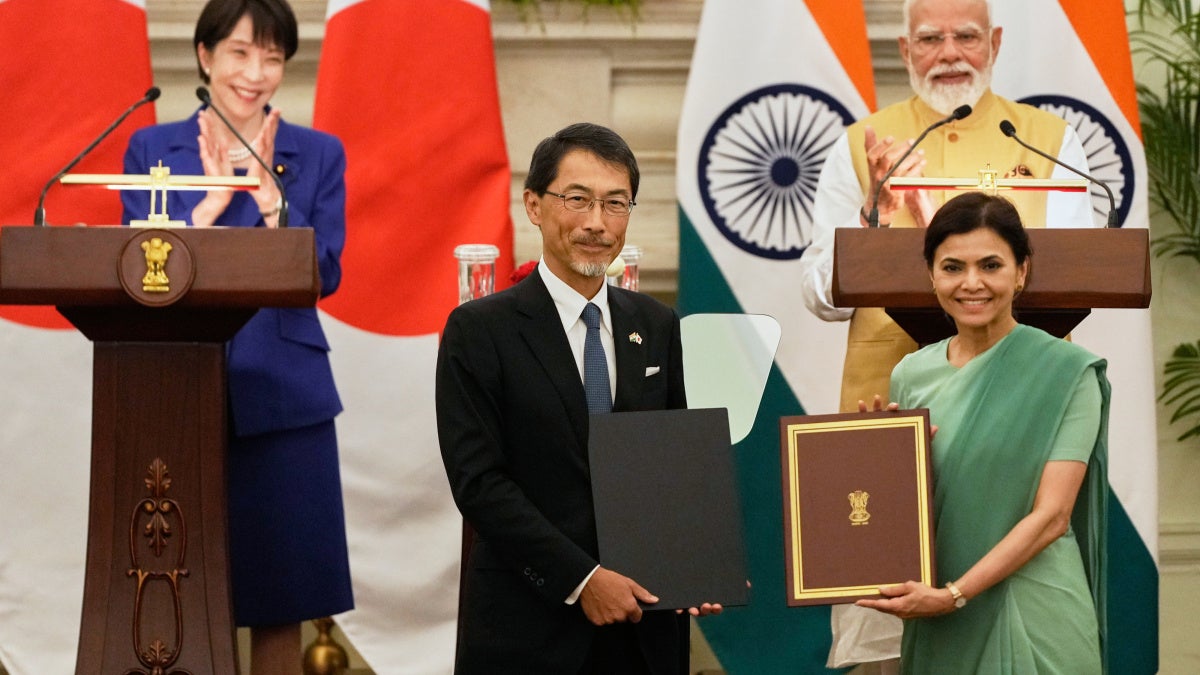
On July 2, Prime Minister Sanae Takaichi, on her first visit to India since taking office, met with Prime Minister Narendra Modi. Under their shared “Free and Open Indo-Pacific” vision, an effort to counter China, they agreed to deepen cooperation on security, energy, and investment, unveiling about 120 business agreements worth 2 trillion yen (US$12 billion).
Japan has long called India a partner sharing universal values. When then-Prime Minister Shinzo Abe and Modi elevated ties to a “Special Strategic and Global Partnership,” both pledged to uphold “democracy, human rights, and the rule of law.”
There is no indication that human rights or the rule of law were discussed, notwithstanding the Modi administration’s long-running slide into authoritarianism. His Hindu nationalist government has tightened its crackdown on civil society groups and the media, imposing internet shutdowns and prosecuting activists, journalists, and peaceful protesters on fabricated charges.
The administration has stifled rights groups through foreign funding regulations and adopted discriminatory laws and policies targeting religious minorities, especially Muslims but also Christians. Police complicity has emboldened Hindu nationalist groups to attack minorities with impunity.
Japan should not repeat the mistakes of its China policy. After the 1989 Tiananmen massacre, Japan led the way in re-engaging a shunned Chinese government. The West, too, bet on engagement without human rights conditions, expecting economic growth in China would bring political liberalization and, ultimately, respect for human rights. The policy failed: the Chinese government under Xi Jinping has become increasingly repressive at home and abroad. The Japanese government itself, in its National Security Strategy, identifies China’s military activities and other activities as “a matter of serious concern for Japan and the international community” and “unprecedented and the greatest strategic challenge.”
Beijing dismisses concerns over its rights abuses, marshals countries at the United Nations in its defense, and targets government critics, even in Japan. India has begun to do the same, pushing back against international criticism with allegations of hypocrisy and double standards instead of undertaking reforms.
But it’s not too late. Many in India are still bravely fighting to preserve democratic values. That is precisely why Japan, with Europe and other like-minded partners, should build a relationship in which friends speak frankly about human rights and the rule of law. If those values hollow out, the Free and Open Indo-Pacific vision loses its force against authoritarian rule. Japan should learn the lesson of its China policy: speak up before it’s too late—for a trustworthy partnership and Japan’s long-term interests.