(Beirut) – Israeli and Iranian attacks in mid-March 2026 on vital energy infrastructure were unlawfully indiscriminate and could trigger profound economic consequences for millions of people in the region and globally, Human Rights Watch said today. The attacks on the facilities in Iran and Qatar may amount to war crimes.
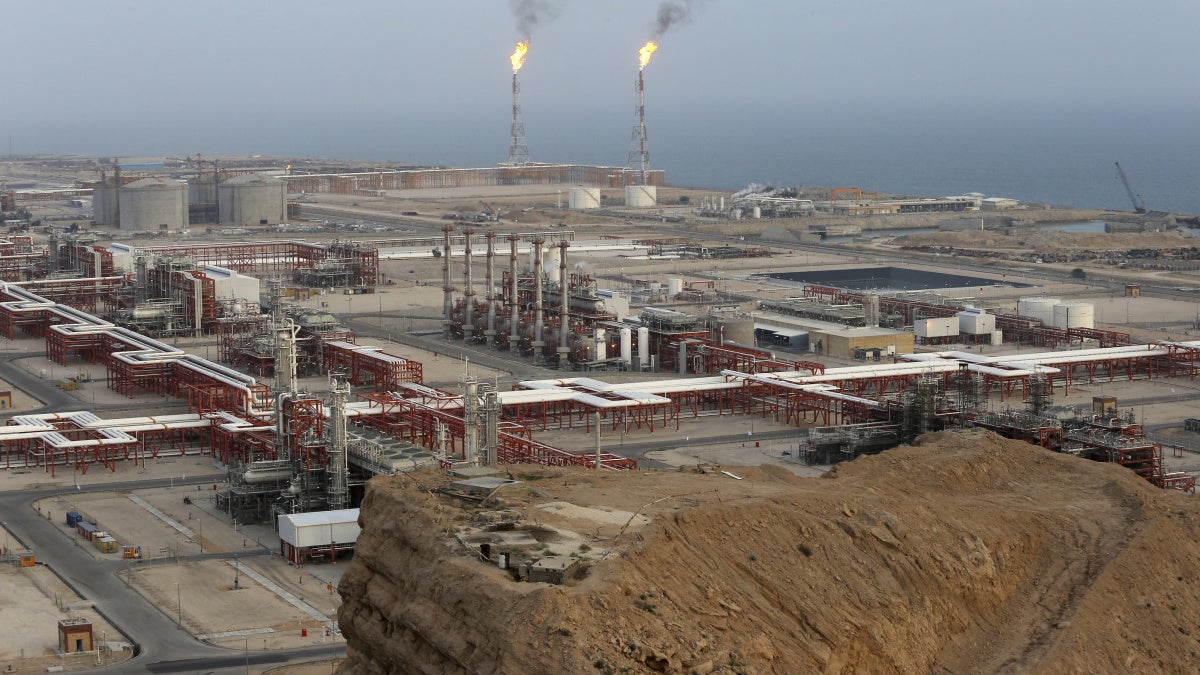
On March 18, Israeli forces attacked Iran’s South Pars Gas Field, an important source of natural gas for Iran’s domestic consumption. Hours later on March 18, and again on March 19, Iranian forces attacked oil and gas infrastructure at Qatar’s Ras Laffan liquefied natural gas facility, which provides one-fifth of the world’s supply. The tit-for-tat attacks are among a series of unlawful attacks on energy infrastructure by Israel and Iran since the latest conflict in the Middle East began in February.
“Unlawful attacks on key oil and energy infrastructure have foreseeable knock-on economic impacts that could prove harmful to millions of people,” said Joey Shea, senior Saudi Arabia and United Arab Emirates researcher at Human Rights Watch. “Israel’s attack on the South Pars Gas Field damaged infrastructure indispensable for the survival of Iranians, while Iran’s attack on Qatar’s Ras Laffan gas infrastructure threatens food security for millions around the world.”
Human Rights Watch investigated both attacks, analyzing official government and company statements, satellite imagery, and videos of the aftermath. Human Rights Watch wrote to both governments on March 26 seeking clarification about the attacks. Israeli authorities responded on March 30, stating that their “targeting processes are governed by a structured and binding framework designed to ensure the accurate identification of lawful military targets.” Iranian authorities have not responded.
The attacks damaged both facilities, based on satellite imagery at different spatial resolutions Human Rights Watch analyzed. Extensive damage was identified in at least four sections of the South Pars Gas Field complex, while two sections of Ras Laffan Industrial City in Qatar sustained damage.
Under international humanitarian law applicable to the armed conflict in the Middle East, oil, gas, and other energy infrastructure are presumptively civilian objects but they can become military objectives if used to support the military. However, attacking them would be unlawfully disproportionate if the expected harm to civilians and civilian structures exceeded the anticipated military gain. Serious violations of the laws of war ordered or committed with criminal intent—that is, deliberately or recklessly—are war crimes.
At a March 19 news conference, when Israeli Prime Minister Benjamin Netanyahu was asked whether he approved the strike and if US President Donald Trump was aware of the strike, he responded that “Israel acted alone against the Asaluyeh gas compound.”
In a media interview also on March 19, the Israeli embassy spokesperson in London said that the South Pars Gas Field “is not only a civilian infrastructure, even though it is, it is also a dual use infrastructure and has been helping the Iranian IRGC [Islamic Revolutionary Guard Corps] forces build their capacities specifically aiming at the ballistic missile program within Iran. They have been replenishing their missiles with the help of that gas structure. So, it is not only a civilian infrastructure.”
However, neither Israel nor Iran has demonstrated that the facilities they targeted were military objectives. Human Rights Watch was unable to determine the extent to which either facility was used for military purposes.
According to the International Energy Agency, 80 percent of Iran’s natural gas comes from South Pars, and natural gas is responsible for 79 percent of Iran’s electricity, including for heating, lighting, cooking, and industrial use. Before the conflict, the Ras Laffan Industrial City provided a fifth of the world’s supply of liquified natural gas. QatarEnergy, Qatar’s national oil and gas company, which administers Ras Laffan, is the world’s largest liquified natural gas producer, with countries in Asia heavily dependent on its supply.
This attack and the broader liquified natural gas supply disruption from the continued uncertainty about shipping in the Strait of Hormuz could have a broader global impact, particularly on access to food and other necessities. Natural gas is a key input in the production of nitrogen-based fertilizers, and it drives domestic energy prices affecting the cost of many other everyday consumption goods and services, such as transportation to work, schools, and hospitals.
Human Rights Watch analyzed low-resolution satellite imagery captured before and after the attack on South Pars and identified extensive damage in at least four sections of the complex.
An image from March 29 shows fire damage to multiple structures within the third, fourth, fifth, and sixth refineries in South Pars. The same structures appeared intact in imagery captured in the early morning of March 18.
Part of this damage is also visible in videos posted to social media from the early afternoon of March 18, showing the aftermath of the attack. These videos initially geolocated by the volunteer platform GeoConfirmed, and further corroborated by Human Rights Watch, show active fires and smoke plumes rising from at least two of these refineries, the fourth and sixth.
Damage across several production lines included on refineries third and fourth are visible on very high-resolution satellite imagery from March 21, included in an article by the German media outlet WirtschaftsWoche.
In a statement published by Tasnim news agency on March 18, Iran’s National Iranian Gas Company said the attack damaged “part of the refining units” and added that a fire at the South Pars facility was extinguished, with equipment cooling operations under way. Eskandar Pasalar, the governor of Assaluyeh, said that several phases were taken out of operation “in order to control and prevent the speed of fire,” Iran’s Fars news agency reported.
Ahmed Moussa, a spokesperson for Iraq’s Electricity Ministry, told the Iraqi News Agency that, “as a result of the repercussions of developments in the region, Iranian gas flows to Iraq stopped completely.”
Human Rights Watch also investigated Iran’s attacks on Qatar’s Ras Laffan Industrial City on March 18 and 19 and reviewed high-resolution satellite imagery.
WirtschaftsWoche published a damage assessment over two sections in Ras Laffan industrial complex based on very high-resolution satellite imagery from March 22. The imagery shows severe damage over two sections labeled as LNG Liquefaction Plant and Pearl Gas-to-Liquids (GTL) Plant in Ras Laffan Industrial City.
Analysis from WirtschaftsWoche shows damage within the LNG Liquefaction Plant to parts of production lines 4 and 6 including a heat exchange tower in line 6 that appears collapsed.
The adjacent building shows visible burn scars. An additional tower appears severely damaged, with the upper sections missing. In the Pearl GTL Plant severe damage in production line 2, including to a chemical plant, is also visible on satellite imagery from March 22. Human Rights Watch compared it with a high-resolution imagery from February 10 and 16 that shows no damage within the LNG Liquefaction Plant and the Pearl GTL Plant.
At the LNG Liquefication Plant, the damaged production lines 4 and 6 total 12.8 million tons a year, approximately 17 percent of Qatar’s exports, based on a March 19 statement by QatarEnergy. Saad al-Kaabi, Qatar’s energy minister and the CEO of QatarEnergy, said the damage is expected “to take up to five years to repair, impacting supply to markets in Europe and Asia.”
On March 19, Shell, which jointly owns Pearl GTL with QatarEnergy, said that “a fire that broke out within the Pearl GTL facility as a result of the incident was rapidly extinguished.” Shell said an initial assessment confirmed “around one year for full repair of train two at the Pearl GTL (Gas-to-Liquids) facility.”
LNG terminals are massive and complex infrastructure. Pearl Gas-to-Liquids is the world’s largest GTL plant and “one of the world’s largest, most complex and challenging energy projects ever commissioned,” according to Shell.
After Israel’s attack on South Pars, Iran threatened to retaliate against energy infrastructure in the Gulf, specifically identifying Saudi Arabia’s Samref refinery and Jubail petrochemical complex, the UAE’s al-Hosn gas field and Qatar’s Mesaieed petrochemical complex and holding company, and the Ras Laffan refinery as targets. The Revolutionary Guard Corps said that the facilities had “become direct and legitimate targets and would be struck within the next hours.”
Fars News, a media outlet affiliated with the Revolutionary Guards, said on March 18 that “the war pendulum has effectively swung from the state of limited and base-bound battles toward a ‘full-scale economic war.’” The outlet said, “We consider the targeting of the source country’s fuel, energy, and gas infrastructure to be a legitimate cause for us, and at the first opportunity, we will retaliate with utmost severity.”
The attacks by both Israel and Iran raise critical issues of long-term disproportionate impact. Guidance from the International Committee of the Red Cross provides that proportionality assessments need to consider “reasonably foreseeable” indirect environmental impacts. These include long-term or “reverberating” effects on the water, food systems, and the health of civilians. Attacks against military objectives are also unlawful if they are expected to cause “widespread, long-term and severe” damage to the natural environment, measured in months or years.
International humanitarian law also prohibits warring parties from attacking, destroying, removing, or rendering useless objects indispensable to the survival of the civilian population, which can include energy infrastructure. The importance of South Pars Gas Field for domestic electricity production in Iran may make it indispensable to survival of Iran’s population. Electricity is fundamental to nearly every aspect of living and participating in present-day societies and access to electricity is a human right, Human Rights Watch said.
The obligations of warring parties under international humanitarian law are not contingent on the other party’s compliance. Violations by one side may not be justified on the basis of another party’s failure to meet their obligations.
“Threats by senior Israeli and Iranian officials to deliberately attack critical oil and gas infrastructure have transformed into the grim reality of attacking critical energy infrastructure that could affect millions of people in the Middle East and across the globe,” Shea said.