Two female domestic workers, ages 15 and 18, jumped from the fourth floor of a Jakarta boarding house on April 22 in a desperate attempt to escape their employer. One died; the other was severely injured.
The tragedy came just a day after Indonesia’s parliament finally approved the long‑awaited Domestic Workers Protection Law, granting domestic workers long denied legal safeguards. But passing the law is only the first step: the government now has one year to draft implementing regulations and set protection standards, slowing the rollout of critical safeguards.
The two domestic workers were fleeing an allegedly exploitative environment—and they are far from alone. Indonesia has about 4.2 million domestic workers, 90 percent of whom are women. The International Labour Organization (ILO) estimated in 2012 that around 700,000 were children under age 18.
Human Rights Watch has documented that domestic workers are often isolated in private homes, cut off from support networks, and trapped in conditions that heighten their vulnerability to abuse. Survivors of sexual violence reported feeling unable to escape, pressured to keep working for financial reasons, or threatened with further harm if they spoke out.
According to Jala PRT, Indonesia’s National Network for Domestic Workers, there were 3,300 reported cases of violence and abuse against domestic workers between 2017 and 2024, including sexual, physical, and economic abuse, as well as forced labor, trafficking, and torture.
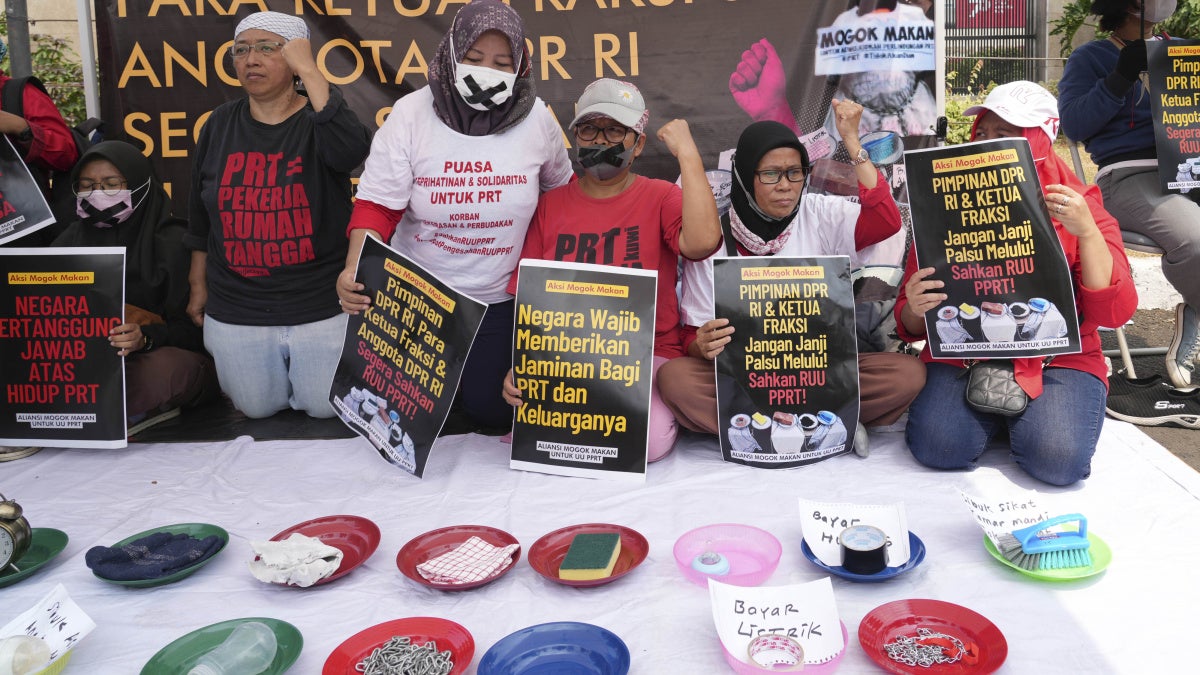
For over two decades, civil society groups and unions have pushed for stronger protections. The new law, 22 years in the making, finally recognizes domestic workers as formal workers, regulates their conditions, and provides access to vocational training, health insurance, unemployment benefits, time off, and pensions. It also sets 18 as the minimum age for domestic work, banning the hiring of children who face greater risk of exploitation.
“The most important thing now is recognition of working hours, religious holiday allowances, wages, days off, accommodation and food, as well as social security and social assistance—all of which have been missing and have kept domestic workers in poverty,” said Lita Anggraini, Jala PRT’s national coordinator.
For the law to deliver real change, the government needs to implement it quickly, establish clear enforcement mechanisms, and ensure that domestic workers can safely report abuse. Indonesia should move to ratify ILO Convention No. 189 on domestic workers and 190 on violence and harassment, aligning national protections with international labor standards.