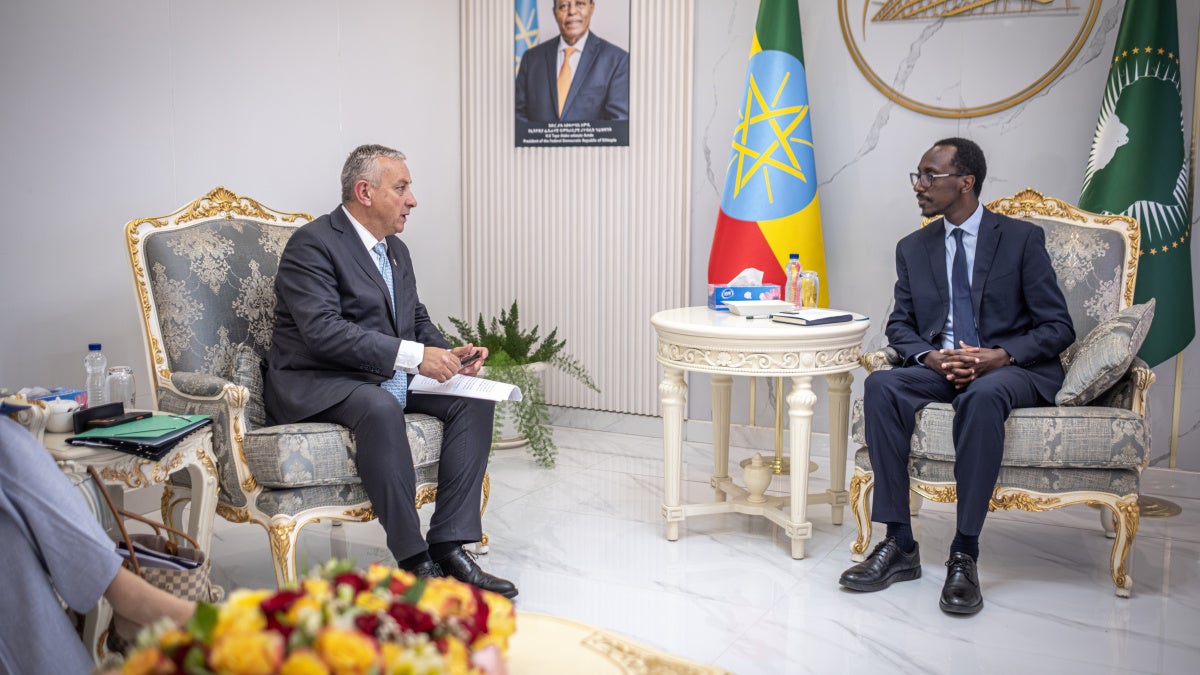
European Union Partnership Commissioner Jozef Sikela announced on April 21 the resumption of EU’s direct budget support to the Ethiopian government: the final step towards normalizing relations with the country.
The move comes as Ethiopia’s dire human rights situation has deteriorated ahead of June 1 national elections.
The EU initially suspended its direct budget support to Ethiopia in 2020 amid the war in northern Ethiopia, which was marked by ethnic cleansing, forced displacement, large-scale massacres, and widespread sexual violence.
The November 2022 truce never completely ended grave abuses in the Tigray region: violations continued during the conflicts in Amhara and parts of Oromia. EU member states made clear that complete cessation of hostilities and accountability for past violations were key conditions for the resumption of full economic support to Ethiopia.
Now, rising tensions between Tigray’s main political party, the Tigray People’s Liberation Front (TPLF), and the federal government raise serious concerns of renewed atrocities.
In addition, the government has made no meaningful progress towards accountability for conflict-related abuses. After the EU refrained from renewing an international investigation into abuses in Ethiopia, the government’s transitional justice process effectively stalled.
At the same time, the authorities have imposed heightened restrictions on independent media, harassed and detained journalists, threatened civil society groups, and severely curtailed peaceful assembly and free speech. A number of youths were reportedly arrested in the capital, Addis Ababa, in April simply for listening to a popular Ethiopian musician’s latest recordings, some critical of the government. The government has offered no clarity on investigations into the apparent abduction of the managing editor of the Addis Standard, a leading independent media outlet. Just weeks before the elections, these developments are especially troubling.
Ethiopia’s increasingly dire human rights context suggests that the European Commission likely overlooked whether its own human rights benchmarks were met before resuming direct budget support.
If the Commission’s goal is to advance economic and social benefits for Ethiopians, it should prioritize other recipients and other forms of aid and at least reaffirm the EU’s commitment to accountability and the protection of civilians. Absent such a message, Sikela’s announcement seems to reward a repressive pre-electoral phase, crushed civic space, and renewed risk of atrocities with fresh cash and public praise, betraying the European bloc’s previous calls for justice and respect for human rights.