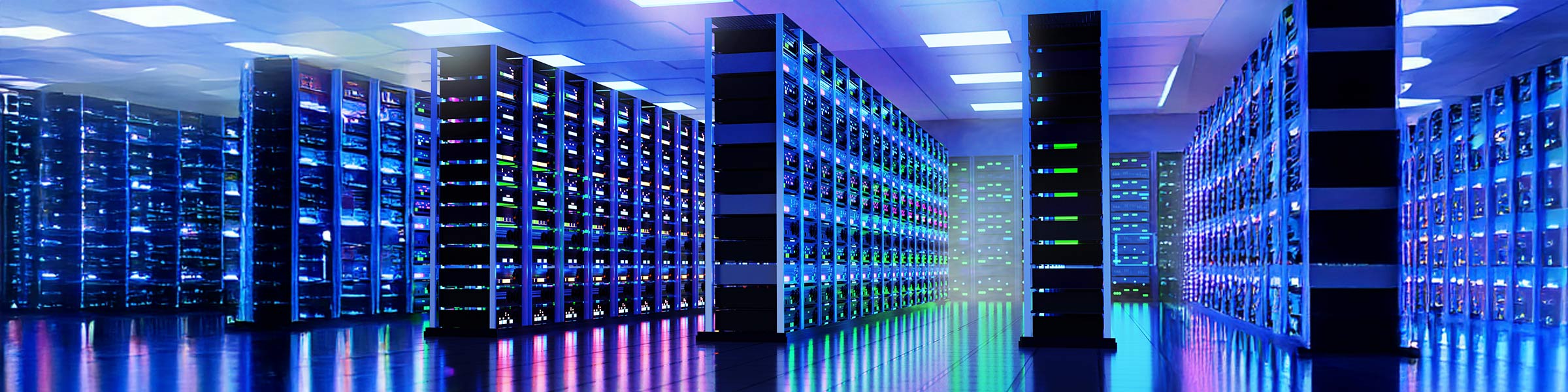
Stepping inside a supercomputer facility is usually an overwhelming experience. These vast machines contain hundreds of thousands of processors working together to perform calculations far beyond the reach of ordinary computers. They consume huge amounts of energy, generate intense heat and are often extremely noisy.
So, when France Boillod-Cerneux from the French Alternative Energies and Atomic Energy Commission visited the Fugaku supercomputer in Kobe, Japan, she was surprised.
“You could hear yourself talking inside the computer room,” she said. “It was incredible. It was so unusual compared to what I’m used to.”
EU-Japan synergies
Since 2024, Boillod-Cerneux has been working with researchers across Europe and Japan through the EU-funded HANAMI collaboration, a three-year research effort tackling some of the biggest challenges in high-performance computing, also known as supercomputing.
The researchers hope their work will help advance fields ranging from climate forecasting and medical technology to materials research.
“Europe and Japan have great synergies when it comes to high-performance computing,” said Boillod-Cerneux. “Today, the Americans are dominating certain fields, such as AI. Europe and Japan want to build their own ecosystem together, to offer an alternative.”
“
Europe and Japan have great synergies when it comes to high-performance computing.
This connects to a broader European push to strengthen technological sovereignty in supercomputing and AI. Through the European High-Performance Computing Joint Undertaking, the EU and participating countries are investing billions of euros in a new generation of supercomputers and AI infrastructure across Europe.
A recent milestone in that effort was the launch of the JUPITER supercomputer at Forschungszentrum Jülich in Germany – also a HANAMI partner. JUPITER is the first European supercomputer to achieve exascale performance – performing more than one quintillion calculations per second.
Systems operating at this scale are expected to accelerate research in diverse fields, from climate science to AI and advanced manufacturing.
Ongoing cooperation
Supercomputers are used for scientific simulations too complex for conventional computers. During the COVID-19 pandemic, for example, they helped researchers model the virus and test huge numbers of potential drug compounds. They are also used to simulate the Earth’s climate, predict extreme weather events and study new materials.
“Japan and Europe are very similar when it comes to high-performance computing research,” said Kengo Nakajima, deputy director of the RIKEN Center for Computational Science in Kobe, and a professor at the University of Tokyo.
“Both have long traditions in climate research and supercomputing. We can learn a lot from each other thanks to our long-standing cooperation.”
The HANAMI collaboration also comes as Europe and Japan deepen scientific ties more broadly. In late 2025, the European Commission and Japan concluded negotiations on Japan’s association to Horizon Europe, opening the way for even closer cooperation in research and innovation.
Building trust in simulations
Climate modelling is one of the main areas of cooperation. Researchers hope increasingly sophisticated simulations will help scientists and policymakers better understand the future impacts of climate change.
But for supercomputers to be useful, scientists need to trust the results they produce.
“We’re looking at the reproducibility of the results,” Boillod-Cerneux explained. “We need to make sure that the results stay consistent, even when they are generated on different supercomputers.”
Unlike ordinary computers, supercomputers are highly specialised systems that often use different hardware and software architectures. Ensuring that scientific results remain accurate and comparable across different machines is therefore a significant challenge.
“The hardware might be impressive, but a lot of our work is about software,” said Boillod-Cerneux. “It’s about optimising scientific applications so they can run efficiently on these highly complex systems.”
“
We can learn a lot from each other thanks to our long-standing cooperation.
Researchers involved in HANAMI are sharing expertise and testing methods across European and Japanese platforms to improve the reliability and transparency of scientific simulations.
As systems become larger and more complex, ensuring that results remain reproducible and trustworthy across different computing platforms becomes ever more critical.
The collaboration is also exploring medical applications. One research team, for example, has been modelling airflow and fluid movement inside the human nose. These simulations could help surgeons better prepare for nose and sinus procedures and potentially reduce complications for patients.
Supercomputing in the age of AI
The growing importance of AI is reshaping the world of supercomputing. AI systems rely heavily on supercomputers for training and processing the enormous amounts of data needed to operate.
“AI has made what we do much more tangible for the public,” said Boillod-Cerneux. “People increasingly use AI in everyday life, and supercomputers provide much of the computing power behind it.”
AI is also beginning to transform scientific research itself. Researchers increasingly use AI to analyse huge datasets, identify hidden patterns and accelerate simulations that would previously have taken far longer to complete.
This emerging field – often called AI for Science – is becoming a growing strategic priority in Europe. In October 2025, the European Commission presented its European Strategy for Artificial Intelligence in Science, aimed at helping researchers responsibly integrate AI into scientific work.
At the same time, the rapid growth of AI has intensified global competition over access to advanced computing chips and infrastructure. This is essential not only for AI systems, but also for next-generation scientific simulations.
For researchers in HANAMI, cooperation between Europe and Japan is partly about strengthening long-term scientific and technological resilience.
“The rapid growth of AI is reshaping the market for high-performance computing chips,” said Boillod-Cerneux. “I’m confident that Europe and Japan can develop their own chip and software ecosystem. Europe has the talent and expertise to remain independent, but it will take time. Partnerships with countries like Japan are key.”
Nakajima believes the next stage of cooperation could focus increasingly on AI-driven scientific discovery.
“I think the next step of our cooperation with Europe should focus more on AI-for-science,” he said. “We need to merge our expertise so we can push each other forward.”
Research in this article was funded by the EU’s Horizon Programme. The views of the interviewees don’t necessarily reflect those of the European Commission. If you liked this article, please consider sharing it on social media.