One of science’s main roles in society is to probe extraordinary claims, separate fact from fiction, and set the record straight. But it does not always succeed. Indeed, sometimes the exact opposite happens.
“Science” itself can sometimes take things out of context, and present half-truths which, repeated over generations, eventually come to seem like total certainties. These ideas do not necessarily take root because they are true, but because they sound good, seem like common sense, and often carry the authority of being linked to an eminent name.
When it comes to diet and health, this is all too common. I am not talking here about the fake news or outright hoaxes that proliferate on social media, but phrases and ideas with historical – and even academic – pedigree that have been mistakenly adopted as unquestionable truths.
1. Let food be thy medicine
One of the best-known examples is the phrase attributed to Ancient Greek philosopher and physician Hippocrates: “Let food be thy medicine and medicine be thy food”. While frequently attributed to him, there is no firm basis for this.
Despite its dubious origins being revealed years ago, the phrase continues to feature in articles and speeches – likely because it is shrouded in apparent wisdom.
2. You are what you eat
Something similar applies to the saying “you are what you eat”. Today it is often treated as an indisputable truth, but its original meaning was philosophical, not physiological. The phrase formed part of a reflection on the importance of the material dimension of human beings put forward by the 19th century German philosopher Ludwig Feuerbach, to challenge those who attached importance only to the soul or the mind.
With this famous phrase, Feuerbach was advocating for social justice from a political and anthropological perspective – not making a lifestyle recommendation.
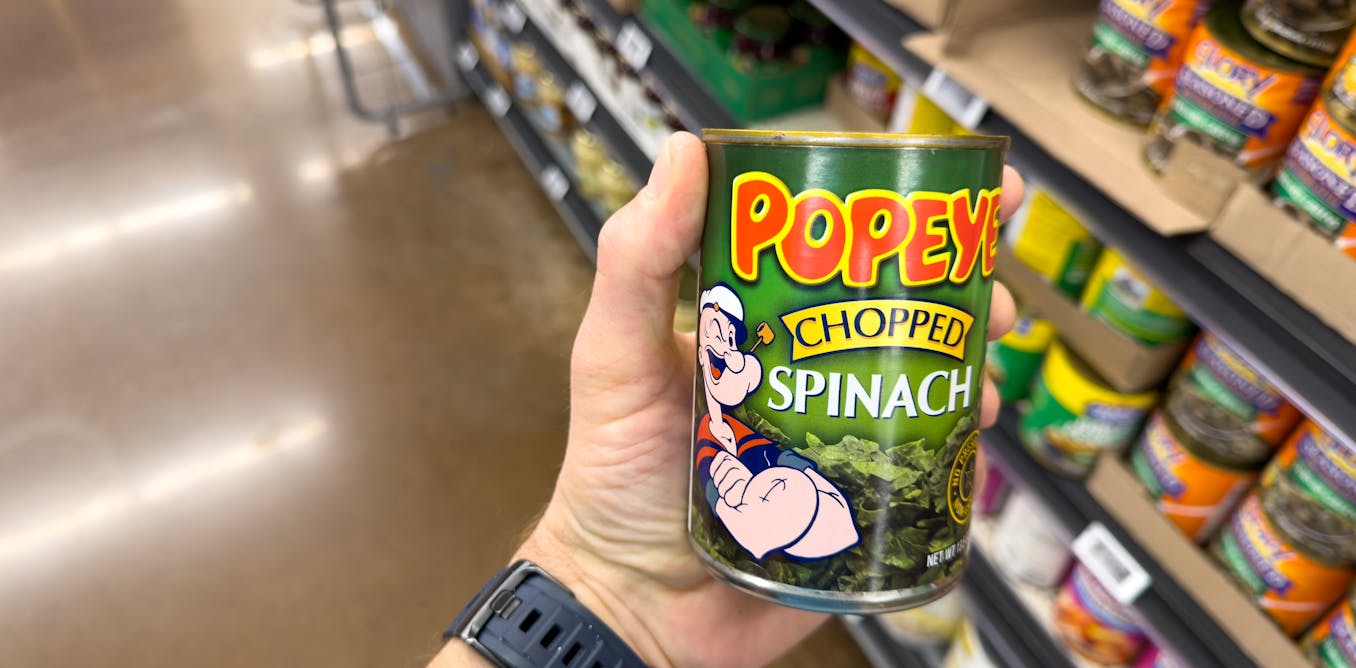
3. Spinach and iron: a double myth
The case of spinach and iron is curious on two fronts. For years, it was claimed that this vegetable’s mistaken reputation as an iron-rich food was due to a transcription error involving a misplaced decimal point in the early 19th century. The story was so widely accepted that it has been repeated time and again in books, articles and lectures.
But the supposed decimal error also appears to be untrue. Not only was an incorrect idea about spinach widely spread, but the explanation of this information’s origin was also false.
Read more:
3 statistical stuff-ups that made everyday items look healthier (or riskier) than they really are
4. Carrots and night vision
Another modern myth is the claim that eating carrots improves night vision. Carrots are a source of vitamin A, a nutrient that plays a role in visual function – but that doesn’t mean they will miraculously make you see in the dark.
The spread of this idea was closely linked to British World War II propaganda efforts to explain the night-time successes of Royal Air Force (RAF) pilots and British anti-aircraft defences against the German Luftwaffe. To conceal the real reason – which was the RAF’s radar systems – the myth was allowed to circulate that the pilots and military personnel in charge of air defence followed a diet particularly rich in carrots.
Read more:
Is TikTok right – will eating three carrots a day really give me a natural tan?
5. The most important meal of the day
Even more enduring is the universal adage that breakfast is the most important meal of the day. The phrase was first coined by Lenna Frances Cooper, in an article published in 1917 in Good Health, the magazine of the Battle Creek Sanitarium, which was run by John Harvey Kellogg. And it stuck, right up to the present day.
Eating a good breakfast is important for many people, but there is no overriding biological reason for it to always be the most important meal. Though one thing is certain: cereals are not the ideal choice for your morning meal.
Read more:
Health Check: is breakfast really the most important meal of the day?
6. Eight glasses a day
The recommendation to drink two litres – or eight glasses – of water a day is a clear example of half-truth. This advice is typically attributed to old recommendations from 1945 regarding daily hydration requirements, which were set at around 2.5 litres of water. But a key detail is often overlooked; those very same recommendations state that most of this hydration is obtained through food intake.
We now also know, as those guidelines already suggested, that under normal conditions and barring exceptions, thirst is usually the best guide for drinking.
How falsehoods take root
Many of these share common mechanisms. They are short, sound reasonable, and appear trustworthy. Some bear the prestigious name of a famous author, whilst others are presented with the vague backing of “science” – even when that backing is actually far less solid than it seems.
In all cases, repetition plays a decisive role. The more a phrase is repeated, the more familiar it becomes. And the more familiar it becomes, the truer it seems.
There is another important factor at play here. Many of these messages serve the interests of a particular food industry and promote certain dietary choices. They are used to sell products, persuade people and shape habits. To correct or challenge them would take effort, knowledge and time – but keeping them alive simply involves repeating a catchy, well-established phrase.
Further examples could be added. Take the truncated quote “in vino veritas”, which simply refers to alcohol’s ability to loosen the tongue. The full quote, attributed to Pliny the Elder, is “in vino veritas, in aqua sanitas”, which recommends drinking water if you want to look after your health.
The commercial dogma that you should eat five times a day also lacks sufficient evidence to support it. And the idea that a glass of milk helps you sleep due to its high tryptophan content exposes the shortcomings of rampant nutritionism.
Many of these are not flat out lies, but they don’t always have to be. Sometimes it’s enough to exaggerate a fact, take it out of context, and turn simple advice into a catchphrase.
Science not only has to contend with the falsehoods circulating outside it. It must also keep a watchful eye on those that, whether due to perceived prestige or simply out of habit, end up taking root within it.
A weekly e-mail in English featuring expertise from scholars and researchers. It provides an introduction to the diversity of research coming out of the continent and considers some of the key issues facing European countries. Get the newsletter!