LONDON — A candid and deeply personal essay penned by prominent British journalist and columnist Petronella Wyatt has reignited a fierce international debate across digital platforms, forcing a re-evaluation of modern womanhood, professional ambition, and the social structures of family life.
Originally published in the Daily Mail, Wyatt’s column described gathering weekly with a group of highly educated, successful female friends in London, noting a striking common denominator: all were in their mid-50s, single, and childless. The essay has since experienced a massive resurgence across X (formerly Twitter), TikTok, and Instagram, striking a raw nerve among middle-aged women navigating the realities of a lifetime prioritizing career autonomy over traditional domestic milestones.
The Core Argument: Career Precedence and Cultural Conditioning
In the widely discussed piece, Wyatt reflected on her upbringing as part of the post-Thatcher generation shaped by pioneering feminist theorists. She argued that young women of her era were heavily conditioned to mimic traditional male trajectories—putting professional achievement and financial independence above all else.
Wyatt’s Core Critiques vs. Traditional Cultural Expectations
+-------------------------------------------------------------------------+
| PROFESSIONAL PRIORITIZATION                                             |
| * Premise: Raised to believe financial independence guarantees fulfillment.|
| * Reality: Middle-aged reflection reveals emotional vacuums and         |
|   solitary routines for many unattached career women.                   |
|                                                                         |
| SOCIAL & INSTITUTIONAL CONDITIONING                                     |
| * Premise: Traditional marriage and domesticity were discouraged or     |
|   stigmatized by certain ideological educators.                         |
| * Reality: Re-evaluating the cultural dismissal of family structures    |
|   has sparked widespread regret among aging cohorts.                    |
+-------------------------------------------------------------------------+
“The feminism I was spoon-fed in my youth made the error of telling members of my sex to behave and think like men,” Wyatt wrote, describing the resulting isolation as a steep price for professional independence. “My career has stalled, I’ve never married and I feel worthless as a person”.
Two-Sided Perspectives on the Legacy of Feminism
The resurfaced essay has sharply polarized online commentators, sociologists, and public figures, drawing intense pushback alongside deep expressions of shared solidarity.
Perspectives on Modern Feminism and Life Choices
+-------------------------------------------------------------------------+
| CRITICS & REFLECTIVE VOICES (Aligning with Wyatt)                       |
| * Argue that institutional pressure devalued motherhood and family-     |
|   building under the guise of absolute career liberation.               |
| * Highlight rising rates of urban loneliness and emotional isolation    |
|   among professional single cohorts in their 40s and 50s.               |
+-------------------------------------------------------------------------+
| DEFENDERS & LIFELONG FEMINISTS (Pushing Back)                           |
| * Emphasize that the core achievement of feminism is **choice**, not a    |
|   mandate against marriage or children.                                 |
| * Maintain that individual life outcomes reflect personal decisions     |
|   rather than systemic ideological failures.                            |
+-------------------------------------------------------------------------+
Proponents of Individual Agency and Choice
Lifelong feminists and independent commentators have strongly pushed back against the narrative that feminism is to blame for personal relationship outcomes. Critics point out that thousands of women successfully balance thriving professional careers, marriages, and parenthood, arguing that feminism’s greatest triumph was dismantling legal and economic barriers so women could choose their own paths—whether single, married, or childfree—without societal coercion.
Advocates for Cultural Balance and Family Value
Conversely, a substantial vocal contingent argues that modern culture historically oversold corporate success as an absolute substitute for family life. Societal observers note that public discourse must increasingly address structural loneliness, supporting balanced educational frameworks that value emotional relationships, family building, and professional development on an equal footing.
Striking an Even Balance in Contemporary Society
As the cultural conversation continues to evolve across digital forums, cultural analysts suggest the path forward lies in escaping rigid ideological binaries. Rather than viewing professional ambition and family life as mutually exclusive or treating feminism solely as an adversary to domestic happiness, modern discourse increasingly emphasizes comprehensive life education—empowering individuals to navigate careers, emotional health, and relational commitments with intention and equilibrium.
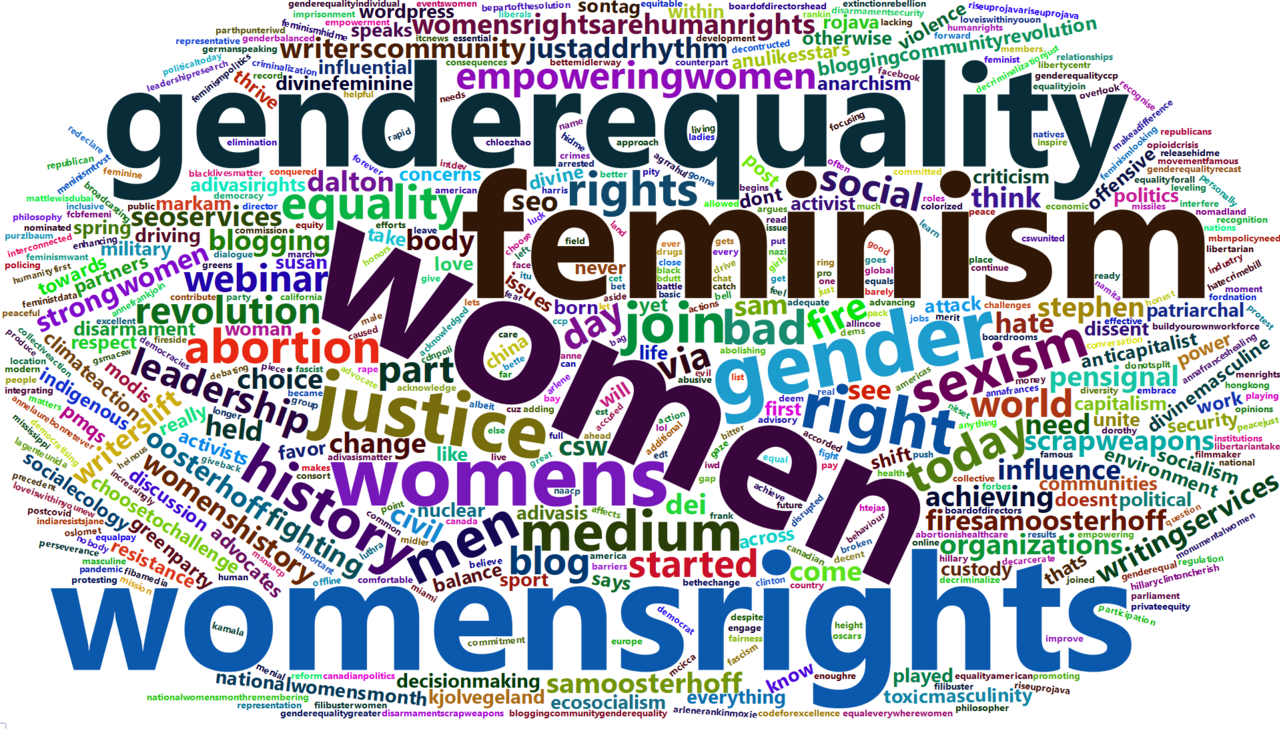
Feminism Word Cloud Image on Wiki by Virgilnr