The decline of the African penguin
The African penguin (Spheniscus demersus) population has plummeted by nearly 80% in the past three decades, in part due to competition with the local purse-seine fishery which targets the penguins’ key prey of sardines and anchovies. To understand the role of fisheries in the penguin decline, a fishery closure experiment was conducted between 2008 and 2021 around two pairs of islands, all home to breeding colonies of African penguins. The areas surrounding the islands were periodically closed to the fishery to test the impact on penguin breeding and foraging.
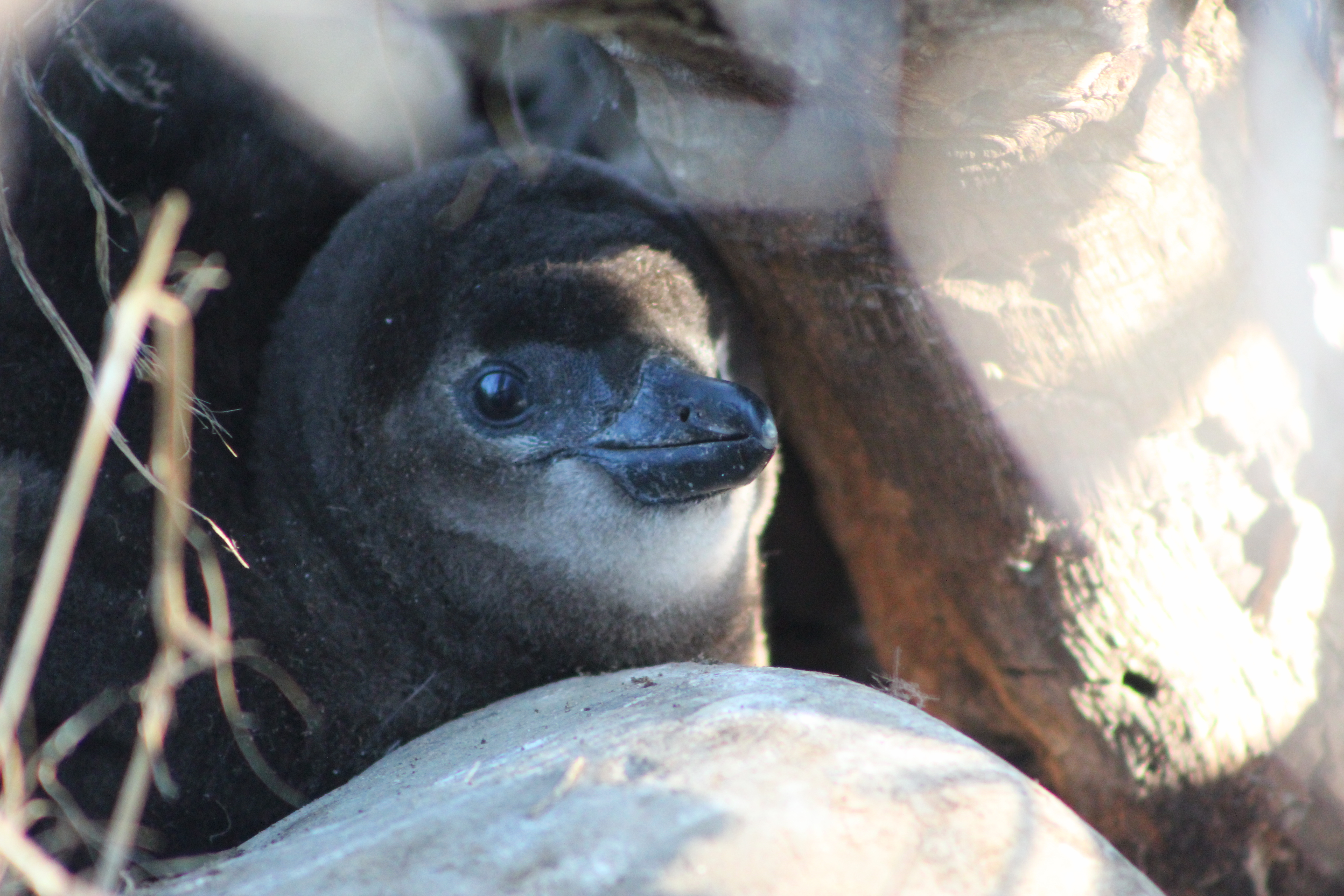
Following the experiment, interim closures were put in place until in 2024, when new closure areas were announced around six penguin breeding colonies. Recently, African penguins have made headlines in a landmark South African court case, which challenged the lack of meaningful fishery closures near colonies.
Quantifying the impact of fisheries
Our study used GPS tracking data from the Critically Endangered African penguins and fishing locations from Global Fishing Watch to show observed overlap between tracked penguins and the fishery. In addition, we simulated penguin foraging tracks at a population level to estimate population-level fishery-penguin overlap. While spatial overlap is commonly used to quantify interactions, it may underestimate the true degree of competition between foraging predators and fishing vessels. We introduce a novel metric — “overlap intensity” — which measures not just the extent of shared space between penguins and fishing vessels, but how many penguins are affected by this overlap. This metric was created as we wanted a better way to assess the number of penguins potentially impacted when fisheries operate nearby — not just where the overlap occurs.
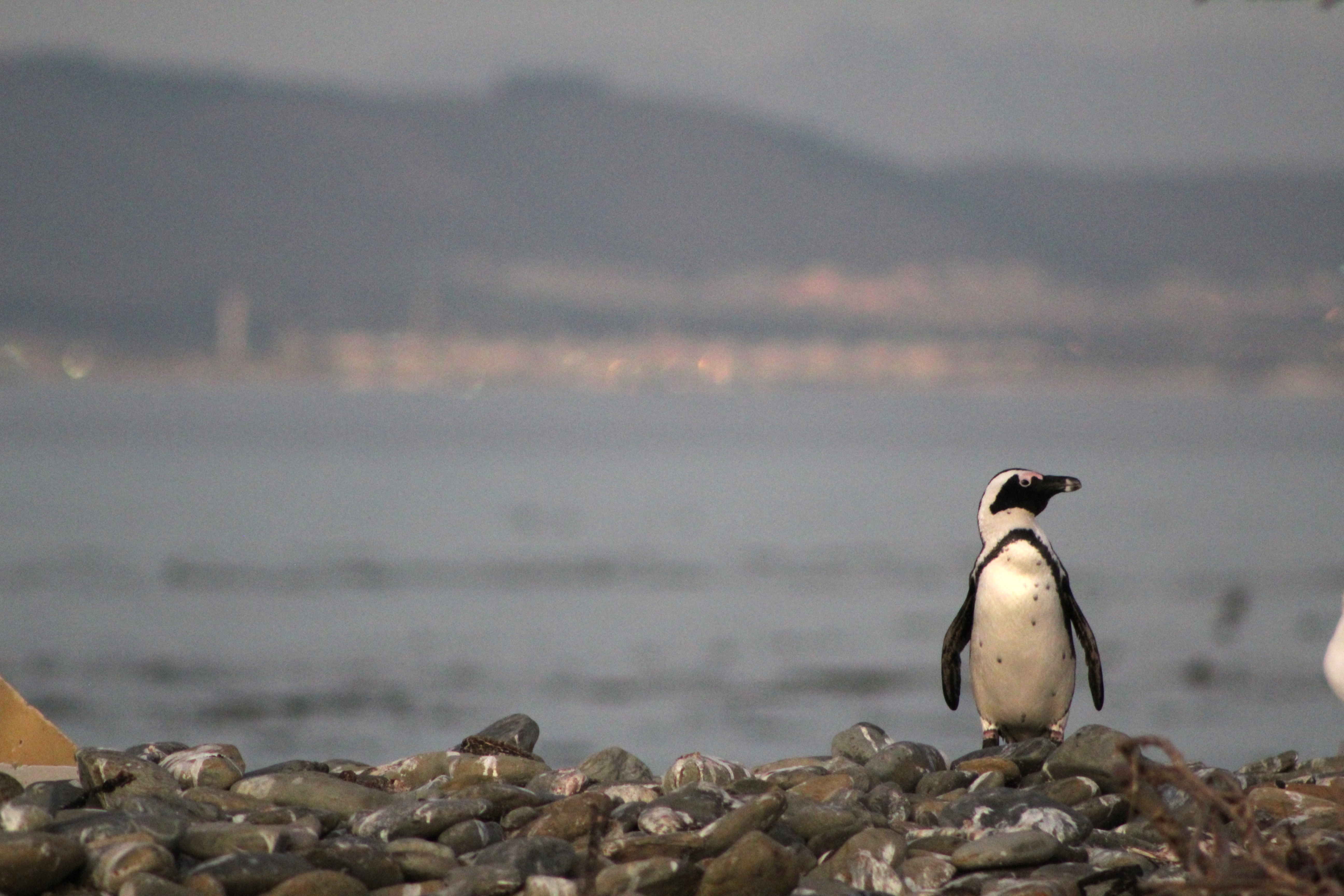
We found that penguins are significantly more likely to forage in the same areas as commercial fishing vessels during years of low fish abundance — increasing competition for food and adding pressure to a species already in crisis. In 2016, a low fish biomass year, around 20% of penguins were foraging in the same areas as fishing vessels. In contrast, during years with healthier fish stocks, overlap intensity fell to just 4%.
Relevance to penguin conservation
By quantifying overlap intensity at the population level, our study provides a powerful new tool to evaluate ecological risks and inform ecosystem-based fishery management and the design of fisheries no-take zones.
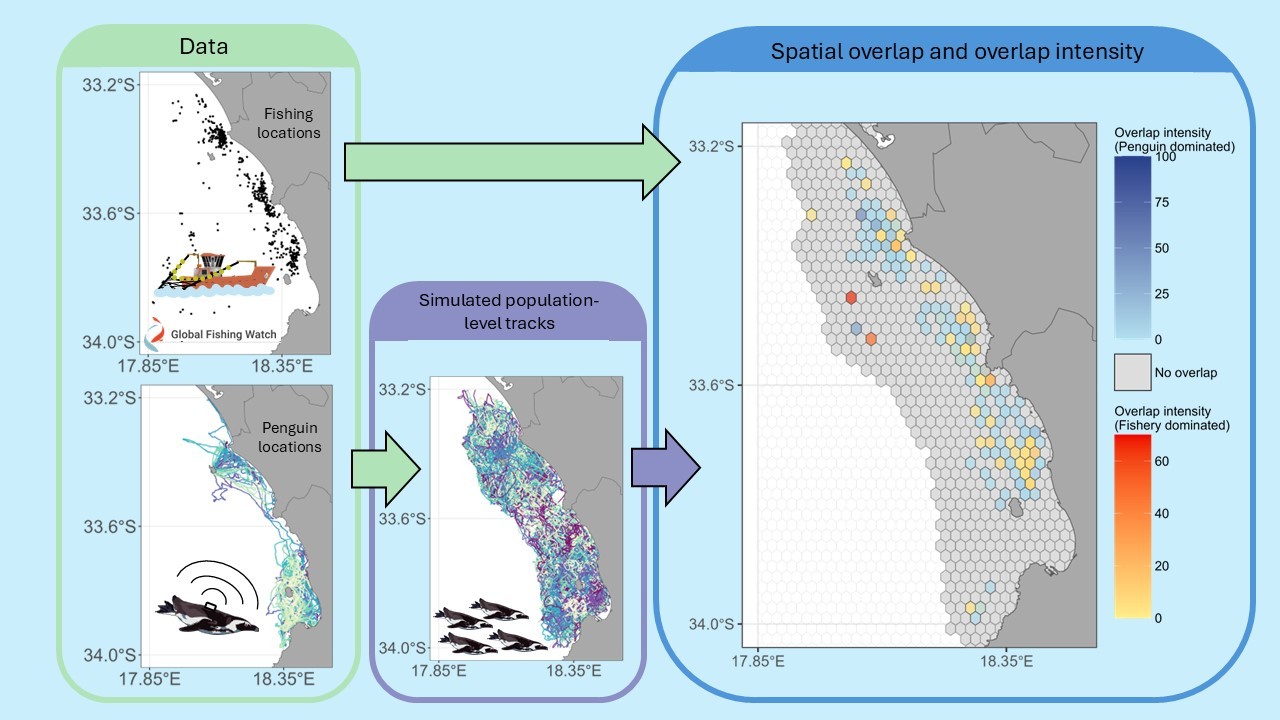
Earlier this year, the South African government reached a court settlement over the need for fishery closures near penguin colonies. In response, more biologically meaningful no-take zones are being reinstated around some colonies, including Robben Island — one of the key colonies studied. Our findings show that there were areas of high overlap intensity – where penguins are most at risk – in previously unprotected areas, highlighting the need for these updated closures.
Read the full article, ‘Spatial overlap alone downplays the level of interaction between a central place forager and the local fishery’, in Journal of Applied Ecology.