In a major diplomatic milestone on the sidelines of the 81st Session of the United Nations General Assembly (UNGA 81), the United Kingdom officially joined the landmark initiative led by France and Mexico aimed at voluntarily suspending the Security Council veto during crises involving genocide, crimes against humanity, and large-scale war crimes.
The United Kingdom becomes the 128th country—and only the second permanent member ($P5$) of the UN Security Council alongside France—to endorse the Political Declaration on Suspension of Veto Powers in Cases of Mass Atrocity.
The Announcement and Political Context
The joint ministerial meeting, co-chaired in New York by representatives of France and Mexico, brought together decades of momentum designed to prevent paralytic gridlock within the UN Security Council when human lives are at immediate risk.
British Foreign Secretary Ed Miliband formally announced the UK’s voluntary commitment, marking a significant shift among the $P5$ powers ($China, France, Russia, the UK, and the US$).
                     UN SECURITY COUNCIL VETO INITIATIVE

  [2015] France & Mexico Launch Initiative ──► Voluntary Veto Restriction in Atrocity Cases
                                                       │
  [2026] 21 New Signatories Join            ──► Broad Support Across Global South
                                                       │
                                                       ▼
  [UNGA 81] UK Signs Declaration            ──► 128 Member States Total (2 of 5 UNSC Permanent Members)
The pledge is a voluntary code of conduct: permanent members agree not to exercise their veto right when the Security Council is called upon to act to prevent or end mass atrocity crimes.
Key Highlights of the UN General Assembly High-Level Week
The announcement arrived amid the broader high-level general debate at the 81st General Assembly session, held under the unifying theme: “Restoring trust, managing transformation: A United Nations that delivers for all”.
| Theme / Forum | Focus & Discussions |
| UNSC Reform & Veto Abuse | Widespread calls from global leaders to reform the Security Council structure and restrict veto usage that blocks urgent humanitarian interventions. |
| Partners for Multilateralism | Side-summits convened by world leaders emphasizing rules-based international law, peace building, and multilateral cooperation over unilateral force. |
| Climate Action & Just Transition | UN Secretary-General António Guterres convened high-level sessions addressing climate adaptation, energy transitions, and vulnerable state protection. |
| Global Conflict Resolution | Urgent debates focused on accelerating peace frameworks, defending international law, and guaranteeing humanitarian relief access across global conflict zones. |
Why the 128-Nation Threshold Matters
For years, the UN Security Council’s ability to uphold its primary mandate—maintaining international peace and security—has been repeatedly stymied by individual $P5$ vetoes.
By rallying 128 member states—including a growing coalition of nations across Africa, Latin America, the Caribbean, and Asia—the French-Mexican proposal creates immense moral and political pressure. While changing the UN Charter requires a formal constitutional amendment, a voluntary commitment by permanent members establishes a powerful international standard: the veto must never serve as a shield for mass atrocities or block the protection of human lives.
For an overview of the structural debate surrounding Security Council reforms and veto power during UNGA high-level discussions, you can review this report on UN Security Council Reform & UNGA High Level Week Debate, which covers the key challenges facing the UN’s peacekeeping apparatus.
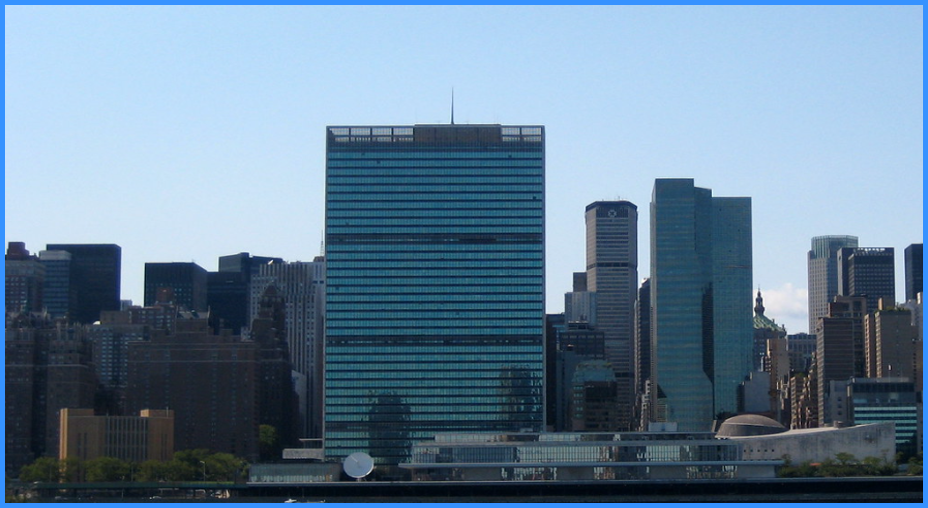
The United Nations Hq NYC, by Wally Gobetz