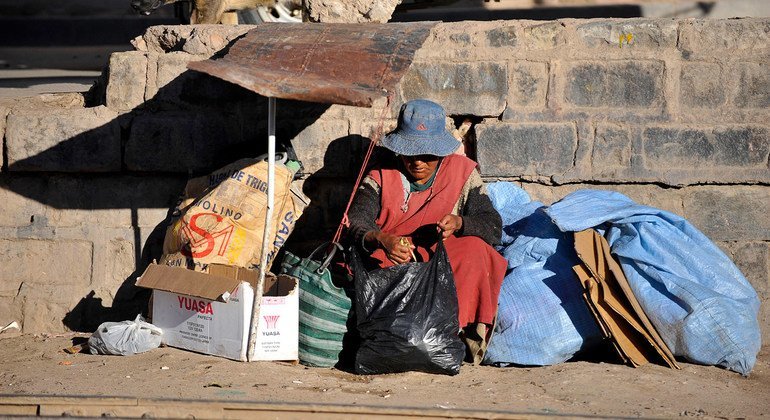
With nearly three billion people lacking access to adequate housing worldwide, the global housing crisis has become one of the most urgent human rights challenges, according to UN-Habitat, the UN agency focused on sustainable urban development and housing.
More than one billion people live in informal settlements, while over 300 million people experience homelessness across the Global South and North.
In Africa, 62 per cent of urban dwellings are informal. In the Asia-Pacific region, over 500 million people lack access to basic water services, and more than a billion live without adequate sanitation.
In a video message supporting a forthcoming conference, Mr. Gere stressed the urgency of global action. “Without a safe home, there is no health, no education, no stable employment” he said.
Homelessness extends far beyond the absence of shelter. It often results in the denial of fundamental rights, including security, healthcare, privacy and human dignity.
Upcoming forum
The issue will take center stage at the thirteenth session of the World Urban Forum (WUF13), the UN’s premier global conference on sustainable urbanization, due to take place in Baku, Azerbaijan.
Held under the theme “Housing the world: Safe and resilient cities and communities,” the conference will bring together governments, civil society organizations, urban planners, private sector leaders and youth representatives to discuss solutions to the growing housing crisis.
The Gere Foundation, HOGAR SÍ, a Spanish organization focusing on housing issues and UN-Habitat are getting together to focus on how to ensure that all people have access to adequate housing.
Homelessness is rooted in the failure of society to provide for its citizens and addressing the crisis will require long-term political commitment, stronger social protection systems and housing-centered public policies, advocates say.
“Homelessness is not inevitable. It is a profound injustice – one we can solve when we choose dignity, housing and human connection,” Mr. Gere said.
Anacláudia Rossbach, Executive Director of UN-Habitat, said the collaboration highlights the need for global cooperation in confronting urban challenges.