What is the past? It may seem a simple question to answer, but it is more complex than we might think at first. As science, politics, technologies and ways of thinking change, so does our understanding of what went before.
Tim Forssman is an archaeologist who has conducted research in South Africa, Botswana, Lesotho and Mozambique. He recently completed a book about how the history of archaeology in Africa has shaped the way we understand the past. Here he shares some thoughts about why the discipline matters.
What are the key phases of archaeological work in Africa?
In my book, I divided the practice of archaeology in Africa into four phases: the early years, the emergence of archaeology, a coming of age, and archaeology’s diaspora across Africa. These are not definitive, and they have fuzzy boundaries, but they made the most sense to me. Each chapter begins with a story that I felt captured that period in time.

CC BY
The early years came at a time (the late 1800s) when European nations were scrambling to parcel up Africa into colonies. Much of the archaeological work at this time was based on collections, with little analysis of the finds. Most of the research was carried out by museums employees, missionaries, administrators and travellers but little by trained specialists.
In the early 20th century, archaeological approaches changed, leading to a clash of amateurs and professionals. By the 1920s, robust analytical approaches were being developed and used to interpret the past. However, archaeology was still chasing the ghosts of colonial misperceptions of Africa’s history. Bogus notions of an Atlantis, a legendary sunken utopia, in west Africa, or Hamitic people from Egypt bringing advanced technology to large parts of the continent, continued.
Read more:
Colonialism in Africa: archaeology offers a deeper view
The second world war brought about a technological leap. Methods such as radiocarbon dating emerged along with other advanced methods that would fundamentally shift archaeological approaches. Early examples of radiocarbon dating in Africa were from Bernard Fagg’s work in Nigeria on the Jos Plateau. While stationed there as a colonial chief inspector of mines he was alerted to finely crafted terracotta heads. He and his wife, Catherine, searched for more and retrieved a large sample. He dated them, producing an age over 2,000 years old, much older than any known kingdom in west Africa at that time. It challenged colonial views that complex civilisations emerged far later in this part of the world than elsewhere.

CC BY
Growing from the 1960s, the diaspora of archaeology, was the role communities played in research, either as workers or by offering information and knowledge. This, I argue, represents a complete shift in archaeological frameworks and in giving agency to Africans.

CC BY
The Swahili coastline is a perfect example. Previous work focused on the role that incoming Arabic groups played in transforming the socio-political landscape. Then a new approach emerged which turned the lens and examined how local communities carved out change along the coastline as part of a much longer history. Interest shifted from monumental settlements like the Great Mosque at Kilwa-Kiswani, in Tanzania, to everyday life.
Read more:
Ancient DNA is restoring the origin story of the Swahili people of the East African coast
These chapters show how the lens archaeologists and historians use focuses on different pasts. As our contexts change, as our approaches shift, or as our science takes on new forms, our view of the past comes into a new focus. We see the past through the present – it is dependent on our social, technological, economic and political contexts.
What role does archaeology play in modern Africa?

CC BY
The past has created the world we inhabit. For example, the entire eastern seaboard, from Mogadishu in Somalia to Vilanculos in Mozambique, is shaped by the long history of trade, interaction, colonisation, slavery and conflict. During the colonial era, and in South Africa until the end of apartheid, much of this was not fully recognised or widely promoted. Refocusing on the past, in places with colonial pasts, can play a reparative role in acknowledging African histories that were poorly recorded, helping us to better understand how our society was shaped.
Read more:
Looting of African heritage: a powerful new book explores the damage done by colonial theft
Archaeology matters beyond how we view ourselves and those around us. It has the potential to promote social harmony, improve spiritual and mental health by connecting people with their past and their ancestors, and create sustainable jobs. It also promotes local and indigenous ways of doing and knowing. In Egypt, the Golden Parade of the Pharaohs through the streets of Cairo, when 22 mummies were moved to their new museum in 2021, became an important symbol of nationhood and identity. However, so much of Africa’s heritage is currently at risk.

CC BY
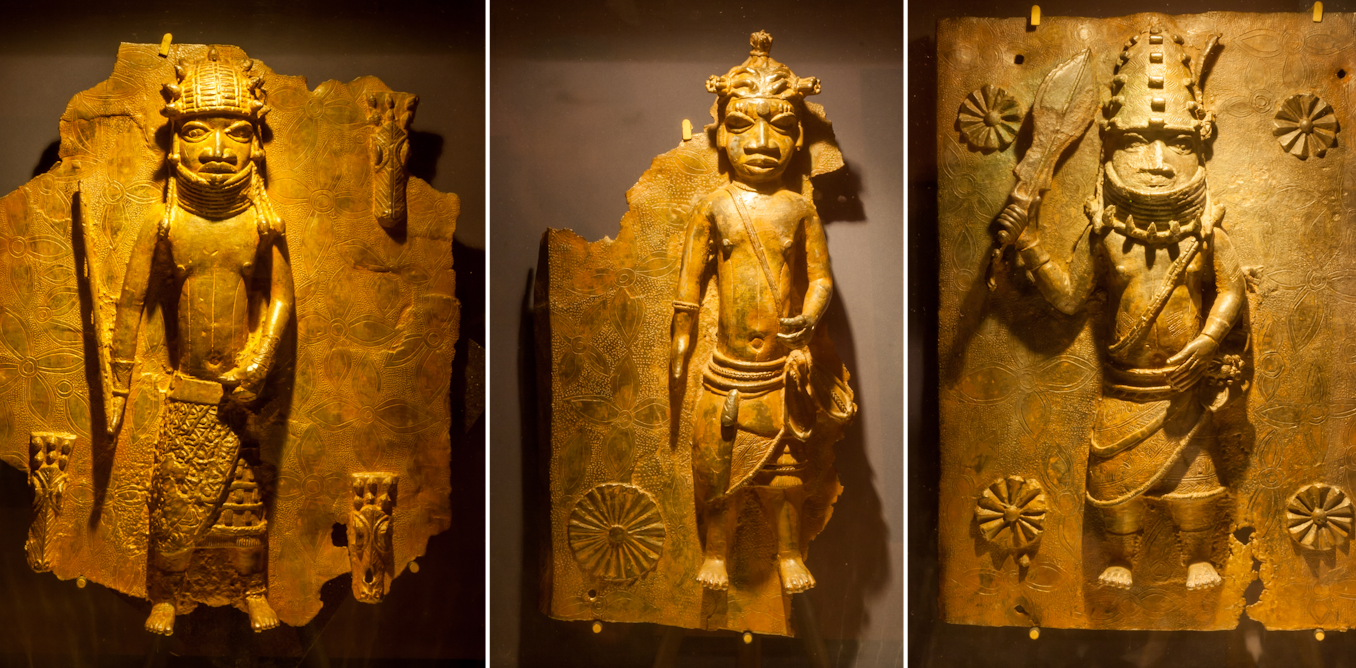
Preserving the past is an important task for all archaeologists and historians. Rampant looting for museums and collections has led to the loss of important historical items, such as terracotta statues in Nigeria and Mali. Crime is another concern. Conflict during the late 1990s in Eritrea and Ethiopia resulted in the toppling of stelae (stone columns) and golden finds from Thulamela (a site in South Africa’s Kruger National Park) were stolen from the museum in Skukuza, never to be retrieved.
Climate change is having an irreparable impact on history and heritage. In east Africa, potentially more than a quarter of the Unesco World Heritage sites are at risk of flooding or erosion. Mozambique is already witnessing massive damage from cyclones. It is only through archaeology that we learn more of these important pasts and identify methods to protect and preserve them.
Where do you see the field going next?
It is a very diverse discipline with a lot of sub-fields. Each has their own ambitions, aims and goals. But I believe there are some overarching agendas.
Reviewing scientific papers of African research shows that the vast majority are authored by people from Europe and North America. This brings collaborations, funds and training opportunities, but it also causes problems locally. This power dynamic needs to be revised. There should be more of an emphasis on growing local capacity, facilities and training.
Read more:
South Africa’s history uncovered: the 1,000-year gap they don’t teach in school
Archaeological science is advancing our knowledge of the past at a rapid rate. Genetic research is helping us understand human and animal movements across the continent, and chemical analysis of artefacts such as glass beads is helping us map trade networks. We need more laboratories in Africa. This will create jobs and skills development, and reduce the risks associated with moving sensitive heritage items far from their places of origin.
Read more:
Nigeria’s city of Ilé-Ifẹ̀ has survived and thrived for 1,000 years: here’s how
I also feel that including local communities in archaeological research at various levels is a grand shift in the discipline. In the earlier years, community knowledge was undervalued, whereas today many studies place it at the centre of understanding. Studies of rock art, for example, struggled to understand the art’s meaning until scholars turned to the belief systems of people who produced it to unlock its symbolism.
While there are many challenges, archaeology is in a strong position to contribute to the future. However, archaeologists must ensure that they show how the past is relevant in the present, or it risks being left behind.

Tim Forssman is affiliated with the University of Mpumalanga and the University of Oxford