- Four human rights groups (the American Friends Service Committee, the Center for Constitutional Rights, Human Rights Watch, and the Open Society Institute) filed a lawsuit in US federal court challenging the Trump administration’s sanctions against ICC prosecutors and judges, a UN human rights expert, and three Palestinian human rights groups.
- The sanctions regime, and the executive order on which it is based, undermines access to justice for victims of serious international crimes around the globe and prevents civil society from working together to combat impunity.
- The groups state that the sanctions are a blatantly illegal attack on international justice and should be struck down. The groups assert the sanctions infringe their constitutional rights to free speech, association, and religion, and violate US law and US obligations under international law.
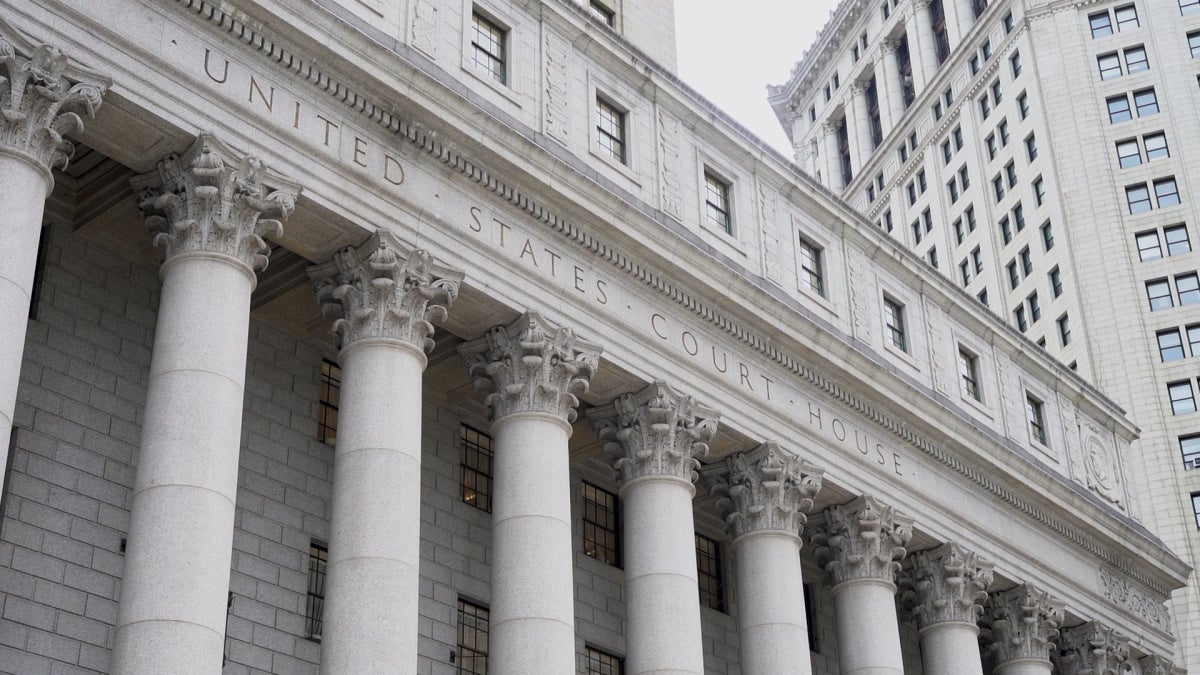
(New York) – Four human rights groups filed a lawsuit in the Southern District of New York on August 11, 2026, alleging that the Trump administration is illegally sanctioning individuals and organizations affiliated with or assisting the work of the International Criminal Court (ICC) and is criminalizing those who associate with or otherwise support them. The suit challenges President Donald Trump’s February 6, 2025 executive order authorizing sanctions on ICC officials, judges, and others working with the court to seek justice for genocide, war crimes, and crimes against humanity.
The plaintiffs (the American Friends Service Committee, the Center for Constitutional Rights, Human Rights Watch, and the Open Society Institute, a part of the Open Society Foundations) state that the sanctions are a blatantly illegal attack on international justice and should be struck down. The groups assert the sanctions force them to curtail a wide range of human rights and legal work in violation of their First and Fifth Amendment rights under the US Constitution and under the Religious Freedom Restoration Act. The lawsuit also argues that the sanctions exceed the president’s powers and are based on a pseudo “national emergency” that has no basis in fact.
“The fact that so many leading human rights and humanitarian organizations have come together to challenge Trump’s unlawful executive order demonstrates the widespread harm it is causing across civil society groups dedicated to bringing those responsible for grave crimes to justice,” said lead counsel Andrew Loewenstein of Foley Hoag LLP. “The plaintiffs are seeking an end to this sanctions regime, which transgresses the president’s authority and violates international and US law, including the rights to freedom of expression and religion.”
The ICC has launched 18 investigations around the globe, including in Afghanistan, Central African Republic, the Democratic Republic of Congo, Libya, the Philippines, Darfur (Sudan), and Ukraine. This includes a Palestine investigation that led to the issuance of arrest warrants for Israeli Prime Minister Benjamin Netanyahu and former Israeli Minister of Defense Yoav Gallant on charges of war crimes and crimes against humanity committed in Gaza. Palestine is a state party to the ICC. Undermining the court makes it harder for survivors to pursue justice and have their voices heard when they have nowhere else to turn, the groups said.
“The US government’s efforts to dismantle the ICC and punish people seeking justice for grave human rights violations harm far more than the individuals and groups facing sanctions. It is an affront to all victims and survivors of war crimes and genocide,” said Joyce Ajlouny, General Secretary of the American Friends Service Committee. “This executive order seeks to intimidate human rights defenders and deter people of conscience from advocating for the rights and dignity of others. We are joining this lawsuit because we refuse to stay silent when the pursuit of justice is criminalized.”
The sanctions are one of many actions the Trump administration has taken against free speech, protest, and advocacy in support of the human rights of Palestinians. To date, the Trump administration has used the order to sanction ICC prosecutors, eight ICC judges, the UN Special Rapporteur on the situation of human rights in the Palestinian Territory occupied since 1967, and three leading Palestinian human rights groups.
On July 13, 2026, US Secretary of State Marco Rubio announced an escalated campaign to “dismantle” the court, including an increased use of sanctions and pressure on ICC member countries to leave the court. While the US claims ICC investigation of Americans, who otherwise would enjoy impunity, is a threat to US sovereignty, Americans who commit crimes abroad may already be prosecuted by foreign courts where the crimes took place, a well-established principle of international law.
“For many years, I have represented victims in pressing for justice for crimes committed by the powerful, and finally saw much-needed, even if overdue, investigations opened at the ICC. In response, the Trump administration took the extraordinary step to not only deny Palestinians and victims of US torture equal access to justice, but to criminalize and punish them, their lawyers and advocates, and their partners,” said Katherine Gallagher, Senior Staff Attorney at the Center for Constitutional Rights and legal representative for victims before the ICC. “All victims of international crimes – from Sudan and Ukraine to Palestine and Afghanistan – need and deserve to have an independent and strong ICC able to fulfill its mission of ending impunity, without fear or favor.”
Sanctioned individuals and the Palestinian human rights groups have experienced frozen or closed bank accounts, rejection of financial transactions, denial of access to digital services, and travel bans. US organizations, including the plaintiffs, can face punishment of up to 20 years of imprisonment and exorbitant fines for providing services to sanctioned persons or entities.
The sanctions have stopped the four plaintiff organizations from continuing or undertaking activities like representing victims of war crimes as legal counsel, making legal and policy submissions to the ICC, and collaborating with the sanctioned Palestinian human rights groups to undertake litigation, coordinate advocacy campaigns, research human rights violations, or provide humanitarian aid. The executive order profoundly damages the plaintiffs’ ability to collaborate with others, including the sanctioned Palestinian human rights groups, thereby harming their ability to protect human rights and advance the cause of justice.
The crippling effects of the sanctions extend well beyond US borders. Due to the dominance of US financial institutions and technology companies and the threat of losing access to the US banking system, non-US banks and other entities outside of US jurisdiction are also being chilled from providing services.
“These sanctions are an assault on the rule of law, independent judges and prosecutors, and civil society in the United States and around the world,” said James Goldston, executive director of the Open Society Justice Initiative. “They betray historic US leadership in the cause of international justice and are a slap in the face to victims and survivors of grave crimes everywhere who depend on the ICC as a court of last resort.”
In 2025, federal courts in New York and Maine found the executive order violated the First Amendment and temporarily or permanently stopped enforcement of the sanctions regime against the plaintiffs in those cases. Since the executive order was issued in February 2025, ICC states parties, the leadership body of the court’s Assembly of States Parties, the European Union, UN experts, the UN Secretary-General, the UN High Commissioner for Human Rights, civil society organizations, and the ICC itself have spoken out strongly against the effort to obstruct the court’s work.
The ICC is a permanent international court created to try individuals accused of war crimes, crimes against humanity, genocide, and the crime of aggression. Following the genocides in the mid-1990s in Rwanda and in the former Yugoslavia, the international community created the ICC to prevent those responsible for serious crimes, including senior officials, from evading justice. The ICC does not displace the responsibility of states to bring justice for these crimes and can only act if a state is unable or unwilling to conduct genuine national proceedings. The court has jurisdiction over nationals of ICC states parties and those who commit these serious crimes on the territory of an ICC state party, whatever their nationality. Nearly two-thirds of UN member countries have joined the court.
“We are taking the Trump administration to court to stop attacks on international justice and the civic space necessary to ensure that rights are protected consistently around the world,” said Liz Evenson, international justice director at Human Rights Watch. “Governments should step up to protect the ICC and those seeking justice before it to ensure no one is above the law.”
Plaintiffs are represented by Foley Hoag LLP.