
Ylva Lekberg, from MPG Ranch, discusses her article: Eco-evolutionary shifts in interactions between a globally invasive plant and belowground putative pathogens coincide with shifts in plant performance
Some plant species become invasive in non-native ranges and outcompete native plants, reduce biodiversity, and alter ecosystem functions. Altogether, invasive species cost billions of dollars to manage. We often attribute the success of invasive plants to escape from co-evolved specialist pathogens and herbivores, but do invasive plants encounter new pathogens in the non-native range and do plant-microbial associations vary with biogeographical history in ways that help plants become even more invasive?

What we did
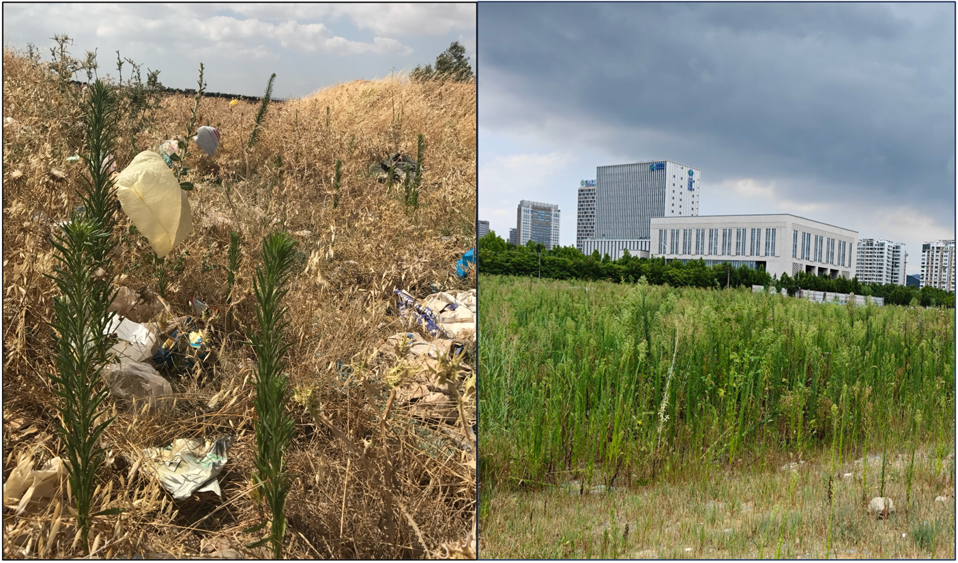
Our study involved researchers from Germany, India, China, Jordan, USA, and Canada, who are all part of the iCONNECT network. We characterized fungal pathogens in the roots and rhizosphere of Conyza canadensis (Canadian horseweed) collected from a broad gradient of environmental conditions in its native (North America, 17 populations) and non-native (Eurasia/Middle East, 17 populations) ranges. We also conducted a common-garden experiment in the glasshouse where we grew seeds collected from the different field populations in soil from the native range of the species to assess evolutionary shifts in plant-pathogen associations.
Key results
We found that Conyza canadensis populations from the non-native range were associated with different and richer fungal pathogen communities than those in the native range. We also documented a higher abundance of pathogens in the rhizosphere than in the roots of plants in the non-native range, and that plants with more pathogens in the rhizosphere relative to the roots were also larger. No such relationship was found in the native range. Across ranges, fungal genera known to associate with a broad range of host species, such as Fusarium and Alternaria, dominated.
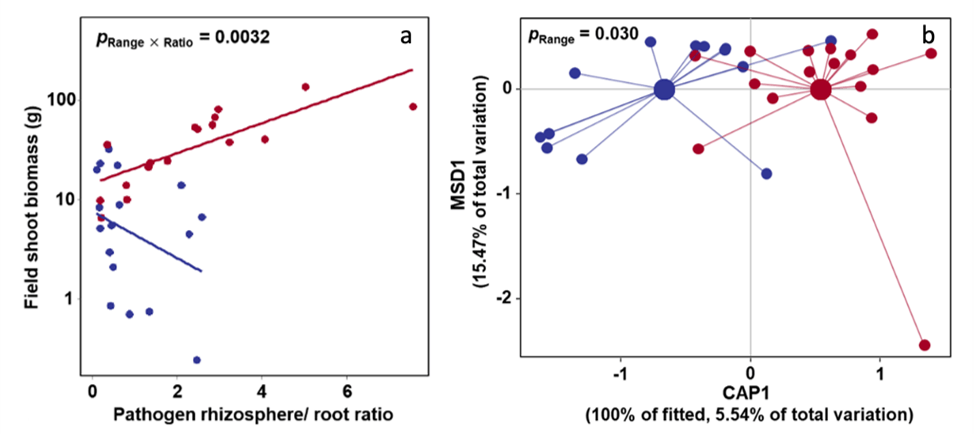
In the glasshouse, plants from the native and non-native range cultured different pathogen communities. Similar to in the field, plants from the non-native range promoted pathogens in their rhizosphere, but not in the roots, unlike plants from the native range. Pathogens promoted by plants from non-native ranges were less suppressive on sibling plants compared to pathogens cultured by Conyza populations from the native range.
Main conclusions and why they matter
Invasive plants break many ecological “rules” and can grow and establish persistent monodominant stands under stressful conditions in ways that many native plants cannot. Ecologists continue to study invasion to better understand what enables such unusual behavior by exotic invaders, but the lack of coevolutionary relationships between plants and microbes seems likely to play a role.
We found that Conyza plants encounter novel pathogens in their non-native range; a pre-requisite for enemy release. We also found evidence for evolutionary shifts in plant-pathogen associations toward defense in which pathogens appear to be resisted by roots and accumulate in the rhizosphere. This is consistent with the accumulation of local pathogen hypothesis, which is gaining traction. But the accumulation of pathogens in non-native ranges also raises a lot of questions. First, how can plants accumulate pathogens in their rhizosphere without succumbing to disease? And second, do these pathogens selectively suppress neighbor plants and therefore aid the invader? These questions are currently being addressed in an ongoing study within iCONNECT.








