People are up in arms about changes to the prostate cancer screening guidelines in the UK.
TV personality Jeremy Clarkson wrote on X: “Until last week, men over 50 were entitled to a free PSA prostate cancer check. But the government has now decided to withdraw that right. I cannot for the life of me work out what their reasoning might be.”
Former prime minister David Cameron, who credits the test with catching his own cancer, called the changes “yet another step backwards”.
The fear is easy to understand. Why make it harder to get a simple blood test that could spot a deadly cancer before symptoms appear?
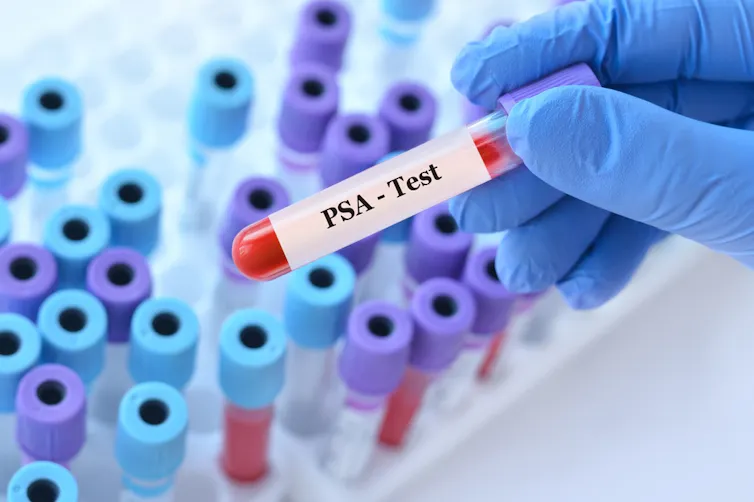
At the centre of the row is the PSA, or prostate-specific antigen, test. PSA is a protein made by the prostate, and prostate cancer can cause levels of it in the blood to rise.
Prostate cancer is much easier to treat before it spreads, so finding it early sounds like an obvious win. But PSA has a fundamental limitation: it is not actually a cancer test. High PSA levels can be caused by cancer, but also by an enlarged prostate, inflammation or infection. And some men with prostate cancer have normal PSA levels.
There’s another problem. Not all prostate cancers behave in the same way. Some grow quickly and can become life threatening. Others grow so slowly that they would never cause symptoms. If we test millions of healthy men, we will inevitably find some of these harmless cancers. This is known as overdiagnosis.
But once someone is told they have cancer, choosing not to treat it can be difficult for both patients and doctors. Treatment with surgery or radiotherapy can cure prostate cancer, but it can also cause urinary incontinence, erectile dysfunction and other lasting side-effects. This is why the UK has never had a national PSA screening programme for all men over 50.
Screening programmes are not judged simply on whether they find cancers earlier. They also have to save enough lives to outweigh the harms caused by testing large numbers of healthy people.
Large trials of PSA screening have shown that it can reduce deaths from prostate cancer, but at the cost of substantial overdiagnosis. For that reason, the UK National Screening Committee still does not recommend routine screening for all men.
What changed in the guidance?
Until recently, NHS guidance under the Prostate Cancer Risk Management Programme stated that men aged 50 and over without symptoms could ask for a PSA test after discussing the potential benefits and harms with their GP. That programme has now been retired.
Men can still ask for a PSA test, but GPs now have clearer discretion over whether to offer one, based on a man’s personal risk factors. The government says this clarifies existing guidance rather than taking away anyone’s right to be tested.
Critics argue that, in practice, it creates an additional barrier between an informed man and a test he previously expected to receive.
At the same time, the UK is starting to focus screening on people at the highest risk. From 2027, men aged 45 to 61 who carry harmful BRCA mutations – a gene change more commonly associated with hereditary breast and ovarian cancer – are planned to be offered PSA screening every two years.
Screening men most likely to develop prostate cancer makes sense because it increases the chances of finding dangerous cancers while reducing unnecessary diagnoses.
That raises the question of other high-risk groups. Black men have approximately twice the lifetime risk of developing prostate cancer as white men, while having a father or brother with the disease also increases risk. But there still isn’t enough evidence to justify a national screening programme for these groups.
StanislavSukhin/Shutterstock.com
A major UK study called Transform is testing whether MRI scans, genetic information and other risk-based approaches can do a better job of identifying dangerous prostate cancers. That’s important because diagnosing prostate cancer has changed considerably since the early PSA screening trials.
A man with a raised PSA can now undergo a type of scan called a multiparametric MRI before biopsy. MRI can identify suspicious areas of the prostate, allow biopsies to be targeted and help some men avoid a biopsy altogether.
And if a small, low-risk cancer is found, doctors increasingly use “active surveillance” – monitoring it carefully rather than immediately operating or giving radiotherapy. These advances could reduce two of the biggest problems that made PSA screening so controversial in the first place.
So the claim that men over 50 have simply been denied PSA testing is too strong. They can still ask for a test, although access now more explicitly depends on a GP’s judgment. But the anger surrounding the change reflects a genuine scientific and ethical tension.
For someone such as Cameron, whose symptomless cancer was discovered through PSA testing, the benefit of early detection is intensely personal and obvious. Screening policy has to answer a harder question: what happens when the same test is offered to millions of healthy men?
The real debate, therefore, should not be about whether early diagnosis saves lives – it can. It is about whether we can find the prostate cancers that need to be found while leaving the harmless ones alone. PSA by itself has never been very good at doing that. An interesting question now is whether MRI scans, genetic risk scores and better monitoring have improved diagnosis enough to tip the balance in favour of wider screening.

Justin Stebbing does not work for, consult, own shares in or receive funding from any company or organisation that would benefit from this article, and has disclosed no relevant affiliations beyond their academic appointment.