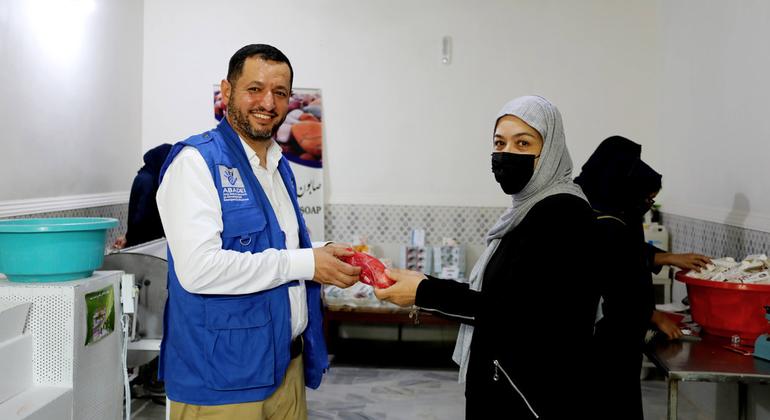
For many, running a small business has become the only viable path to earning an income – and a way to support other women who have lost their jobs.
With help from the UN, these entrepreneurs are keeping their livelihoods going, often in the face of intense social pressure and strict rules governing women’s movement.
“It was difficult for women to sit at home. They had to come out of their houses and learn,” says Parwin Zafar, who runs a tailoring shop in the northern city of Mazar-i-Sharif.
Parwin Zafar in her tailoring shop in Mazar-i-Sharif. She currently employs 16 women.
Her business is one of the few spaces left where women can safely work and train others.
Although women are barred from jobs in government, NGOs and the UN itself, many have found ways to continue working from home or in trades traditionally associated with women.
These include textile production, food processing and carpet weaving – sectors that remain broadly accepted by both the de facto authorities and local communities.
A lifeline
“The one channel that exists for Afghan women is small businesses,” says Ms. Zafar. And the UN Development Programme (UNDP) is helping keep that channel open.
The agency has supported more than 89,000 small enterprises across Afghanistan, 91 per cent of them led by women, creating over 439,000 jobs.
“These are sectors where women have historically worked. There’s no questioning of these traditional businesses,” explains Waheeb Al Eryani, UNDP’s area manager in Mazar-i-Sharif.
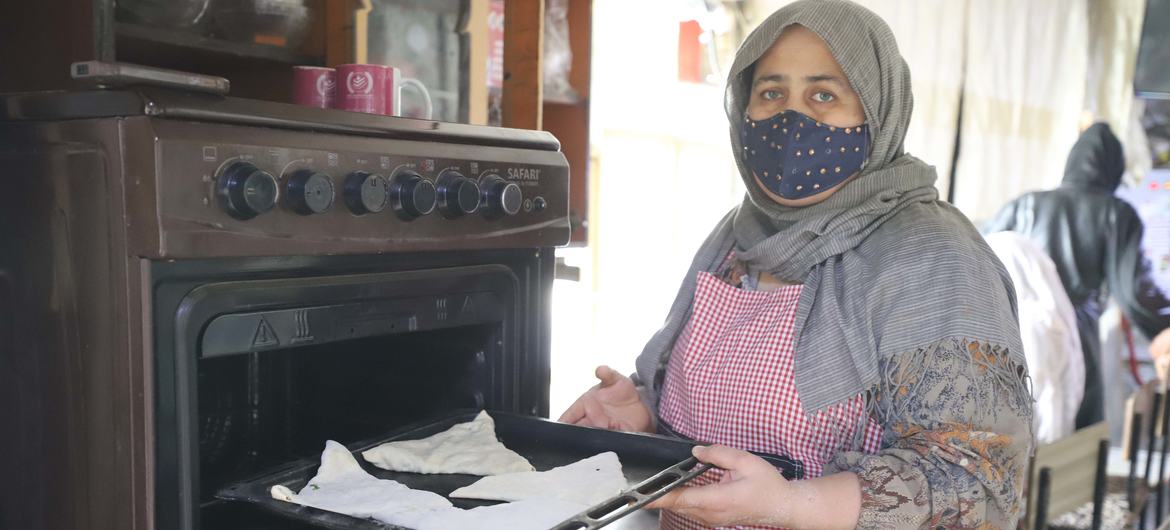
Shaista Hakimi in her restaurant in Mazar-i-Sharif.
But acceptance does not mean ease.
Many women still face opposition at home. For restaurant owner Shaista Hakimi, a mother of three, this has been painful and personal. Since her husband died two years ago, her father-in-law has pushed her to stop working altogether.
“He says people will laugh at us because ‘your daughter-in-law is working’,” she explains. Yet her restaurant, which serves only women, has become a vital community space – and a source of income for 18 women she now employs.
Staying afloat with UN support
Ms. Hakimi kept her business alive thanks to a UNDP loan and is now applying for a matching grant that would allow her to expand and secure safer accommodation.
“I can rent another place or building where I could live and do my work as well,” she says.
Ms. Zafar’s story mirrors her experience. When her previous business faltered, she received a subsidised UNDP loan, invested in new equipment and rebuilt her tailoring workshop. She now employs 16 women.
“Thank God, I was able to start my business again. This is how I can help more women,” she says.
Navigating strict rules
Even the most successful women entrepreneurs have little choice but to rely on male relatives. Decrees requiring women to travel with a male guardian – a mahram – severely limit their ability to deliver goods, meet customers or negotiate with suppliers.
“Women are not allowed to go places without a mahram. Especially if we want to deliver products to other provinces, we cannot do that,” Ms. Zafar explains.
To keep their businesses running, many rely on husbands, brothers or sons who can travel freely.
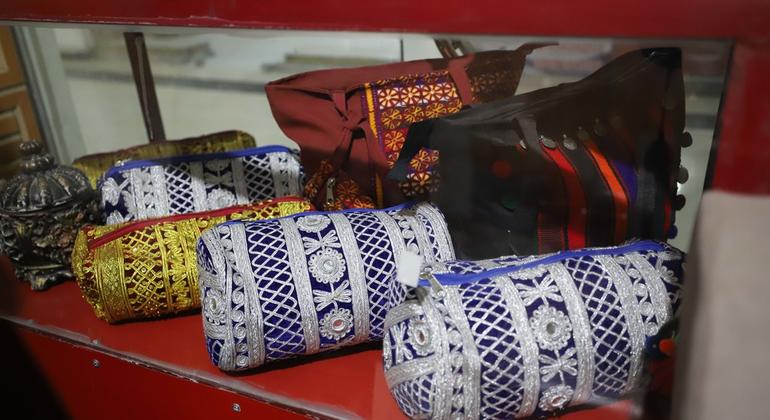
“They leverage their networks,” says Mr. Al Eryani. “If they cannot access the market, male relatives will sell the products or finalise deals with wholesalers.”
“Men we are related to are supportive. They try to sell our products in the community,” Ms. Zafar adds.
Resilience in the face of crisis
Access to markets and finance remains among the biggest hurdles. Only four per cent of Afghan women have access to international markets, and obtaining a loan often requires multiple guarantors – a barrier few can overcome.
Yet the entrepreneurs supported by UNDP are finding ways to persist, even as new challenges emerge.
With large numbers of Afghans recently returning from Iran and Pakistan, several women-led businesses have stepped up to offer jobs to returnees.
“With UNDP’s support, they employed 20, 30, sometimes 40 returnees per business,” says Mr. Al Eryani. “They became agents of support and contributors rather than recipients of help.”
An uncertain future
Despite their resilience, the future for Afghan businesswomen remains uncertain. With girls barred from education beyond Year 6, the next generation risks missing out on the skills needed to run a business or manage finances.
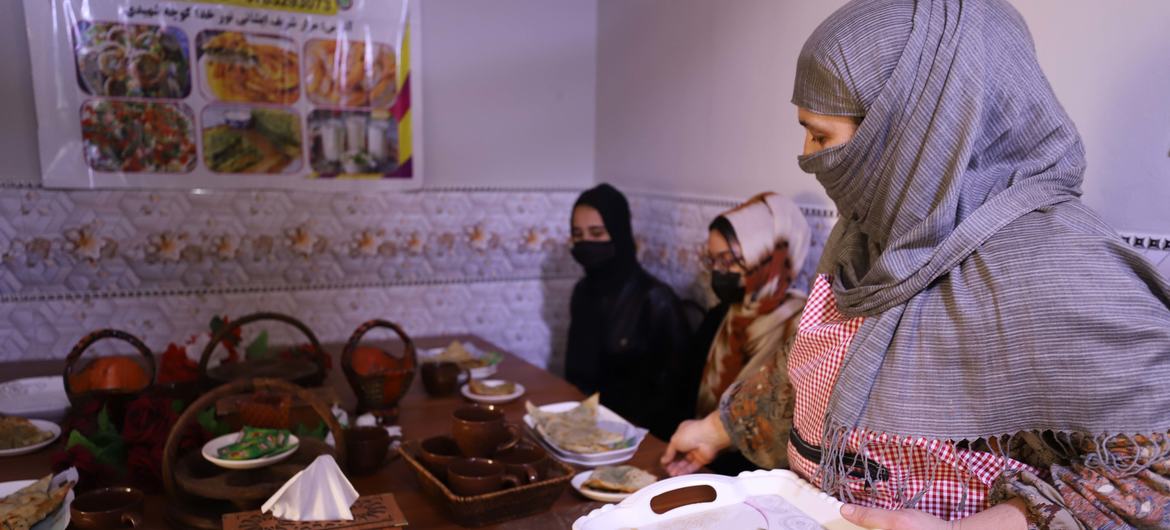
Shaista’s restaurant welcomes women for on-site dining, while delivery and pick-up services are available for both men and women.
“There is a lack of access to financial education,” Ms. Zafar says. “The support we are receiving is not enough.”
For now, Afghan women entrepreneurs continue to hold their communities together – creating jobs, passing on skills and proving every day that they will not be pushed out of public life entirely. But without wider access to education and sustained international support, the space they have carved out may shrink even further.