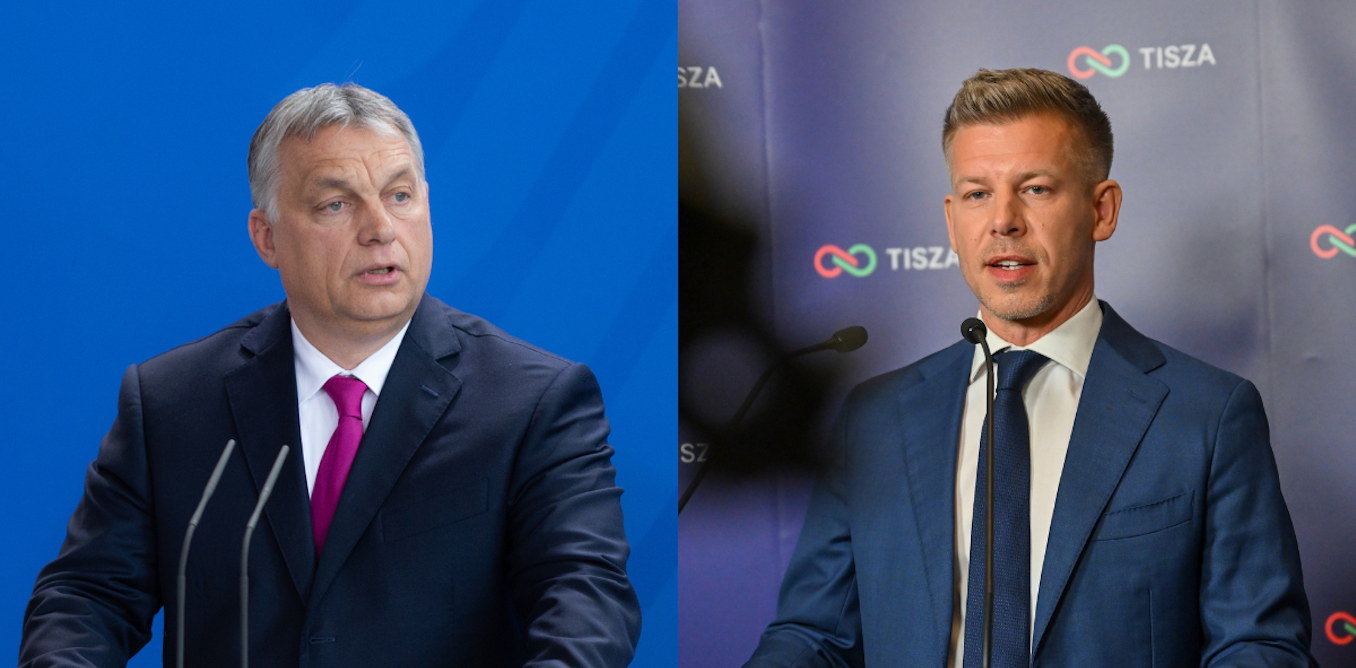
Hungarian voters have overwhelmingly rejected the 16-year rule of authoritarian strongman Viktor Orbán, electing his one-time political ally, Péter Magyar, to replace him. Magyar’s Tisza party has secured a two-thirds majority in parliament and therefore a supermajority. This will allow the new government to roll back some of the illiberal measures introduced Orbán governments over the years. Magyar has said that he intends to work for a “free, European” Hungary, which would reverse his predecessor’s rejection of Brussels.
One of Magyar’s key election promises was to restore press freedom, and reform state-run media, which, under Orbán, had become a powerful tool for distributing disinformation.
This huge win for Tisza followed a campaign marred by what many foreign monitors claimed were unprecedented levels of disinformation, foreign interference and government propaganda. In fact, the result may come as a surprise to those who believe that in information autocracies such as Hungary, where access to news and political discussion is controlled by what have been dubbed “spin dictators”, election results can easily be controlled by the ruling party.
Orbán is a textbook example of an information autocrat. The propaganda arsenal deployed by his ruling Fidesz party in this campaign was as formidable as ever. Pro-government election billboards blanketed the country, financed not just by Fidesz but by the government itself and by powerful publicly owned agencies such as the state energy conglomerate MVM, by the Magyar Nemzeti Bank (MNB) – Hungary’s central bank – and by a host of government-aligned NGOs.
State communication channels were repurposed wholesale for partisan messaging. Pro-government media and troll networks amplified existential warnings about the opposition.
But Fidesz’s tactics went further than messaging. Elaborate theatrics were deployed to scare or influence voters. A bomb was allegedly defused in Serbia that had supposedly targeted Hungarian election infrastructure. Ukrainian cash and gold assets were seized on spurious grounds concerning some shadowy threat from Ukraine’s “war mafia”. Each spectacle seemed designed to lend weight to Fidesz’s warnings about external interference.
Fidesz attempted to fire up its electoral base by framing the election as an existential struggle for Hungary itself. Since it was first elected in 2010, Fidesz has relied almost exclusively on this strategy, painting its challenger as a danger to the country, and turning elections into a matter of life and death.
But this time around, Fidesz has learned to its cost that it was insufficient to stick to the playbook that has kept it in power for 16 years. Things have changed – most notably the Hungarian economy, which has essentially flatlined since 2022, with near-zero real GDP growth compounded by the highest inflation in the EU. The second big shift has been political – the consolidation of the opposition behind a single credible challenger to Orbán. Previously, Fidesz had been able easily defeat the fragmented and ineffective coalitions it had previously faced.
EPA/Zoltan Balogh
Orbán’s failing appeal
Despite Orbán’s considerable arsenal of information manipulation tools, his election pitch appears to have been broadly rejected. This appears to have been a failure of strategy, unexpected from such a wily political veteran. In his annual “state of the nation” address in February, Orbán promised more of the same, to protect Hungary from change and outside threats such as from Brussels.
But that’s a pitch to true believers, not to the wavering or undecided. There was no attempt to build bridges to new groups or attempt to extend his electoral coalition.
Having watched Fidesz govern all this time, I believe that answer is that the voter manipulation system the party built built over the years is poorly suited for this purpose. Persuading new voters to come round to your side is hard and requires credibility, good arguments and strong messages, none of which the government has any more. Much easier to focus on fear caused by slander, misinformation and the moral panic button.
This clearly didn’t work. In February, a survey found that only 23% of Hungarians believed the government’s central claim that victory for Magyar and his Tisza party would result in Hungary being dragged into a foreign war, a theme hammered on by Orbán in his state of the nation speech. Even among Fidesz voters, nearly half – 43% – said they didn’t believe this.
Political science literature is clear on the risks of negative campaigning helps explain why. Attack messages can attract attention – but their effectiveness hinges on whether voters find them credible. Dishonest attacks can boomerang, eroding trust in the attacker rather than the target. And this clearly happened in Hungary in this election campaign.
All of which points to a broader lesson about information control in illiberal regimes: it can easily be overstated. Hungary’s 2026 election has revealed that an information autocracy can have its limits. And in the face of a faltering economy and a united and credible opposition, Orbán’s campaign reached those limits – and failed as a result.