(Madrid) – Argentina’s efforts to extradite and question a former Venezuelan official residing in Spain accused of crimes against humanity could offer a pathway toward accountability, Human Rights Watch said today, following Spanish authorities’ reported decision to continue proceedings on the extradition request.
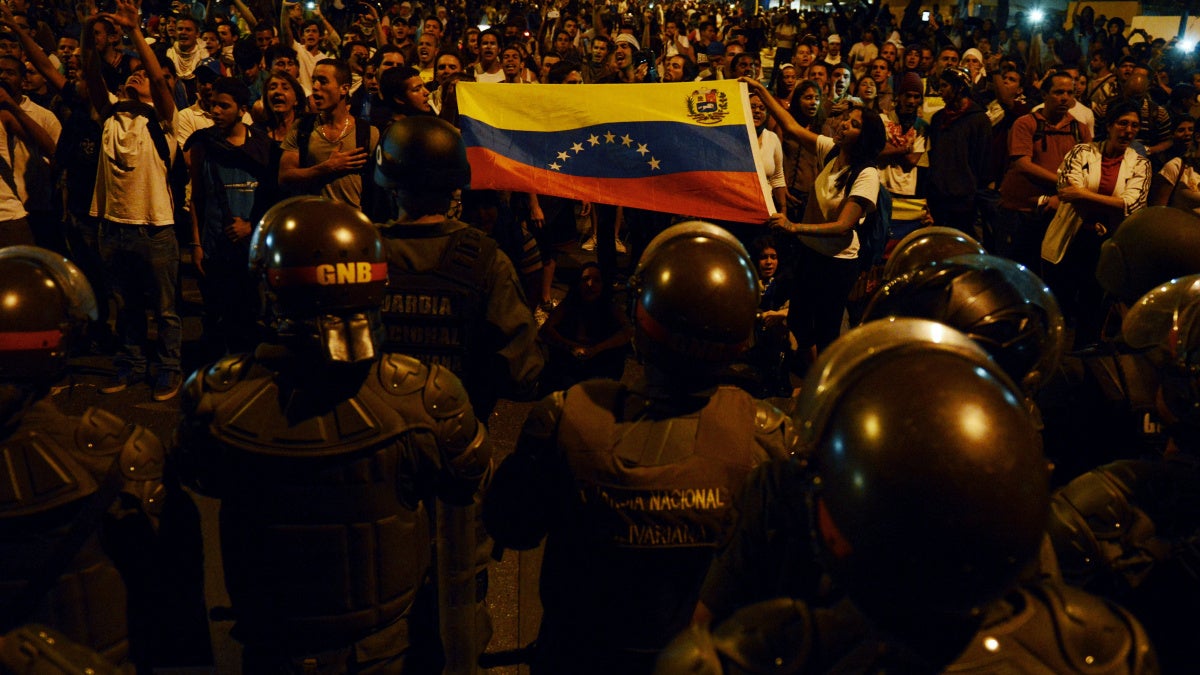
Argentina seeks the extradition of Ephraín Enrique Verdú Torrelles, a former officer of the Venezuelan Bolivarian National Guard (Guardia Nacional Bolivariana, GNB), a militarized police force responsible for widespread human rights violations. The extradition request seeks to secure Verdú Torrelles’ presence for questioning in connection with allegations that he committed murder as a crime against humanity during a government crackdown on the 2014 protests in Venezuela.
“Victims in Venezuela have seen no justice at home, and Argentina’s request for extradition is a reminder that justice can cross borders,” said Michelle Reyes Milk, senior international justice counsel at Human Rights Watch. “It will now be up to the Spanish court to decide on whether to proceed with extradition.”
The Spanish Council of Ministers approved the continuation of the proceedings on the extradition request, referring the matter to the Audiencia Nacional (Spain’s national court). The representative of the Venezuelan victims, Ignacio Jovtis, told Human Rights Watch that Spanish authorities have notified Verdú Torrelles about the proceedings on the extradition request. During the 2014 protests in Venezuela, security forces systematically used excessive and unlawful force against largely peaceful demonstrators, arbitrarily arresting hundreds and subjecting many detainees to severe abuse including beatings and, at times, torture, while denying them due process. Security forces and pro-government gangs known as colectivos also committed extrajudicial killings.
The United Nations Independent International Fact-Finding Mission on Venezuela found reasonable grounds to believe that government violations amounted to crimes against humanity, and that the government’s deliberate weakening of judicial mechanisms in the country worsened impunity. In 2021, the International Criminal Court opened an investigation into alleged crimes against humanity in Venezuela.
The extradition request follows a criminal complaint filed in June 2023 by the team of InterJust, a human rights group, before Argentinian courts, on behalf of family members of individuals alleged to have been killed extrajudicially by members of the Bolivarian National Guard during the 2014 protests. This case is possible due to the principle of universal jurisdiction, which allows countries to investigate and prosecute certain grave human rights violations amounting to serious international crimes, regardless of where they were committed or the nationality of the suspects or victims.
A separate and parallel complaint was lodged by an Argentinian human rights group, Foro Argentino para la Defensa de la Democracia (Argentine Forum for the Defense of Democracy), in January 2023, against former Venezuelan president Nicolás Maduro and his interior minister, Diosdado Cabello. Maduro has been detained in US federal custody since January 3 and is awaiting trial in the Southern District of New York on narco‑terrorism, drug trafficking, and weapons charges. Cabello continues to serve as minister of interior, justice and peace in Venezuela. He also faces narco-terrorism, drug trafficking, and weapons charges in the United States.
In September 2024, the investigating judge in Argentina issued arrest warrants against Verdú Torrelles and 13 other GNB officers to question them about the case filed against them. Under applicable Argentinian criminal procedure, Verdú Torrelles and the other officers have not been charged with a crime at this stage. Instead, Verdú Torrelles has been formally notified that he is the subject of an ongoing criminal investigation, procedurally becoming an imputado. Separately, the judge also summoned and issued arrest warrants against Maduro and Cabello.
If extradited, Verdú Torrelles would become the first individual in this case to appear in person before the Argentinian courts. Extradition would allow the investigation against him to move forward procedurally in Argentina, including questioning and possible indictment, after which the case could be sent to trial.
This would make Verdú Torrelles, to date, the highest-level individual to face a court anywhere for grave human rights violations committed in Venezuela, Human Rights Watch said.
Ongoing universal jurisdiction cases in Argentina concern alleged crimes under international law in Myanmar, Colombia, Nicaragua, China, Israel and Palestine, and Franco-era Spain. These cases have faced challenges, including securing the presence of suspects on Argentinian territory, the lack of specialized investigative and prosecutorial units with the mandate to conduct universal jurisdiction cases, and other resource limitations. At the same time, Argentinian judges and prosecutors have prosecuted important cases regarding international crimes committed in Argentina in the past.
“Argentina’s pursuit of universal jurisdiction cases sends a clear and resounding message that there should be no safe haven for those responsible for grave human rights violations,” said Reyes Milk. “The cooperation of other states, like Spain, is key to that effort.”