(Washington, DC) – Federal immigration enforcement agents shot and killed a man in Minneapolis, Minnesota this weekend, marking the second killing by immigration enforcement agents in the city this month. Federal officials reportedly blocked state officials from accessing the scene, raising concerns that the federal government is not acting in good faith to ensure an independent and comprehensive investigation, Human Rights Watch said today.
“The fatal shooting of another Minneapolis resident by federal agents follows weeks of violent and abusive immigration enforcement actions throughout the city,” said Ida Sawyer, crisis, conflict and arms director at Human Rights Watch. “The continuously unchecked actions of these agencies are endangering residents, with devastating consequences.”
US Border Patrol agents shot and killed Alex Pretti, a 37-year-old intensive-care nurse and US citizen, at around 9 a.m. on January 24. Pretti appeared to be observing and filming agents minutes before they shoved him, sprayed him in the face with a chemical agent, beat him with a metal canister, and fatally shot him.
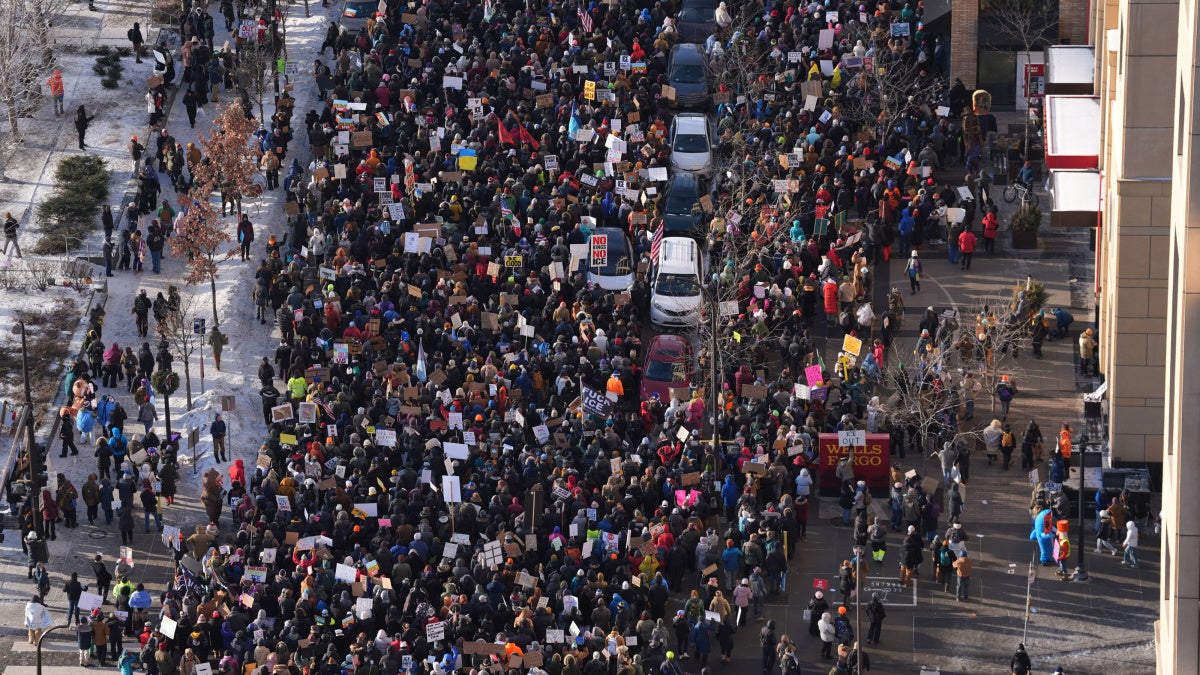
The killing comes two and a half weeks after an Immigration and Customs Enforcement (ICE) officer killed 37-year-old Renee Good in Minneapolis, which Human Rights Watch determined was unjustifiable. Both killings come amid a surge of federal agents to Minnesota, as part of abusive immigration enforcement operations that have spread fear and sparked widespread protest in communities across the United States.
Human Rights Watch analyzed and verified eight videos taken from different angles showing Pretti before, during, and after the shooting. Researchers also reviewed two witness statements submitted in federal court.
The Department of Homeland Security (DHS) claimed that the agents defensively shot Pretti. In a news conference hours after the shooting, DHS Secretary Kristi Noem stated that Pretti, who was reportedly a legal firearm owner with a permit to carry in Minnesota, approached officers with a handgun and “reacted violently” when they tried to disarm him. Human Rights Watch analysis of the videos and witness testimony contradict Noem’s account. There is no available evidence that Pretti did anything to threaten the lives of the officers that would justify the intentional use of lethal force under international human rights standards.
The first video, filmed at 8:58 a.m., shows Pretti filming agents in the street in front of a senior center on Nicollet Avenue, and one agent pushing him back toward the sidewalk.
One witness said in a statement that Pretti was directing traffic and observing agents when an agent told Pretti and the witness to back up, and another agent threatened observers with pepper spray. The witness said that Pretti approached them “just with his camera out. I didn’t see him reach for or hold a gun.” Another witness, a pediatrician, stated that they saw Pretti yelling at agents, but “did not see him attack the agents or brandish a weapon of any kind.”
Video footage confirms this. It shows an agent shoving one of the two other observers and then shoving Pretti. Pretti puts his arm around the observer who was shoved, in what appears to be an attempt to help them, as the agent then shoves the third observer. Pretti then places himself between the third observer and the agent. The agent sprays a chemical irritant directly into Pretti’s face from arm’s length and at the other observers, as Pretti holds his phone in his right hand and holds up his left hand defensively. Pretti staggers and falls toward the observers, with his back to the agent, who continues to spray him. Pretti appears to either reach for one of the observers or their backpack as an agent shouts, “Get back.”
Five more agents surround Pretti and the others, pulling Pretti to the ground. Two agents struggle with Pretti as he appears to be face forward on his knees. Two more agents move in on Pretti as they continue struggling. An agent lunges for Pretti’s waistline near his right hip. Video shows the other agent near Pretti’s head repeatedly striking him with a small canister. One of the men repeatedly screams that Pretti has a gun, and another male voice can be heard saying, “Gun, gun, gun!”
Simultaneously, the agent reaching for Pretti’s waistline removes a gun from Pretti’s right hip, quickly stepping back with it. Another agent standing next to the agent who removed the gun draws his handgun from his holster, and pivots around to Pretti’s rear pointing it in Pretti’s direction as two other agents try to restrain Pretti. A shot is heard as the agent who unholstered his own firearm continues to move around Pretti. At the time of the shot, he is the only agent within view who has unholstered his firearm, while the agent holding Pretti’s firearm carries it away.
After the shot, Pretti reels up, planting his right foot with his left knee still on the ground; his left hand swings from the center of his waist to his left side and his right hand is around his back on his right side. As the agent who unholstered his weapon stands over Pretti from behind, three more shots are fired in quick succession. The handgun’s slide is seen moving to the rear, indicating rounds are being discharged from the weapon. The agents around Pretti back away, as the agent who struck Pretti with the canister also unholsters his firearm. It is not clear if he fires his weapon. In total, agents fired 10 shots, based on Human Rights Watch’s video analysis.
Approximately 24 seconds after an agent fires the last round at Pretti, agents approach Pretti’s body. One agent searches Pretti’s body and shouts, “Where’s the gun? Where’s the fucking gun?” The agent points in the direction the agent who disarmed Pretti had moved and shouts, “You’ve got the gun?” A male voice responds, “I’ve got the gun.” The agent searching Pretti’s body then shouts that he needs scissors.
Approximately 90 seconds after the shooting, agents begin to remove Pretti’s clothing and call for a medic; a man arrives with a bag, saying “medic,” and agents tending to Pretti remove material from their bag. An agent calls for chest seals, a bandage commonly used to treat a puncture wound to the chest.
According to the statement from the pediatrician witness, agents first prevented the pediatrician from checking on Pretti, but subsequently permitted them to assess Pretti and administer CPR until emergency personnel arrived. The pediatrician said Pretti did not have a detectable pulse.
International human rights law stipulates that law enforcement officers should only intentionally use lethal force as a last resort, when strictly unavoidable to protect life. International human rights standards also require a prompt, effective, thorough, independent, impartial, and transparent investigation of a potentially unlawful death.
DHS policy, which applies to Border Patrol agents, only permits the use of force when no reasonable alternative appears to exist, and prohibits the use of lethal force unless the officer reasonably believes there is an imminent threat of death or serious bodily injury.
There is a serious risk that no comprehensive and independent investigation of this killing will be conducted, Human Rights Watch said. Investigations are reportedly being led by DHS Homeland Security Investigations. But the day of the killing, senior federal officials, including Noem, US Border Patrol Chief Gregory Bovino, and Homeland Security Advisor Stephen Miller, raced to defend the killing, claiming that Pretti “reacted violently,” “violently resisted,” and was a “domestic terrorist.” Bovino stated that it looked “like a situation where an individual wanted to do maximum damage and massacre law enforcement.”
Federal officials also seem to be impeding state-level efforts to investigate. The superintendent of the Minnesota Bureau of Criminal Apprehension (BCA), which would typically investigate killings in the state, including incidents involving federal officers, declared in a court filing that DHS agents “blocked” the BCA “from accessing the scene,” though they had a signed search warrant. The superintendent expressed concern about whether federal officials were properly protecting evidence. Referencing photos circulated online by DHS of a gun, the superintendent expressed particular concern that the gun “does not appear” to have been “protected according to normal law enforcement processes.” On January 24, a federal judge temporarily blocked DHS “from destroying or altering evidence” of the shooting.
Concerns about an adequate investigation are amplified as authorities have apparently refused to properly investigate Good’s January 7 killing. On January 8, the BCA reported that it was closing its investigation after the Federal Bureau of Investigation (FBI) said it would lead the investigation alone and no longer allow the BCA access to evidence. But 10 days later, Deputy US Attorney General Todd Blanche stated that the US Justice Department was “not investigating” the shooting. At least six federal prosecutors and one FBI agent reportedly resigned amid reports that the FBI and the US Attorney’s office in Minnesota were ordered to investigate Good and her wife instead of investigating ICE.
To ensure an independent and comprehensive investigation, the FBI and DHS should fully cooperate with Minnesota state investigators, including by sharing evidence and the names of witnesses and involved officers.
With the integrity of federal oversight in question, it is essential for Congress to exercise its oversight and appropriations authority to ensure that federal agencies respect human rights, including by complying with restrictions on the use of force. Congress can, for example, make DHS funding contingent on minimum safeguards to protect against excessive use of force, other rights violations, and impunity.
Congress should hold oversight hearings to investigate DHS conduct, including alleged abuses and killings, and consider halting funding for immigration enforcement operations until this is completed. Lawmakers should also support reconstitution of internal oversight offices and staffing that the Trump administration has weakened.
Regardless of what steps Congress might take, these agencies should halt their large-scale operation in Minneapolis and refrain from opening a similar effort anywhere else, Human Rights Watch said.
“Nationwide patterns of abuse by ICE and Border Patrol reveal a dangerous and expanding security force operating with impunity,” Sawyer said. “Urgent action, particularly Congressional oversight, is needed to protect US communities from violence, discrimination, and unlawful detention, and to ensure that their rights to free expression and assembly are respected.”