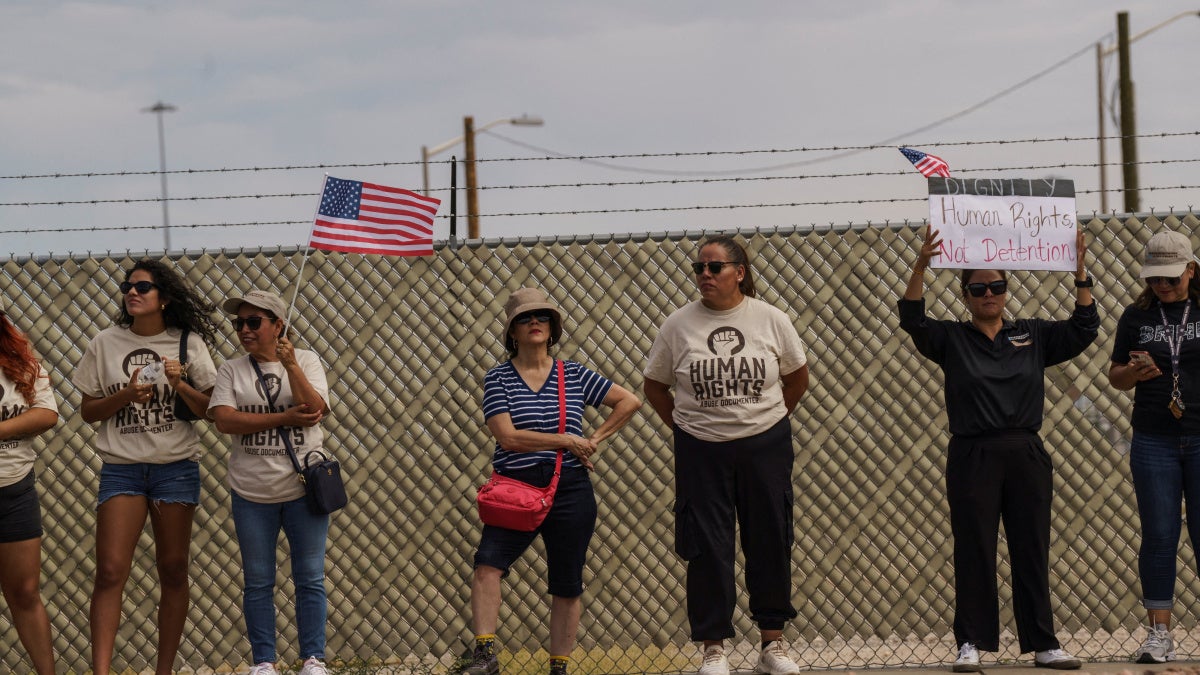
(Washington, DC) – People held in the immigration detention camp at the US Army’s Fort Bliss in El Paso, Texas have experienced serious abuse, Human Rights Watch and the American Civil Liberties Union (ACLU) said in a joint report released today. People detained at Camp East Montana have experienced indiscriminate beatings, life-threatening medical neglect, coercive removals to unfamiliar “third countries,” and, in some cases, experienced conditions of confinement that may amount to enforced disappearance.
The 84-page report, “‘You’re Only Getting Out Deported or Dead’: Abusive US Immigration Detention at Ft. Bliss,” documents conditions at the largest immigration detention facility in the United States. The detention camp has the capacity to hold up to 5,000 people and consists of five “soft-sided” tent-like structures that house detained people in penned enclosures. Inside, detainees said they were forced to live in filthy and cramped conditions with up to 72 people housed in each pod. Human Rights Watch found evidence of punitive immigration enforcement practices, including cruel, degrading, and inhumane detention conditions; excessive force by guards; failures to provide medical and mental health care; coercive deportation practices; and systemic barriers to legal representation.
“ICE’s Camp East Montana is a human rights disaster,” said Angélica César, Aryeh Neier Fellow at Human Rights Watch and the ACLU. “The US government should shut it down, conduct independent investigations into all abuses and deaths in custody, and put an end to mass deportations and mandatory immigration detention.”
Researchers interviewed 80 people, including 71 while they were detained at Camp East Montana, 4 family members, and 5 legal service providers from October 2025 to June 2026. Researchers also analyzed Department of Homeland Security (DHS) investigations and reviewed other records relating to the detention camp.
People interviewed said they had been apprehended during workplace raids, traffic stops, immigration appointments, and other community encounters. More than 60 said they were arrested despite displaying documentation that demonstrated their lawful presence in the United States. They consistently described arrests carried out by masked officers who refused to identify themselves and reported instances in which agents allegedly used excessive force, including beatings and tasers, while apprehending them.
People interviewed said they felt they had been “kidnapped” after being transferred through local jails and temporary holding facilities without meaningful communication with family members or lawyers. Human Rights Watch and the ACLU documented cases in which government detention locator systems did not accurately reflect detainees’ whereabouts. Family members described desperately searching for loved ones while Immigration and Customs Enforcement (ICE) failed to provide answers to questions regarding where detainees had been taken.
In some cases, the circumstances of detention may amount to enforced disappearance under international human rights law.
Once at Fort Bliss, people interviewed said they experienced cruel, degrading, and inhumane living conditions that posed serious risks to their physical and mental health. They reported bathrooms covered in feces, flooded housing units, inadequate cleaning, and no access to soap, sanitizer, and other basic hygiene supplies.
People interviewed also reported being held indoors for prolonged periods without meaningful access to recreation, sunlight, or fresh air. Some said they spent weeks without being allowed outside. During much of 2025, those interviewed said they were allowed outdoor recreation only once every two weeks for approximately 15 minutes at a time.
“Between August and September, I went a month without seeing the sun.” one person said. “The guards were just not taking us outside. We were all becoming anxious and desperate with nothing to do. I felt trapped, it was torture.”
People interviewed also described inconsistent meal schedules, spoiled food, and delays of up to 12 hours between meals. People with diabetes and other medical conditions reported headaches, blood sugar fluctuations, and other health complications after missing meals or receiving food that was spoiled, frozen, or otherwise inedible.
Researchers also documented widespread allegations of physical abuse by guards and facility personnel.
“The guards run into our pod in groups of 15, sometimes it looks like 20,” one man said. “They are dressed in all black, wear masks that cover everything but their eyes, and don’t wear name tags. When they come, they just run in, grab whoever they can and start to beat them… They are in control and can do whatever they want with us.”
People interviewed reported that guards beat detainees in response to hunger strikes, requests for medical attention, complaints regarding detention conditions, and efforts to obtain outdoor recreation after prolonged periods of confinement indoors. Several people said that guards imposed collective punishment, striking or assaulting multiple people after accusing one detainee of violating facility rules. Others described verbal abuse, humiliation, threats, and retaliation against detainees who asked for necessities or attempted to assert their rights.
An internal ICE investigation similarly documented impermissible and unreported uses of force at Camp East Montana.
Researchers interviewed witnesses to the death of Gerardo Lunas Campos on January 3, 2026, at Camp East Montana. Witnesses said that guards apparently asphyxiated Lunas Campos after he requested medication while in the Special Housing Unit, or solitary confinement unit. One man said: “It sounded like guards were hitting Geraldo, like his body was being punched and slammed. Geraldo screamed for help. He said: ‘I can’t breathe!’ many times. They continued to beat him. He said: ‘You are suffocating me.’ Everything went silent.”
Researchers documented repeated allegations that authorities failed to provide adequate medical and mental health care to people held at Camp East Montana. Every person interviewed described failures in the facility’s medical request and referral system. They reported prolonged delays in receiving treatment, interruptions in prescribed medications, inadequate medical assessments, and punitive responses to medical emergencies.
Researchers found that some detainees were subjected to coercive efforts to pressure them into abandoning immigration claims and accepting removal to third countries if they could not be sent back to their own country. They said they were threatened with violence, criminal prosecution, and indefinite detention if they refused deportation. Cuban and Venezuelan detainees described efforts to transfer them to Mexico despite ongoing legal proceedings and their fears of harm there.
The US government should close Camp East Montana and conduct independent investigations into deaths in custody, excessive force, medical neglect, enforced disappearances, and coercive deportation practices, Human Rights Watch and the ACLU said. Officials should hold those responsible for abuse to account, provide remedies to those harmed, and end immigration detention policies that contribute to widespread rights violations.
“The abuses documented at Fort Bliss are the predictable outcome of the Trump administration’s mass deportation agenda, its brutal expansion of immigration detention, and the erosion of federal oversight mechanisms,” César said. “People at Camp East Montana are human beings who deserve to be treated with dignity and protected from harm.”