The study, published in ‘Nature’, was led by scientists at The Pirbright Institute.
It brought together researchers from:
- the University of Cambridge
- the University of York
- the KEMRI-Wellcome Trust Research Programme
- National Museums of Kenya
It was funded primarily through the UKRI Biotechnology and Biological Sciences Research Council (BBSRC) alongside Kenya’s National Research Fund.
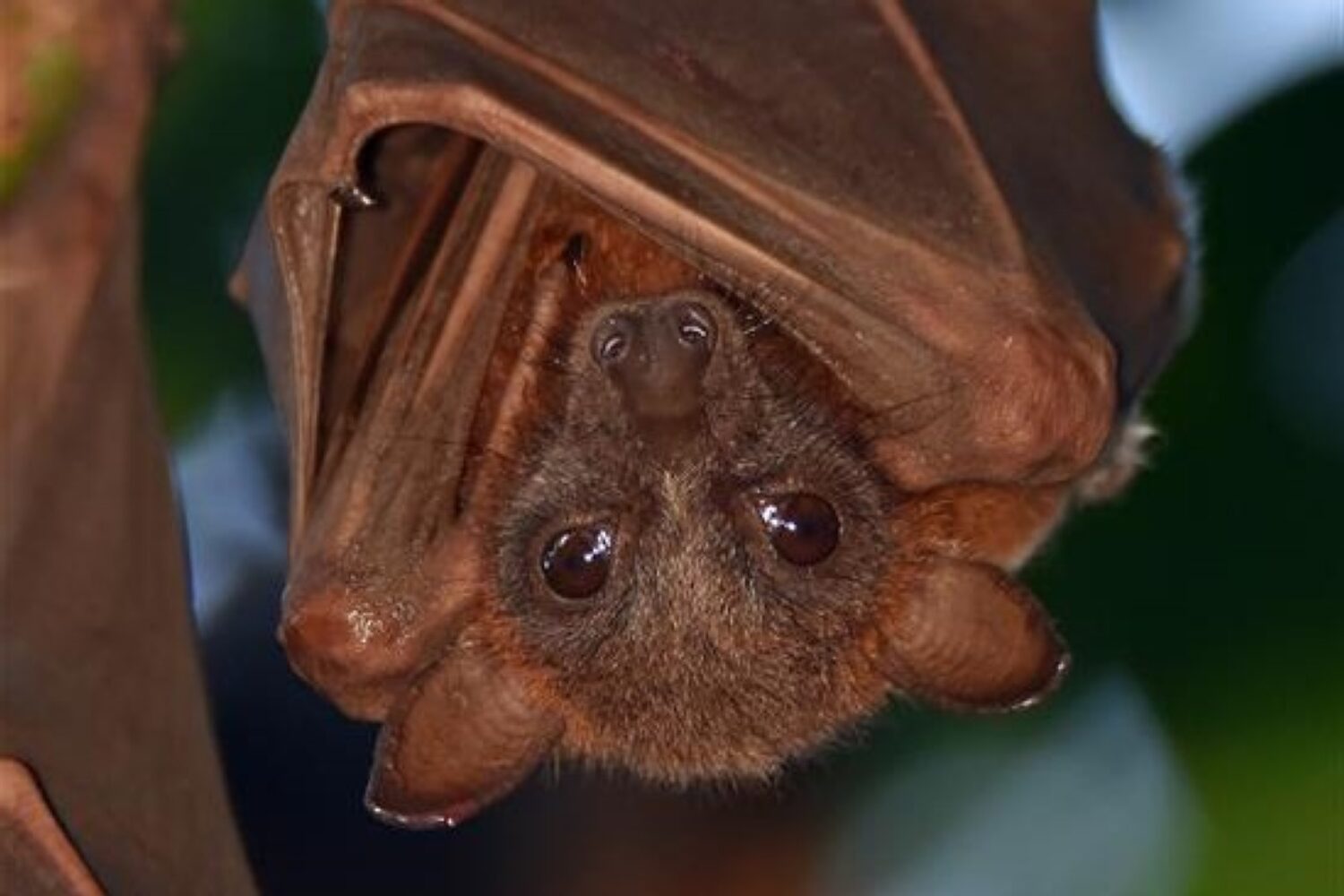
The heart-nosed bat
One virus, found in the heart-nosed bat in East Africa, was found to bind to a human cell receptor called CEACAM6.
Preliminary testing in Kenya suggests the virus has not yet spread to local human populations.
However, the researchers say the discovery highlights the importance of monitoring bat coronaviruses for their potential to cross into humans.
Challenging assumptions
The findings challenge previous assumptions about how alphacoronaviruses enter cells and suggest this family of viruses may be able to use a wider range of human receptors than previously thought.
Dr Dalan Bailey, Group Leader at The Pirbright Institute, said:
Before our study, it was assumed most alphacoronaviruses used just one or two possible receptors to enter their host, and the only difference was which species they could enter.
We now know alphacoronaviruses might use a whole variety of additional receptors to get into cells.
Preparing for future threats
Professor Anne Ferguson-Smith, BBSRC Executive Chair, said:
This discovery shows that with the right investment in fundamental science and strong international partnerships, we can stay one step ahead.
By bringing together world-leading scientists from the UK and Kenya, this team has found a smarter, safer way to identify viruses with the potential to infect humans before they do.
Understanding how animal viruses can cross into human cells is vital if we are to be better prepared for future health threats.
The power of collaboration
The international collaboration is part of UKRI’s broader commitment to funding research that protects global health by understanding the animal origins of infectious disease.