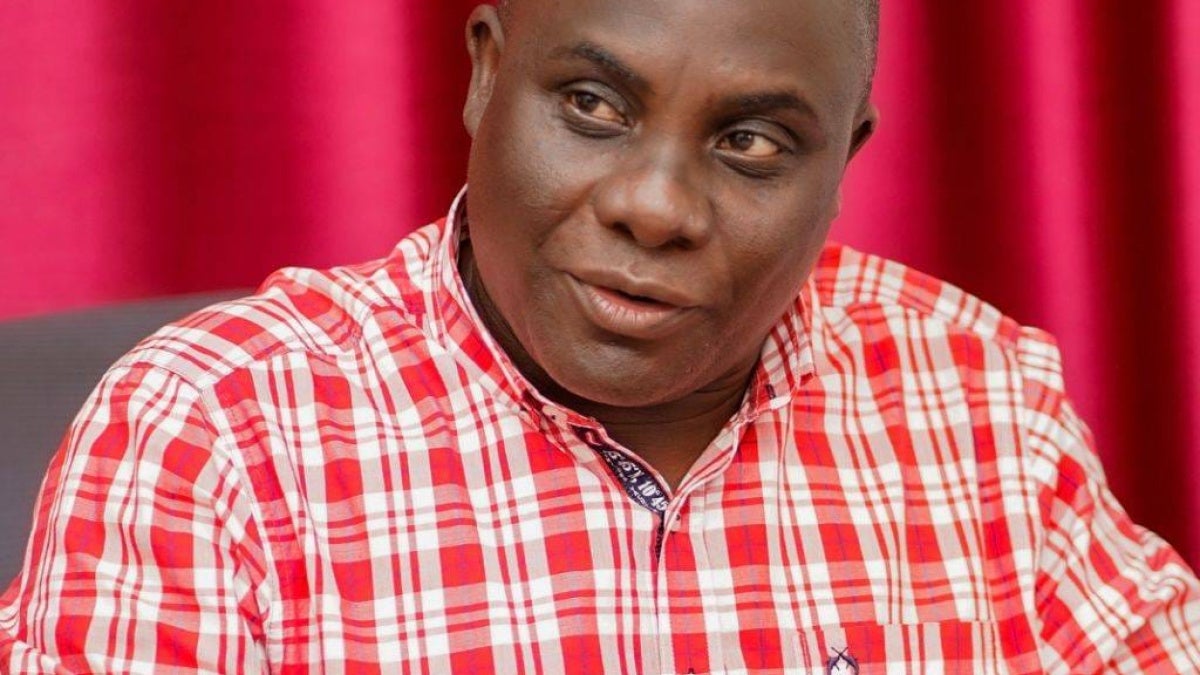
(Nairobi) – The Ugandan authorities have brought abusive criminal charges against an opposition politician, Muwanga Kivumbi, apparently based on his criticism of the president’s son, who is head of the armed forces, Human Rights Watch said today.
On July 29, 2026, the authorities charged Kivumbi, a deputy president of the National Unity Platform (NUP) Uganda’s main opposition party, with “inciting violence” and “managing an unlawful society,” after unlawfully detaining him for 19 days in an unrevealed location the day after he was released on bail for separate politically related charges. Kivumbi is one of several government critics that the military has in recent weeks arbitrarily seized, held incommunicado, and handed over to courts for abusive prosecutions.
“Ugandan authorities are weaponizing the justice system to harass and target its critics and opposition,” said Ashwanee Budoo-Scholtz, deputy Africa director at Human Rights Watch. “The government needs to end these malicious prosecutions, and instead ensure accountability for the numerous rights abuses and scaling up of human rights violations in the country.”
On July 10, armed plainclothes and uniformed soldiers dragged him from his car at a police roadblock and drove off with him to an unrevealed location. On the morning of July 19, the soldiers left him at a police station in Kampala, media reported.
The police took him 66 kilometers away to a magistrate’s court in Butambala later that day, where they brought new charges against him. Based on the charge sheet, Kivumbi’s charges arise from a speech he made to his supporters at a public gathering in Butambala on the day of his initial release.
The authorities did not specify the basis for the charges in the charge sheet. But in a video of this speech, seen by Human Rights Watch, Kivumbi criticized President Museveni’s son, Muhoozi Kainerugaba, who is the chief of the Uganda Peoples’ Defence Force, for engaging in politics as a military officer.
During the July 29 court hearing, Kivumbi said that the security officers who abducted him blindfolded him and took him to a location he could not identify, where they held him for days in a small room, and kicked and beat him until he bled from his head. A witness who saw Kivumbi upon his release told Human Rights Watch that he had scars on his head, arms, legs, and back, apparently from the beatings.
The authorities had initially arrested Kivumbi on January 22, alongside scores of other National Unity Platform supporters around Uganda’s contested general elections on January 15, holding him until he was released on bail in July. Kivumbi had been running for a parliamentary seat during the elections which he lost.
The authorities who arrested Kivumbi in January accused him of orchestrating “a violent attack on Kibibi Police Station and Butambala Electoral Commission Tally Centre,” and causing “serious damage to sections of the Butambala-Gomba road” and multiple vehicles that “directly resulted into the deaths of seven people” on the days before and after election day. Kivumbi had rejected the allegation, saying security forces had raided his home on election day and shot and killed several members of his campaign team who were there.
The Agora Centre for Research, a Ugandan organization, reported that the armed forces killed at least seven people at Kivumbi’s home, including election officials, who had run into a garage for safety during the raid.
The Ugandan authorities should urgently and impartially investigate the circumstances of those killings and hold the those responsible to account, Human Rights Watch said.
Although Uganda’s Constitution guarantees the right to bail and prohibits arbitrary arrests and detention, security agencies frequently re-arrest people after courts have granted them bail, and courts have denied bail to other political opponents, extending their pretrial detention beyond maximum periods under Ugandan and international law.
In another such case, on July 29, a former presidential candidate, Kizza Besigye, who is on trial for treason and has been imprisoned since November 2024, collapsed during a court hearing and was hospitalized. The courts have previously denied him bail, despite requests by his family to have him released to allow him to receive private medical treatment.
On July 15, soldiers seized and unlawfully detained one of Besigye’s lawyers, Elias Lukwago, then sent him to pretrial detention on treason-related charges. The authorities later deported another of Besigye’s lawyers, Martha Karua, to Kenya on July 22. On July 30, the High Court denied Lukwago bail, which he had sought to receive medical treatment.
International human rights law requires any pretrial restrictions on criminal suspects to be consistent with the right to liberty, the presumption of innocence, and the right to equality under the law. The UN Human Rights Committee, the international body that provides authoritative analysis of the International Covenant on Civil and Political Rights, has stated that pretrial detention imposed on suspects as punishment, among other reasons, is inconsistent with those rights.
Ugandan law criminalizes torture under the Prevention and Prohibition of Torture Act 2012, and the Human Rights (Enforcement) Act 2019 provides for personal liability for public officers who commit human rights violations.
“Kivumbi’s charges are only the latest in Uganda’s intensifying clampdown on critics of the government,” Budoo-Scholtz said. “The authorities should drop all criminal charges against him and ensure that all security officials implicated in his ill-treatment and enforced disappearance are held to account.”