The U.S. Department of Housing and Urban Development (HUD) has finalized a rule prohibiting households with mixed immigration statuses from participating in federal housing assistance programs, placing housing providers across the United States on a tight deadline to verify the citizenship or immigration status of all subsidized tenants or risk losing federal funding.
Published in the Federal Register on November 12, 2026, and scheduled to take effect on December 14, 2026, the regulation applies to major programs including public housing, project-based Section 8, and Housing Choice Vouchers. While HUD estimates that as many as 200,000 residents live in mixed-status households, housing advocates warn that nearly 80,000 people—including almost 37,000 children, 95% of whom are U.S. citizens—face direct displacement and heightened homelessness risks.
Key Provisions and Impact of HUD’s Mixed-Status Housing Rule
- Strict Verification Deadlines for All Residents: Under the final rule, every resident living in HUD-assisted housing—including U.S. citizens and seniors aged 62 and older, who were previously exempt—must submit proof of U.S. citizenship or eligible immigration status. Housing agencies and project owners must notify tenants missing documentation by January 11, 2027, and mixed-status families have 90 days from the effective date to provide proof, with a maximum 60-day extension allowed at provider discretion (up from 30 days in the proposed rule).
- Financial Strain and Voucher Shortfalls: HUD’s own Regulatory Impact Analysis projects that replacing prorated mixed-status households with fully subsidized families will reduce the total number of households assisted unless Congress provides an estimated $300 million in additional funding. Public Housing Agencies (PHAs) warn that covering the shortfall could force them to delay or reduce Housing Choice Vouchers or leave units vacant, while all low-income tenants face added costs to obtain documents such as birth certificates or passports.
- Warnings of Rising Homelessness and Legal Challenges: National Low Income Housing Coalition (NLIHC) President and CEO Renee M. Willis said the rule “could undermine housing stability for far too many of our neighbors,” forcing low-income families to choose between eviction and family separation. Housing advocates and local officials—including coalitions in California and New York City that filed federal lawsuits this week to block the rule—warn that full implementation will drive up national homelessness, deepen childhood poverty, and shift far higher emergency shelter and social service costs onto state and local governments.
Current HUD regulations governing mixed-status households remain in place until December 14, 2026. HUD officials stated the rule is designed to ensure federal housing subsidies are reserved strictly for U.S. citizens and eligible noncitizens, even as state and municipal leaders challenge the mandate in federal court ahead of next month’s implementation deadline.
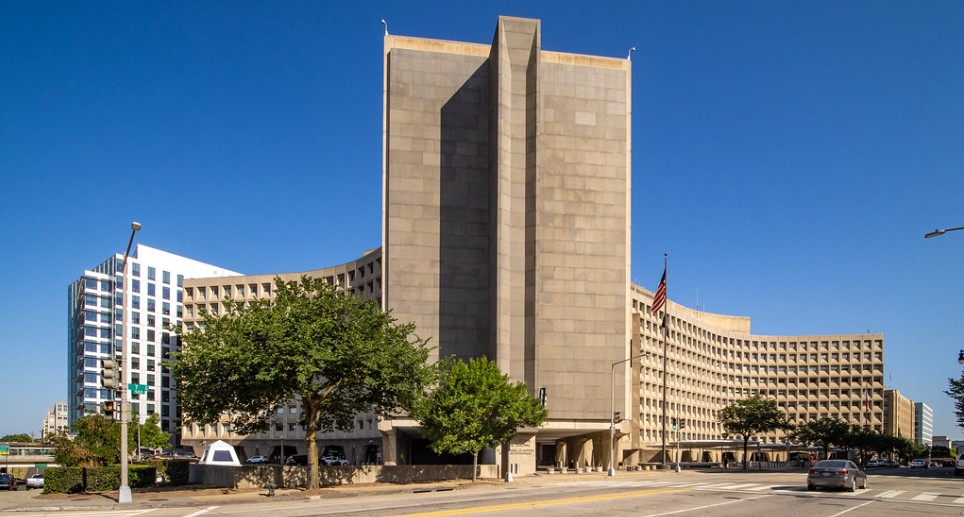
U.S. Department of Housing and Urban Development (HUD) Robert C. Weaver Federal Building – HUD Headquarters Flickr Picture by ajay_suresh