Benjamin Roux, University of Bordeaux in France, discusses his article: Tree canopy shapes the survival of oak and beech saplings during the regeneration stage along an elevation-driven temperature gradient
The challenges of heatwaves for forest ecosystems
As western Europe experiences yet another heatwave, most of the public discussion focuses on how human societies can adapt to increasingly extreme temperatures. Surprisingly, very little public attention is paid to how natural ecosystems are coping with these extreme climatic events. Forests, for example, play a crucial role in regulating climate and supporting biodiversity, yet they are themselves facing unprecedented environmental stress. As climate change accelerates, understanding how forests respond to increasingly harsh conditions has become more important than ever.
To address this topic, we turned our attention to one of the most critical stages of forest dynamics: forest regeneration.
The critical stage of forest regeneration
The immediate impacts of heatwaves and drought on mature trees provide valuable information about short-term forest responses. However, understanding the future of forests requires looking beyond adult trees and examining their ability to regenerate.
The juvenile stage is the most vulnerable phase in a tree’s life cycle. The survival of young saplings determines not only short-term regeneration success but also the long-term persistence of forest ecosystems. Unfortunately, this life stage is particularly sensitive to drought and heat stress, making it a potential bottleneck for forest renewal under climate change.
Measuring the influence of neighbouring plants
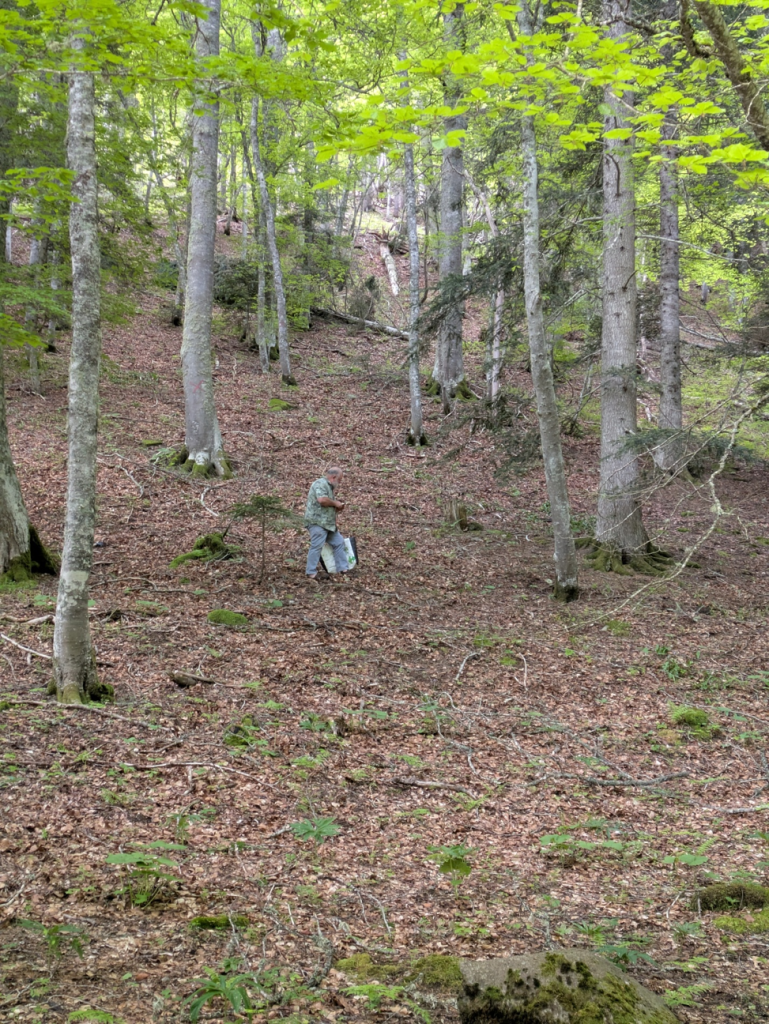
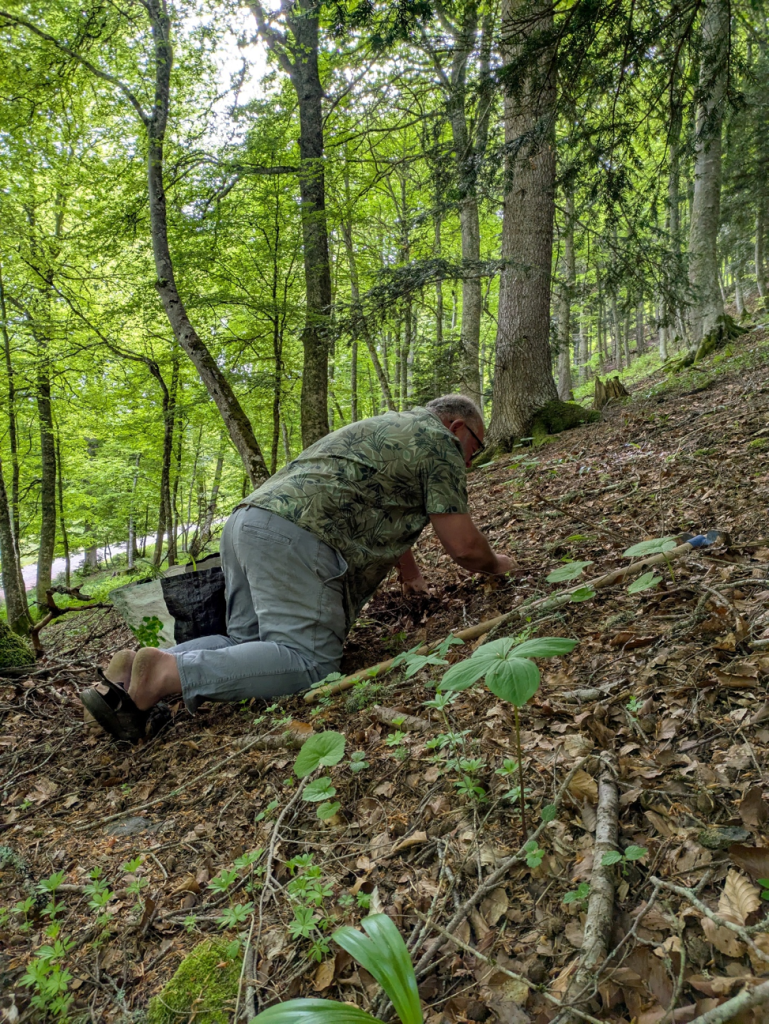
In our study, we investigated how canopy cover influences the survival of saplings of two of the most widespread European trees: common beech (Fagus sylvatica) and sessile oak (Quercus petraea). To assess the effect of canopy cover, we planted saplings both beneath the forest canopy and in nearby open areas, then monitored their survival over five years. Comparing the difference in survival between the two conditions gives a very good proxy of the overall effect of the canopy on saplings survival.
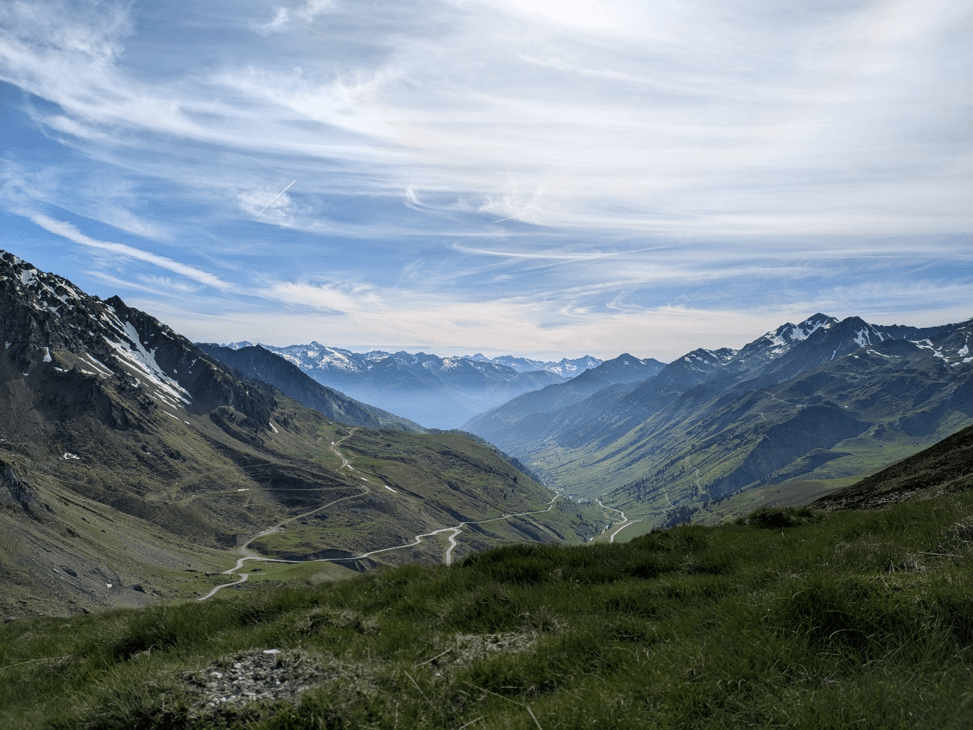
We established study sites at five different elevations, from 100 to 1,600 metres above sea level. This elevation gradient provided a natural temperature gradient while minimizing changes in many other environmental factors, allowing us to isolate the effects of climate and canopy cover on sapling survival.
The contrasting effects of canopy cover
After five years, survival patterns differed markedly between species and across elevations. For both species, mortality increased at higher elevations; however, the magnitude of this decline and the influence of canopy cover varied considerably.
At high elevations, canopy cover strongly reduced the survival of sessile oak saplings due to heat limitation, while having little effect on common beech. In contrast, at the lowest elevation, canopy cover increased the survival of common beech saplings by reducing the temperature in the understorey, whereas sessile oak showed little response.
These results reveal that the same forest canopy can either help or hinder regeneration, depending on both the species considered and the environmental conditions.
Biotic interactions shape species response to global warming
Our findings highlight the importance of biotic interactions in plant ecology. In forest environments, plants do not grow in isolation: they constantly interact with their neighbours. These interactions can be positive, a process known as facilitation, when neighbouring plants improve survival or growth, or they can be negative through competition for resources such as light, water, and nutrients. Importantly, facilitation and competition effects are not necessarily consistent across species. Even within the same forest and under the same climatic conditions, neighbouring plants can affect different species in very different ways.
More broadly, our study provides further evidence that predicting the impacts of climate change on forest ecosystems requires accounting for these biotic interactions. Climate alone cannot fully explain species responses. Understanding not only where species can live, but how they interact and survive under new conditions, will be critical to anticipating the future of temperate forest ecosystems.