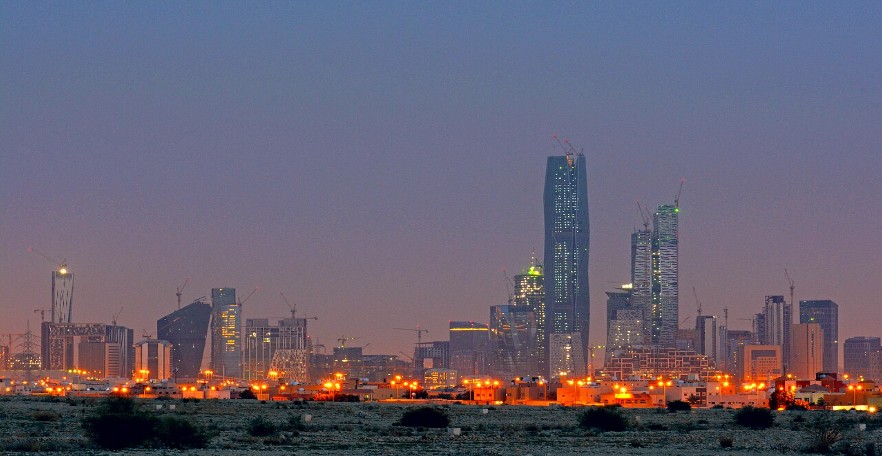
RIYADH — An administrative building belonging to state-owned oil giant Saudi Aramco in the heart of Riyadh’s King Abdullah Financial District (KAFD) sustained structural damage on Sunday morning, November 8, 2026, following a missile threat alert over the Saudi capital.
Explosions rocked the city center as air defense forces intercepted incoming ballistic and cruise missiles. While official state channels attributed the damage to falling shrapnel from an intercepted projectile, multiple witnesses and geolocated video footage indicated a direct impact on the multi-story tower.
Incident Overview and Official Response
The escalation unfolded shortly after dawn, triggering emergency air-raid sirens and national early-warning alerts across Riyadh.
Riyadh Missile Incident Overview
+-------------------------------------------------------------------------+
| DATE & TIME: Sunday, November 8, 2026 (Morning hours)                   |
| TARGET LOCATION: King Abdullah Financial District (KAFD), Riyadh        |
| AFFECTED STRUCTURE: Saudi Aramco Administrative Tower                   |
| CASUALTIES: None reported by Saudi Ministry of Energy                   |
| INTERCEPTION STATUS: Saudi-led coalition reported intercepting ballistic|
|                      and cruise missiles over the capital region        |
+-------------------------------------------------------------------------+
According to a statement released by the Saudi Ministry of Energy and the Saudi-led coalition spokesman Maj-Gen Turki al-Malki, air defense systems successfully intercepted incoming projectiles. The ministry confirmed that falling debris struck the Aramco administrative facility, blowing out windows across several floors and scorching part of the facade.
Emergency responders and civil defense teams secured the perimeter immediately. Authorities confirmed there were no fatalities or injuries, and Aramco operations remained unaffected.
Symbolic Escalation in the Capital’s Financial Core
The strike on KAFD marks a notable escalation in the ongoing regional conflict, as high-security commercial and financial hubs within the capital have rarely been directly impacted.
Perspectives on the Capital Security Incident
+-------------------------------------------------------------------------+
| MILITARY COALITION & OFFICIAL CHANNELS                                  |
| * Emphasize the successful interception rate of inbound ballistic and   |
|   cruise threats by integrated air defense batteries.                   |
| * Stress that damage to civilian and commercial structures was the      |
|   result of falling shrapnel from neutralized projectiles.|
+-------------------------------------------------------------------------+
| INDEPENDENT OBSERVERS & LOCAL WITNESSES                                 |
| * Highlight the psychological and symbolic impact of an explosion       |
|   occurring directly inside Riyadh’s premier financial district.|
| * Point to contrasting accounts between official shrapnel reports and   |
|   witness observations of direct projectile trajectories. |
+-------------------------------------------------------------------------+
The incident occurred just hours after the Saudi Ministry of Education had announced the resumption of in-person classes in Riyadh following a prior wave of remote learning.
Security analysts note that targeting the financial district—home to multinational corporations, major banking headquarters, and critical energy infrastructure—serves to heighten regional tension. Saudi civil defense authorities have urged residents to avoid filming or sharing unverified footage of interception sites, warning of legal liabilities under national cyber and security statutes.
Houthi Missile Hits Aramco’s Tallest Tower In Saudi Capital | Watch
This video report captures footage and overview coverage of the missile strike aftermath in Riyadh’s financial district.
King Abdullah Financial District Picture on Wiki by B.alotaby