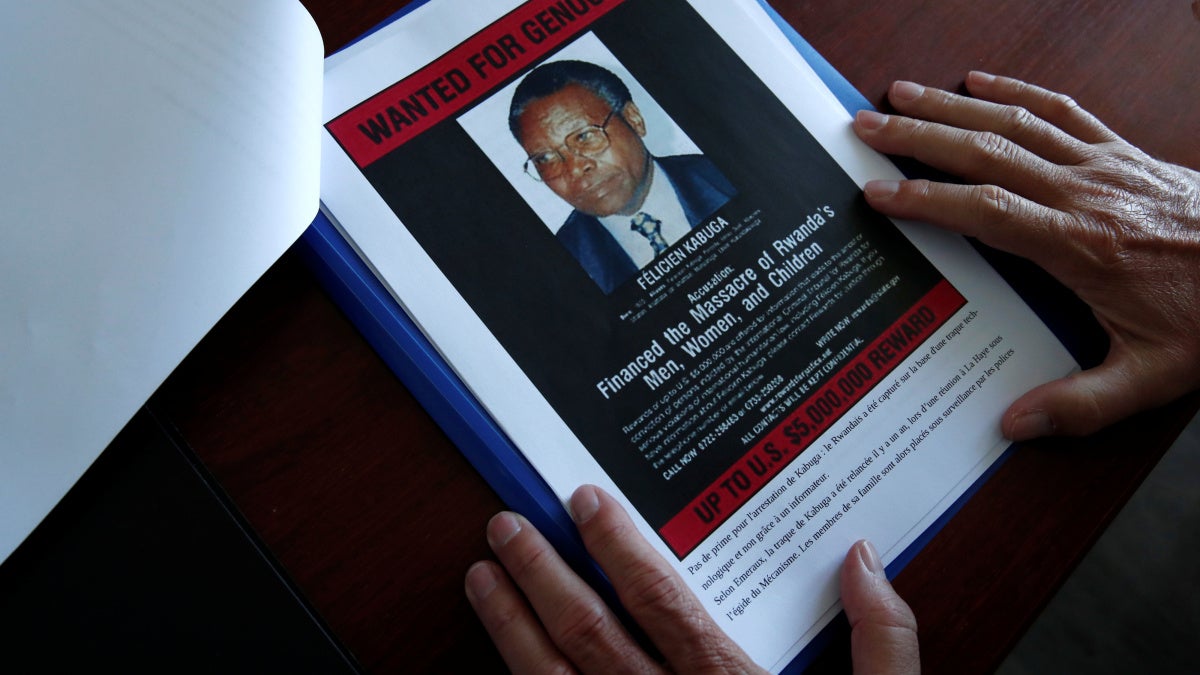
The death of accused Rwandan genocide financier Félicien Kabuga closes an important chapter of the country’s 1994 genocide. Unfortunately, it also robs survivors of a chance for justice many had waited decades to see.
Kabuga, long alleged to have financed the extremist militia that carried out the genocide and helped fuel genocidal propaganda through Radio Télévision Libre des Mille Collines, died in a hospital in The Hague at the age of 93 on May 16 while in custody of the United Nations International Residual Mechanism for Criminal Tribunals. He had been declared unfit to stand trial in 2023 because of dementia and deteriorating health.
For years, Kabuga symbolized both the persistence of international justice efforts and long-standing impunity for crimes committed during the genocide. Indicted in the 1990s, his 2020 arrest in France after more than two decades as a fugitive was a breakthrough for genocide victims and survivors.
When his trial opened in The Hague in 2022, 28 years after the genocide, it was an important opportunity to establish a full public record of the role Kabuga played in it.
Alison Des Forges, who was a senior adviser to the Africa Division at Human Rights Watch for almost two decades, published in her authoritative account of the genocide, “Leave None to Tell the Story,” that “Radio RTLM, which had incited to genocide before April 6, communicated the orders for implementing the killings after that date. It instructed people to erect barriers and carry out searches; it named persons to be targeted and pointed out areas which should be attacked…. So important was this means of communication that officials admonished citizens to keep listening to the radio for instructions from the interim government.”
Des Forges also documented how Kabuga was implicated in ordering the thousands of machetes imported to Rwanda in 1993 and early 1994, and how he supported the military training for the Interahamwe youth militia, whose members hunted down Tutsi civilians during the genocide.
Kabuga died without a judicial determination of guilt or innocence, marking a painful lack of closure for the victims of one of the gravest crimes of the 20th century.
There is no expiration date on justice for the most serious crimes, and alleged perpetrators of the Rwandan genocide continue to be arrested in different countries. Judicial authorities should ensure that survivors and victims don’t face more delays.