
Think about the last time you stood up from a chair or lifted a heavy shopping bag from the floor. These movements might feel automatic, but they take a surprising amount of coordination between your brain and your muscles.
As you lift the bag, your brain sends signals that tell your muscles when to tighten and how hard to pull. At the same time, signals from your body help your brain tell where your limbs are and whether you’re starting to lose your balance. If the bag is heavier than you expected, you can adjust your grip and shift your weight as you lift.
A recent study involved 162 adults aged 65 and over who showed signs of mild cognitive impairment. This means having more difficulty with memory or thinking than is usual at that age while still being able to manage most everyday tasks.
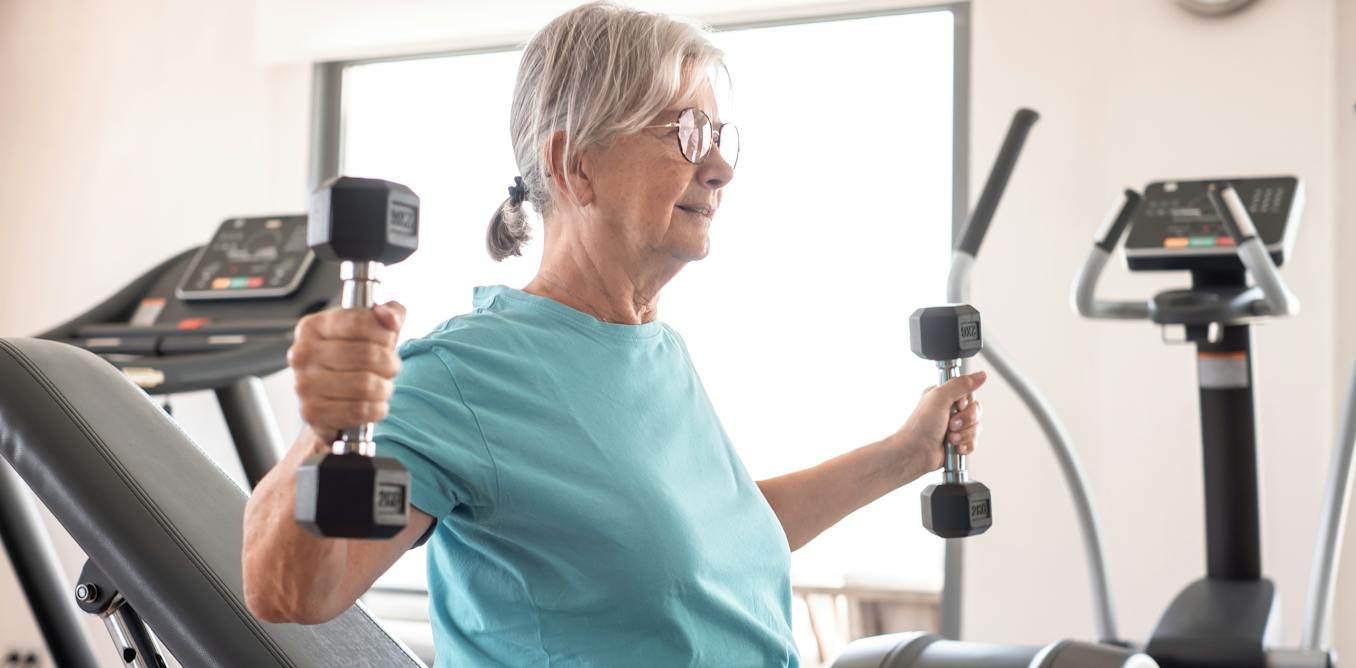
The researchers compared gentle exercise with a 24-week programme of resistance training, in which muscles work against a weight or against the body’s own weight. The strength exercises gradually became harder. In the second half of the programme, participants began doing some of them on surfaces such as foam pads, which made it harder to keep their balance.
By the end of the programme, the strength-training group scored slightly higher than the gentle-exercise group on two tasks: repeating a string of numbers immediately after hearing it and naming as many words as possible beginning with the letter A in one minute. The groups scored similarly when asked to remember details from a story, both immediately and half an hour later. It’s unclear whether the small differences on the two tests would make a difference in daily life. Whether the programme affects the chances of developing dementia, where changes in memory or thinking interfere with daily life, remains an open question.
Learning to move
When someone first starts strength training, they can get stronger before their muscles grow noticeably. One reason is that the brain and nerves get better at activating the muscles needed for the movement. Think of it as developing a “muscle map”. With practice, it becomes easier to sense where your body is and adjust how much effort you need.
An exercise that challenges your balance may also demand more attention. Whether that extra effort benefits other thinking skills is less clear. In the 24-week study, the researchers compared the whole training programme with gentler exercise, so they couldn’t tell how much the balance challenge itself contributed to the results.
Much of the research on exercise and thinking skills in older age looks at memory or at skills such as planning and switching between tasks. Those tests can tell us how someone performs on a particular task. Other measures are needed to see whether exercise helps someone move more confidently or manage everyday activities on their own.
Practising one task can make a similar task easier. For example, doing squats can help you stand up from a chair because both movements use many of the same muscles. The same principle applies to thinking skills. Strength training might give you practice at remembering the order of your exercises, while a programme designed to improve memory gives you more direct practice at learning new information and recalling it later.
How strength training might affect the brain
Strength training may also affect the brain through changes elsewhere in the body. It can lower blood pressure and help the body respond better to insulin, the hormone that helps control blood sugar. Both high blood pressure and type 2 diabetes are linked to a higher risk of dementia.

Mangkorn Danggura/Shutterstock
Strength training may also reduce some signs of long-lasting inflammation, which can occur when the body’s immune defences stay active over time. Researchers are still investigating what that might mean for the brain.
Other studies have looked at whether strength training changes the levels of proteins that help brain cells work and form connections. Some have found higher levels of these proteins in the blood after training, but results in people have varied. When muscles tighten during exercise, they also release substances called myokines, which can send signals to other parts of the body. Researchers are exploring whether some of those signals affect the brain.
Beyond the gym
Strength training can help some older adults who have difficulty getting around to move more easily. That might make it easier to walk to the shops or get to a regular social activity. Over time, those outings could provide more opportunities to stay active and see other people. Being physically inactive and being socially isolated are both linked to a higher risk of dementia. What someone can do with their improved strength also depends on practical things, such as how easy it is to get somewhere and how confident they feel going out.
More women than men live with dementia worldwide, yet women are less likely to do regular strength exercises. A review drawing on studies involving more than 2.6 million adults estimated that fewer than one in four did muscle-strengthening exercises at least twice a week. In interviews with women who trained regularly, some described feeling unsure of their abilities or feeling that strength training was seen as something for men.
Having the chance to build strength and confidence earlier in life can help people stay independent as they get older. The benefits can show up in ordinary ways, whether it’s carrying the shopping home or getting out of a chair without help.

Hannah Campbell receives funding from the Economic and Social Research Council.









