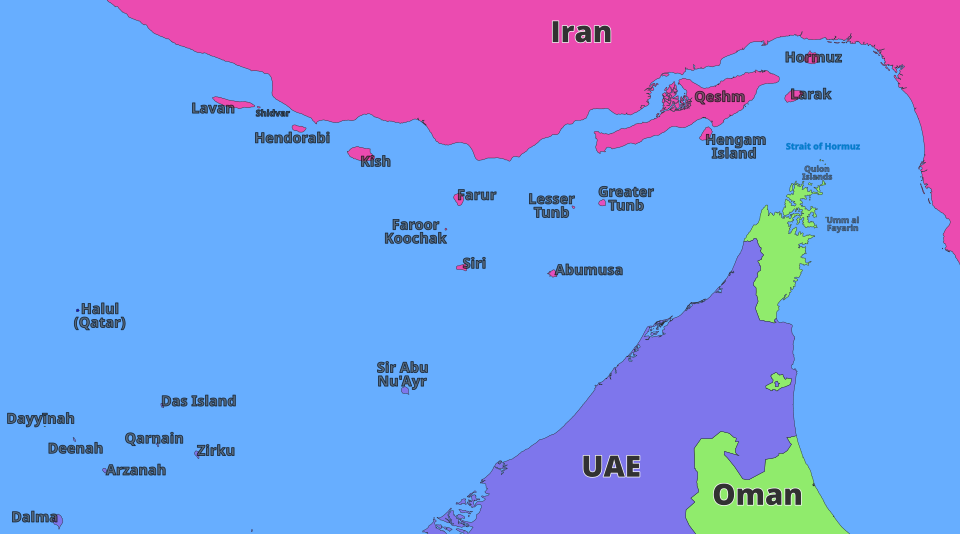
RIYADH — As geopolitical volatility threatens maritime movement through the Strait of Hormuz, Gulf energy exporters are facing a stark operational reality: while major producers like Saudi Arabia and the United Arab Emirates have established overland bypass routes, the majority of regional oil and gas exporters remain critically vulnerable to single-point maritime disruption.
Roughly 20% of the world’s petroleum liquids transit the narrow maritime choke point between Iran and Oman daily. With regional tensions escalating security risks along the Persian Gulf, the race to secure overland pipeline capacity to external deepwater ports has become a top strategic imperative.
Saudi Arabia’s Red Sea Pivot: The East-West Petroline
Saudi Arabia stands as the primary Gulf state capable of rerouting a major portion of its crude output away from the Persian Gulf. Through its 1,200-kilometer East-West Pipeline (Petroline), state energy giant Saudi Aramco transports crude from Abqaiq in the Eastern Province across the Arabian Peninsula to the Red Sea port of Yanbu.
EAST-WEST PETROLINE ROUTE
Abqaiq (Persian Gulf Coast) ──► 1,200 km Overland Pipeline ──► Yanbu Port (Red Sea)
                                                                    │
                                                       ┌────────────┴────────────┐
                                                       ▼                         ▼
                                                  Sumed Pipeline             Direct VLCC
                                                    (to Europe)             (via Bab el-Mandeb)
By converting parallel natural gas liquids lines into crude service, Aramco expanded Petroline’s throughput to 7 million barrels per day (bpd). However, analysts note that the Red Sea corridor introduces secondary geopolitical challenges:
- Yanbu Loading Bottlenecks:Port facilities at Yanbu constrain maximum daily loading schedules under peak wartime conditions.
- Bab el-Mandeb Exposure:Tankers bound for Asian markets must navigate south through the Bab el-Mandeb strait, exposing shipments to maritime threats off the Yemeni coastline.
The Gulf Divergence: Who Can Bypass the Choke Point?
The United Arab Emirates represents the only other Gulf Cooperation Council (GCC) member with operational bypass capability.The Habshan–Fujairah (ADCOP) pipeline transports 1.5 million bpd directly from onshore Abu Dhabi fields to the Gulf of Oman, completely avoiding the Strait of Hormuz.Construction is also being fast-tracked on a parallel line (West-East 1) to double export capacity to Fujairah.
Conversely, neighboring producers lack significant overland alternatives:
| Country | Key Bypass Infrastructure | Maximum Bypass Capacity | Primary Export Corridor |
| Saudi Arabia | East-West Petroline (Abqaiq to Yanbu) | 7.0 million bpd | Red Sea / Sumed Pipeline |
| United Arab Emirates | Habshan-Fujairah Pipeline (ADCOP) | 1.5 million bpd (expanding to 3.0+ Mbd) | Gulf of Oman |
| Iraq | Ceyhan Pipeline (Northern Route) | Limited (~0.4 million bpd capacity) | Persian Gulf / Turkey |
| Kuwait | None | 0 bpd | Strait of Hormuz |
| Qatar | None (LNG Carriers) | 0 bpd | Strait of Hormuz |
| Bahrain | None | 0 bpd | Strait of Hormuz |
Structural Vulnerabilities and Long-Term Outlook
For landlocked energy logistics in Kuwait, Qatar, and southern Iraq, constructing alternative pipeline infrastructure requires traversing complex cross-border terrain or securing diplomatic access through neighboring nations.
Furthermore, while oil can be piped overland, Qatar’s vast liquefied natural gas (LNG) exports rely entirely on specialized cryogenic tankers that cannot be converted to pipeline transport.
As energy security planners evaluate long-term risks, the strategic focus continues to shift toward expanding Red Sea and Indian Ocean export infrastructure. However, replacing a maritime arterial route that handles over 20 million barrels of crude and petroleum products per day remains a multi-year, multi-billion-dollar engineering challenge.
For a deeper look into the strategic logistics behind Saudi Arabia’s Petroline infrastructure and its impact on global crude flows, see this Saudi East-West Oil Pipeline analysis
This video provides valuable background context by illustrating the physical route of the Petroline and explaining how Aramco manages oil rerouting through Red Sea terminals.
Strait of Hormuz islands Image by Wikideas1